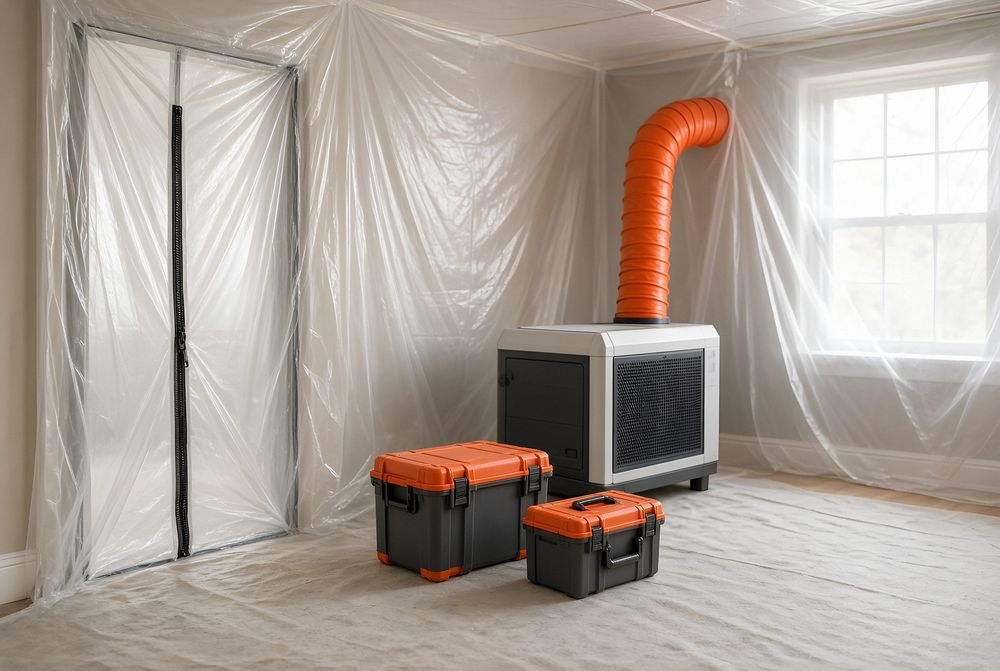
Large indoor marijuana grow operations, whether unlicensed or operating outside the terms of a license, can do serious damage to a house. Unlike meth labs, the main problems aren't drug residue on surfaces; they're moisture, mold, electrical modifications, structural changes and odor. This guide explains what to look for and how remediation works.
What grow operations do to a building
Moisture. Plants release large amounts of moisture through transpiration, and watering adds more. Without proper dehumidification, humidity stays high for months, soaking into drywall, insulation, framing and subfloors.
Mold. Sustained high humidity, poor air circulation and organic material create ideal conditions for mold growth inside walls, ceilings, attics and crawlspaces.
Electrical modifications. High-wattage grow lights and equipment often lead to illegal wiring, bypassed meters, overloaded circuits and fire hazards.
Ventilation changes. Holes may be cut in walls, floors, ceilings and roofs for ducts and fans. Windows may be covered or sealed.
Structural damage. Moisture and rot can weaken framing and subflooring. Removed walls and added structures may compromise the building.
Chemicals. Fertilizers, pesticides and fungicides may be stored or spilled, and residues can remain.
Odor. Strong plant odor can persist in materials and HVAC systems.
Safety before entry
- Electrical hazards are a serious concern. Have the power shut off at the utility and an electrician inspect before work begins.
- Mold can be extensive; protective equipment is needed for remediation.
- Structural concerns may require an engineer's evaluation.
- Law enforcement may need to release the property if it was seized.
Assessment
A thorough assessment includes:
- Moisture mapping of walls, floors and ceilings
- Visual inspection for mold, including inside wall cavities, attics and crawlspaces
- Electrical inspection by a licensed electrician
- Structural evaluation where damage is suspected
- Inventory of chemicals and equipment left behind
- HVAC evaluation
Remediation
- Remove equipment, plant material and debris.
- Dispose of chemicals properly.
- Control moisture and dry the structure.
- Remove mold-damaged materials such as drywall, insulation and sometimes subfloor and framing, following industry mold remediation practice.
- Clean and treat remaining framing and surfaces.
- Clean or replace HVAC components.
- Treat odor after source removal.
- Verify with moisture readings and, where appropriate, post-remediation evaluation.
Repairs
After remediation, repairs may include electrical rewiring with permits, structural repairs, closing holes cut for ventilation, roofing repairs, new insulation, drywall and finishes. Local building permits and inspections are often required.
Insurance and legal considerations
Many property insurance policies exclude damage from illegal activity or gradual mold growth. Landlords should review policies and leases. Licensed cannabis operations are governed by state rules that vary widely, and some states regulate cultivation in residences. Consult an attorney about tenant responsibility and disclosure when selling or renting.
Buying a former grow house
Buyers should ask about history, order a thorough inspection including moisture and mold evaluation and an electrical inspection, and obtain estimates before closing. Some former grow houses need extensive repair.
Landlords: spotting a grow operation
Warning signs include covered windows, condensation on windows, unusually high electric bills or tampered meters, strong plant odor, constant fan noise, heavy foot traffic at odd hours, and tenants who refuse access for inspections. Periodic inspections with proper notice, and lease clauses on cultivation and modifications, help landlords catch problems before damage becomes extensive.
Documenting damage
Before remediation, photograph every affected area, the electrical modifications, holes and equipment. Keep moisture readings and contractor reports. This documentation supports claims against tenants, insurance claims where coverage exists, and disclosure when selling.
Working with code officials
Unpermitted electrical work and structural changes may need to be inspected and brought to code. Local building departments can advise on required permits. Some jurisdictions also have nuisance or drug house ordinances that impose requirements on owners.
Frequently asked questions
Is marijuana residue dangerous like meth residue?
The primary concerns in grow houses are moisture, mold and electrical hazards rather than drug residue on surfaces.
Can mold from a grow house be cleaned?
Yes, through professional mold remediation that removes affected materials and addresses moisture. Some states license mold remediation work.
Should I test for mold?
Visual inspection and moisture mapping are usually the starting point. Testing may help in specific situations, as recommended by a qualified professional.
Are grow houses regulated like meth labs?
Generally not in the same way, though local building, electrical and code enforcement rules apply.
How long does remediation take?
From several days to several weeks, depending on mold extent, drying and repairs.
Do odors from a grow house go away?
Plant odor fades once materials are removed and HVAC is cleaned, but absorbed odor in drywall and fabrics may need treatment.
Can the electrical system be saved?
A licensed electrician will determine what can stay; illegal modifications must be removed or brought to code.
Is a former grow house worth buying?
It can be, with a thorough inspection and realistic repair estimates.
Key takeaways
Indoor grow operations cause moisture damage, mold, dangerous electrical modifications, structural changes and odor. Safety comes first, especially electrical. Assessment should cover moisture, mold, electrical systems, structure and HVAC. Remediation removes damaged materials and dries the structure, followed by permitted repairs.
Sources
- IICRC: ANSI/IICRC S500 Standard for Professional Water Damage Restoration
- OSHA: 29 CFR 1910.134, Respiratory Protection
This guide is general information. It is not legal, medical, environmental or safety advice. Rules vary by state and locality. For a specific situation, consult the relevant agency or a qualified professional.