Why sewage is treated as a biohazard
Water damage is commonly sorted into categories by contamination level. Water from sewage, toilet backflow from beyond the trap, septic failures, and floodwater that has moved over the ground is grossly contaminated. The restoration industry's standard (IICRC S500) calls it Category 3, or "black water." It can carry bacteria, viruses and parasites, and it contaminates every porous material it touches.
That changes the job. With clean-water leaks, wet materials can often be dried in place. With sewage, most porous materials that got wet, such as carpet, pad, the lower portion of drywall, insulation and many furnishings, can't be reliably cleaned and are removed.
What to do right away
- Keep people and pets away from affected areas, especially children and anyone with a weakened immune system.
- Stop using sinks, toilets, showers and appliances that drain to the affected line until the cause is known.
- Don't walk through sewage, and keep the HVAC system from circulating air from the affected area if you can.
- If water is near electrical outlets, panels or appliances, don't enter. Have the power shut off safely.
- Call a plumber for the cause, and your insurer if you plan to file a claim.
How the cleanup is done
- Source control. The cause is fixed or isolated by a plumber or septic professional before cleanup.
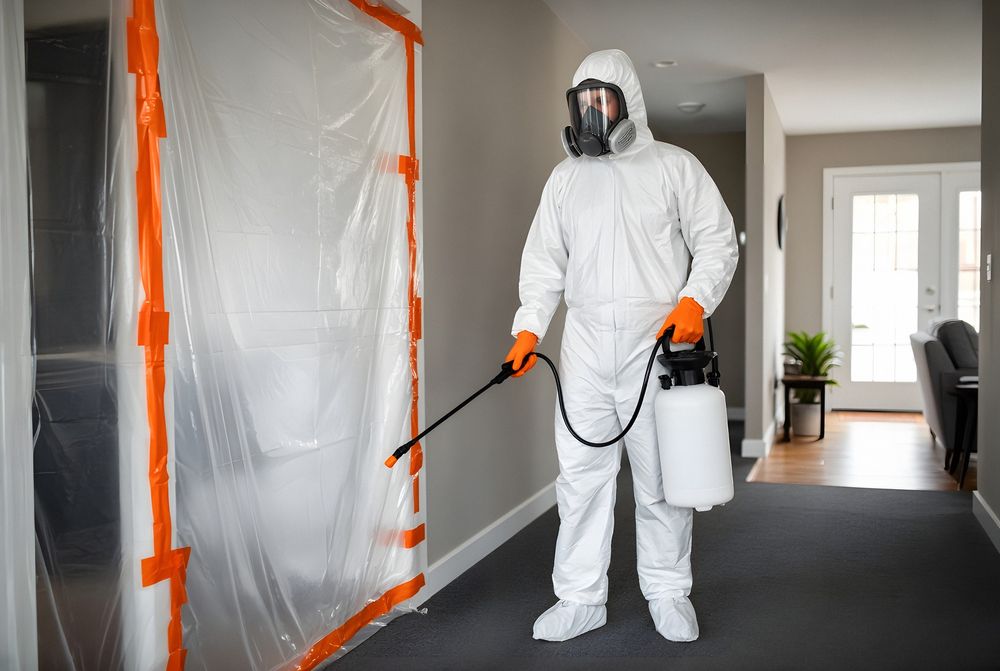
- Containment. The affected area is isolated so contamination doesn't spread to clean areas.
- Extraction. Standing sewage and water are removed.
- Removal. Contaminated porous materials are removed. Drywall is typically cut out above the visible water line.
- Cleaning and disinfection. Remaining structure and non-porous contents are cleaned and treated with disinfectants appropriate for sewage.
- Drying coordination. The structure must be dried thoroughly to prevent mold growth. We coordinate drying with moisture monitoring.
- Odor control and final documentation.
Crawlspaces and basements
Sewage under a house, from a broken drain line or a septic backup, can go unnoticed until odor or insects appear. Crawlspace cleanup usually involves removing the vapor barrier and saturated soil or debris, cleaning and disinfecting, drying, and installing a new vapor barrier.
Insurance
Coverage for sewage backups varies a great deal. Many homeowner policies exclude sewer or drain backup unless a specific endorsement was purchased, and flood is typically covered only under a separate flood policy. We provide the documentation insurers commonly request. Your insurer decides coverage.