When a death goes undiscovered
An unattended death is one where a person dies alone and isn't found for some time. That can be hours, days or weeks. Often the person lived alone, and the discovery comes through a welfare check, a landlord, a neighbor who noticed an odor, or a relative who couldn't reach them. Once the medical examiner or coroner has removed the decedent and released the property, the family or owner faces a space that is affected far beyond what is visible.
Decomposition starts soon after death. Fluids are released and move by gravity and capillary action into whatever the body rested on: mattresses, upholstery, carpet and pad, and then subflooring, joists, concrete or the floor below in multi-story buildings. Gases carry strong, persistent odors that penetrate drywall, insulation, fabrics and HVAC systems. Depending on the season and how long the death went undiscovered, insects may also be present.
What remediation involves
Unattended death cleanup is mostly a question of how far the contamination reached. Two deaths in similar rooms can need very different scopes, depending on time, temperature, the surfaces involved and airflow.
- Assessment. The affected area is traced from the visible stain outward and downward. Subfloor, wall bases, adjacent rooms and HVAC returns are checked.
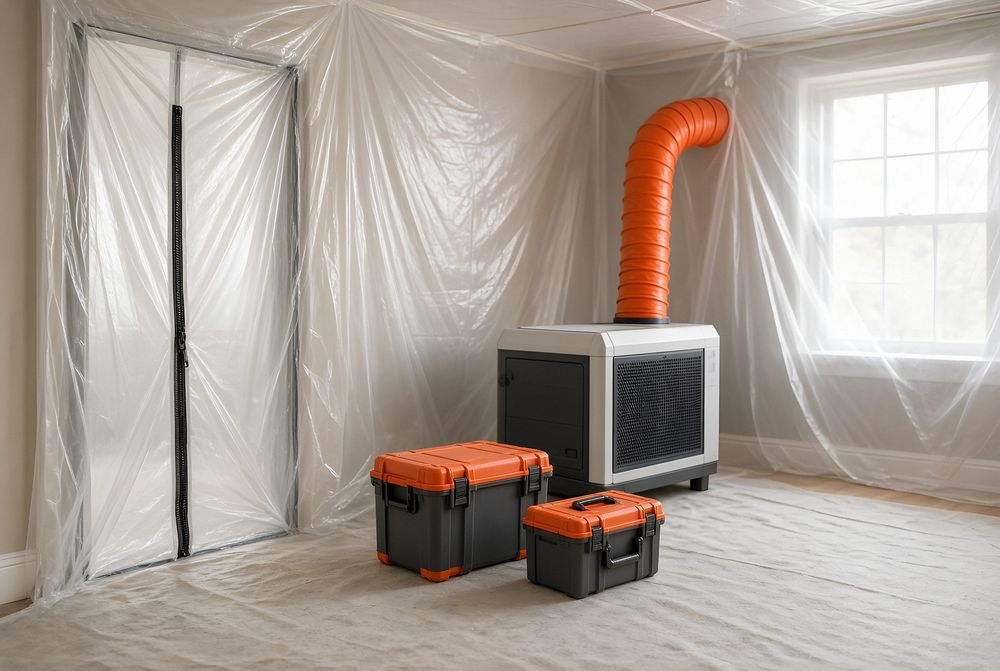
- Removal of affected materials. Porous items that have absorbed fluids, such as mattresses, upholstered furniture, carpet and pad, are removed and packaged for proper disposal. Affected sections of subfloor, drywall or trim are cut out in controlled sections.
- Structural cleaning. Exposed framing and concrete are cleaned and treated. Where some odor remains bound in a structural material after cleaning, a sealing or encapsulation step may be recommended before rebuilding.
- Insect remediation. Insect activity is cleaned up as part of the decontamination. If an active infestation continues, a licensed pest professional may be needed.
- Odor elimination. Deodorization works on the source first, then on residual odor in the air and in materials, using methods suited to the space.
- Documentation. Photographs and a written record of the scope support insurance claims, estate administration and repairs.
Personal property and the estate
Families are often handling the estate at the same time as the cleanup. Personal papers, photographs, jewelry and keepsakes are frequently in or near the affected area. We can recover, clean and return items where that is safe, and we set questionable items aside for the family to decide on. We also coordinate with executors, landlords and property managers when more than one party has an interest in the property.
Apartments and shared buildings
In apartments and condominiums, fluids and odor can reach neighboring units through floor assemblies, shared walls and ventilation. Landlords and associations need the affected unit assessed and the adjoining areas checked. Our apartment unattended death cleanup page covers the coordination with property managers and neighbors this usually requires.
Safety
Decomposition fluids can contain pathogens, and the odor alone can make people ill. We strongly discourage family members from cleaning these areas themselves or removing items before an assessment. Keep the space closed, keep people and pets out, and, where it is practical, turn off the forced-air heating or cooling serving that area so odor doesn't spread through the home.
What happens next
When you call, a coordinator will ask about the property, roughly how long the death went undiscovered (if known), the surfaces involved and who is authorized to approve work. You'll receive a written scope before work begins, and nothing is removed or discarded without that authorization.