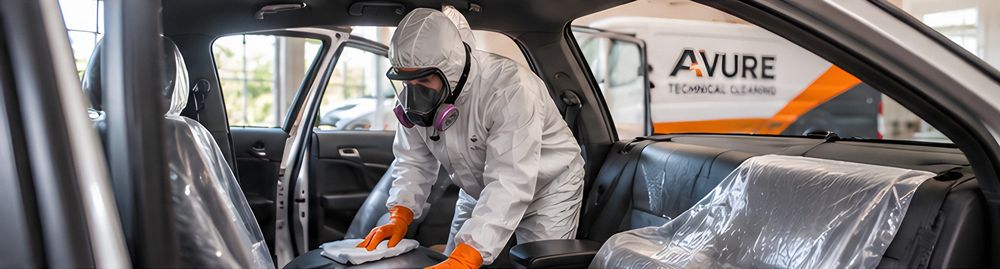
Why vehicles are hard to decontaminate
Vehicle interiors are small and enclosed, and they are built from layered porous materials: seat foam over springs and frames, carpet over sound-deadening padding, headliners on fiberboard, plus a ventilation system that pulls air through hidden ducts. Blood, bodily fluids or residue in a vehicle seldom stays on the surface. It wicks into seat foam, runs into seat tracks and wiring harness channels, and soaks the padding under carpet.
Detail shops are not set up to handle biohazards safely, and standard detailing doesn't reach where contamination usually ends up. Vehicle biohazard remediation applies the same principles used in buildings — find everything affected, remove what can't be decontaminated, clean and disinfect the rest, and dispose of waste correctly — inside a much smaller and more complex space.
Situations we handle
- Blood and bodily fluids after injuries, assaults, suicides, overdoses or medical events in a vehicle.
- Decomposition after a death went undiscovered in a vehicle, which can saturate seats and carpet and produce severe odor.
- Drug residue, including vehicles used for smoking or transporting drugs, or seized vehicles with suspected methamphetamine or fentanyl contamination. Some states, including Tennessee, have specific guidance for quarantined vehicles.
- Fleet and public-safety vehicles such as patrol cars, ambulances, transport vans and rideshare or rental fleets that need documented decontamination after an incident.
- RVs, campers and boats, which combine living-space materials with vehicle systems.
How the work is done
- Assessment. We identify the affected areas, check under seats and carpet, and inspect ventilation intakes.
- Component removal. Seats, carpet, padding and trim panels are removed as needed to reach the contamination.
- Cleaning and disinfection. Hard surfaces and components are cleaned and treated with EPA-registered disinfectants. Saturated porous components are typically replaced rather than cleaned.
- Ventilation and odor treatment. The cabin air system is cleaned and deodorized, and the cabin air filter is replaced.
- Documentation. Photographs and a written scope support insurance, fleet records or resale disclosure.
Total loss or remediation?
Sometimes the cost of remediation and replacement parts approaches the vehicle's value. We'll give you a scope you can share with your insurer or fleet manager so the decision to remediate or total the vehicle is an informed one. Insurers make coverage decisions. We supply documentation.
Before you call
If law enforcement is involved, make sure the vehicle has been released. Don't drive a contaminated vehicle or let others ride in it. Keep windows closed so the contamination stays contained, and park it in a secure place.