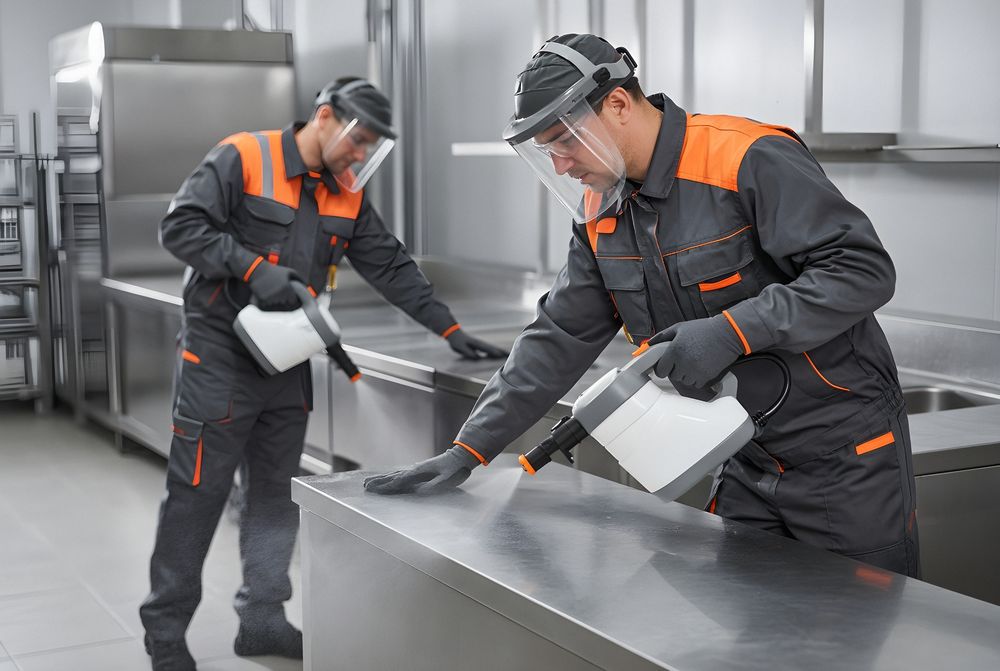
Technical cleaning, defined
"Technical cleaning" is cleaning where the method matters as much as the result. That includes environments with hazards to workers, processes that can be disrupted or contaminated by cleaning itself, equipment that needs specific procedures, and clients who need a documented record of what was done. Industrial technical cleaning sits between routine janitorial service and specialized environmental remediation.
Where it applies
- Industrial biohazard events. Workplace injuries or deaths on a production floor, in machinery or in confined areas, where the cleanup has to account for equipment, lockout and production schedules.
- Warehouses and distribution centers. Contamination from spilled products, rodent or bird activity, sewage events or trauma incidents across large floor areas and racking.
- Manufacturing facilities. Planned deep cleaning of production areas and equipment, coordinated with shutdowns.
- Food processing support. Sanitation support that complements, but does not replace, the plant's own sanitation program, HACCP plan and regulatory obligations.
- Cleanrooms and controlled environments. Cleaning that follows the facility's protocols, gowning requirements and materials restrictions.
- Data centers and critical environments. Low-disruption cleaning of raised floors, plenums and white space under the operator's procedures.
- Equipment decontamination. Cleaning and decontaminating machinery, tools and vehicles after a contamination event or before transfer or disposal.
- Chemical residue and non-emergency hazardous material cleanup. Planned cleanup of residues and small spills after emergency response is complete, by personnel with appropriate hazardous-materials training.
Safety planning comes first
Industrial work introduces hazards that ordinary cleaning crews don't face, including energized equipment, confined spaces, chemical exposure, fall hazards and mobile equipment. Projects are planned with the facility's safety team, and work follows the site's lockout/tagout, confined space and permit procedures and applicable OSHA requirements. Where a task requires specific training or certification, such as permit-required confined space entry or HAZWOPER-level hazardous materials work, it is assigned only to personnel holding that qualification.
What we need from you
- Site safety rules, permits and contacts
- Safety Data Sheets for chemicals involved
- Equipment manufacturer cleaning guidance, where relevant
- Production schedules and any restrictions on cleaning agents or methods
Documentation
Industrial clients often need records for internal audits, customers or regulators. We provide scope, methods, products used (with SDS), waste manifests where applicable, and photographs. Our guide to decontamination documentation explains what a good record contains.
Emergency response is separate
Active releases, fires and uncontrolled spills belong to emergency responders and licensed emergency response contractors. Our work starts once the scene is stable and the responsible authority has released it.