What counts as a biohazard
In property remediation, a biohazard is biological material that can transmit disease or cause illness to people who contact it. In practice that means blood and other potentially infectious materials, bodily fluids such as vomit, feces and urine, sharps and used needles, medical waste outside a controlled setting, decomposition, and surfaces contaminated by infectious organisms such as norovirus, C. difficile or MRSA.
Biohazards are a problem because they are rarely confined to what you can see. Fluids soak into porous materials, residues dry on surfaces that look clean, and improper cleaning can spread contamination to new areas. Biohazard remediation is the planned process of finding everything that is affected, removing what can't be decontaminated, cleaning and disinfecting what can, and disposing of the waste correctly.
Situations we handle
- Residential biohazards: blood or fluids from injuries, illness or death; human or animal waste; sharps found in a home or rental.
- Infectious disease contamination: targeted decontamination after illness or outbreaks in homes and facilities.
- Commercial and public incidents: bodily fluid events in restrooms, retail stores, hotels, schools and workplaces.
- Sharps and medical waste: discarded needles and medical waste found on property, packaged and disposed of according to regulated-waste rules.
- Contaminated property: properties that need broad decontamination before they can be repaired, rented or sold.
How the work is done
- Assessment. We identify the material involved, how far it has spread and which surfaces are affected. Porous and non-porous materials are treated differently.
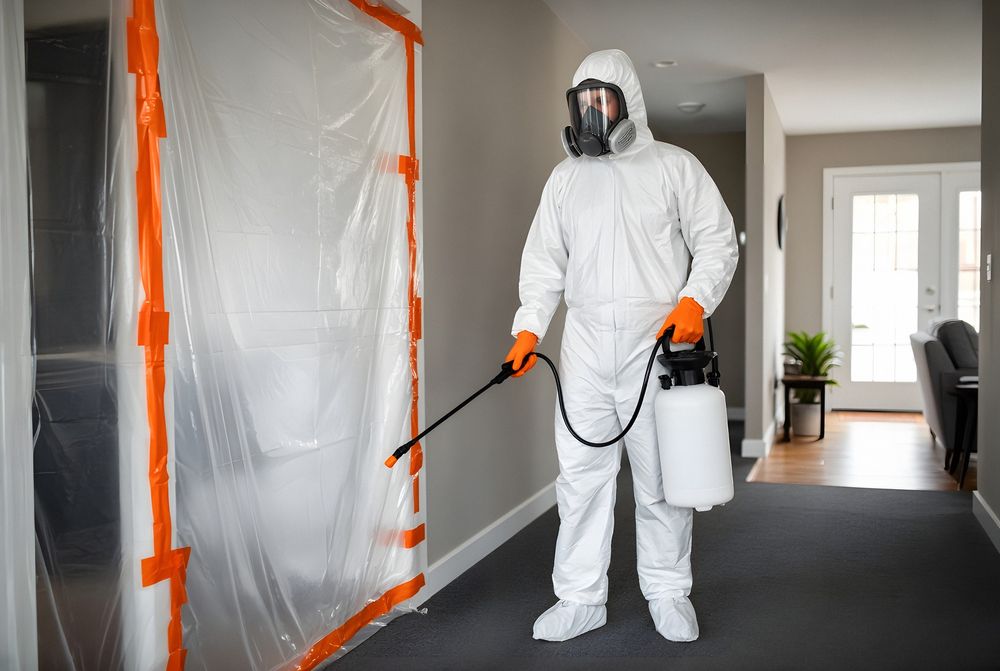
- Protection. Technicians wear protective equipment suited to the hazard, and work areas are contained to prevent cross-contamination.
- Removal. Gross contamination and affected porous materials are removed and packaged.
- Cleaning, then disinfection. Surfaces are cleaned first, because soil and organic matter reduce disinfectant effectiveness. They are then treated with EPA-registered disinfectants, used according to label directions including contact time.
- Verification. The work is checked against the scope. Where it suits the situation, surface testing such as ATP monitoring is used as an additional check on cleaning quality.
- Waste handling. Regulated waste is packaged, labeled and transported for disposal under applicable state and local requirements.
Regulations that apply
Several frameworks shape biohazard work. OSHA's Bloodborne Pathogens Standard (29 CFR 1910.1030) governs employers whose workers can be exposed to blood and other potentially infectious materials. Disposal of regulated medical waste is governed mainly by state environmental and health agencies, so the rules vary by state. Disinfectants used for these claims must be registered with the U.S. EPA. The details differ from project to project, and we'll tell you which requirements apply to yours.
Limits and honest expectations
Not everything can be saved. Mattresses, upholstered furniture, carpet and pad, and drywall that have absorbed blood or fluids usually can't be reliably decontaminated and are removed. We'll explain those decisions and get your approval before removing anything. We also don't diagnose illness or give medical advice. If someone may have been exposed, contact a healthcare provider.
Related services
Use the pages in this category for specific situations, including bodily fluid cleanup, needle and sharps removal, infectious disease decontamination, MRSA and C. diff decontamination, norovirus cleanup, medical waste cleanup and biohazard waste disposal coordination.