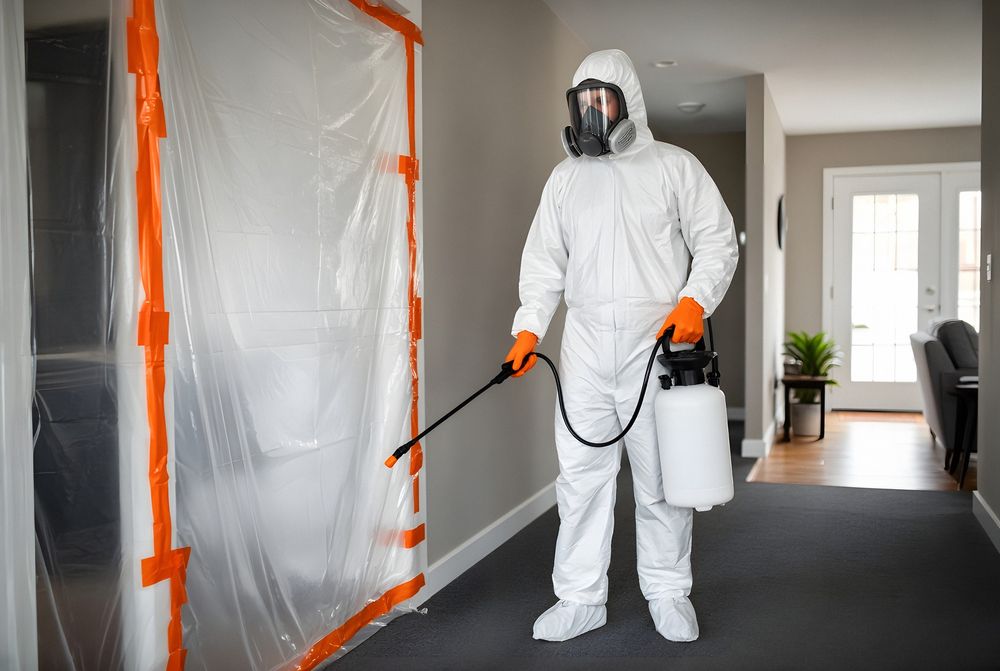
What crime scene and trauma cleanup covers
After law enforcement, medical examiners and investigators release a scene, the property owner is left with the physical aftermath. Trauma cleanup is the removal and decontamination of blood, bodily fluids, tissue and anything they have reached, so the space can be safely used, repaired or reoccupied.
The work applies to many kinds of events: homicides and assaults, suicides and self-inflicted injuries, accidental deaths and serious injuries at home or work, gunshot incidents, and incidents in vehicles. What they share is biological material that may carry bloodborne pathogens and that seldom stays where it first landed. Blood can soak through carpet and pad into subflooring, run behind baseboards, spread into wall cavities through outlets and gaps, and settle into upholstery and mattresses where it can't be seen.
Why this is different from ordinary cleaning
Household cleaning removes what is visible. Trauma remediation has to find and treat everything that is contaminated, including what is hidden, and has to do it without exposing occupants or workers. The work is organized around three questions:
- Where did the material go? Technicians trace fluid paths through porous and semi-porous materials and check adjacent rooms, floor levels and HVAC returns.
- What can be cleaned, and what must be removed? Non-porous surfaces such as sealed tile, glass and metal can usually be cleaned and disinfected. Porous materials that have absorbed blood, such as carpet, pad, drywall, mattresses and some upholstery, generally can't be reliably decontaminated and are removed.
- How will waste be handled? Material containing blood or other potentially infectious materials is packaged and disposed of according to state and local regulated-waste rules.
How a project is carried out
- Confidential intake. You describe what happened, the property type and whether the scene has been released. You don't need to give more detail than you're comfortable with.
- Assessment. The affected area and any secondary contamination are mapped, and a written scope is prepared before work begins.
- Containment and protection. Work areas are isolated, and technicians use personal protective equipment suited to bloodborne hazards. OSHA's Bloodborne Pathogens Standard (29 CFR 1910.1030) sets the baseline employer requirements for this exposure.
- Removal and cleaning. Gross contamination is removed, affected porous materials are cut out in controlled sections, and remaining surfaces are cleaned and then disinfected with EPA-registered products used as the label directs.
- Odor control. Where odor remains, deodorization targets the source. It doesn't just mask the smell.
- Verification and documentation. The work is checked against the scope. Photographs and a written record show what was removed and what was cleaned, which helps with insurance and with any later repairs.
Discretion
Families and businesses rarely want their neighbors, tenants or customers to know what happened. Crews can arrive in a way that draws as little attention as practical, and we keep conversations about your project confidential. If personal belongings, documents or keepsakes are in the affected area, we can recover, clean and return items where that is safe, or set them aside for your decision rather than discarding them.
What we won't do
We don't enter a scene before law enforcement or a medical examiner releases it, and we don't move or handle evidence. We don't give legal advice about responsibility for cleanup costs. We also don't promise specific arrival times before we know the job and its location. Some structural repairs, such as replacing subfloor, drywall or flooring, are reconstruction rather than remediation. We can coordinate that handoff, and the repair work may be done by a separate contractor.
Services in this category
The pages below cover specific situations, including homicide and suicide cleanup, blood cleanup, gunshot incidents, workplace accidents and cleanup for businesses. Each page describes the particular hazards and decisions involved.
Paying for trauma cleanup
Many homeowner and commercial property policies provide some coverage for biohazard cleanup, depending on the policy terms and the cause. Some states' crime victim compensation programs reimburse certain crime scene cleanup costs for eligible victims. We can supply the scope, photographs and itemized documentation that insurers and compensation programs commonly ask for. Coverage decisions belong to the insurer or program.