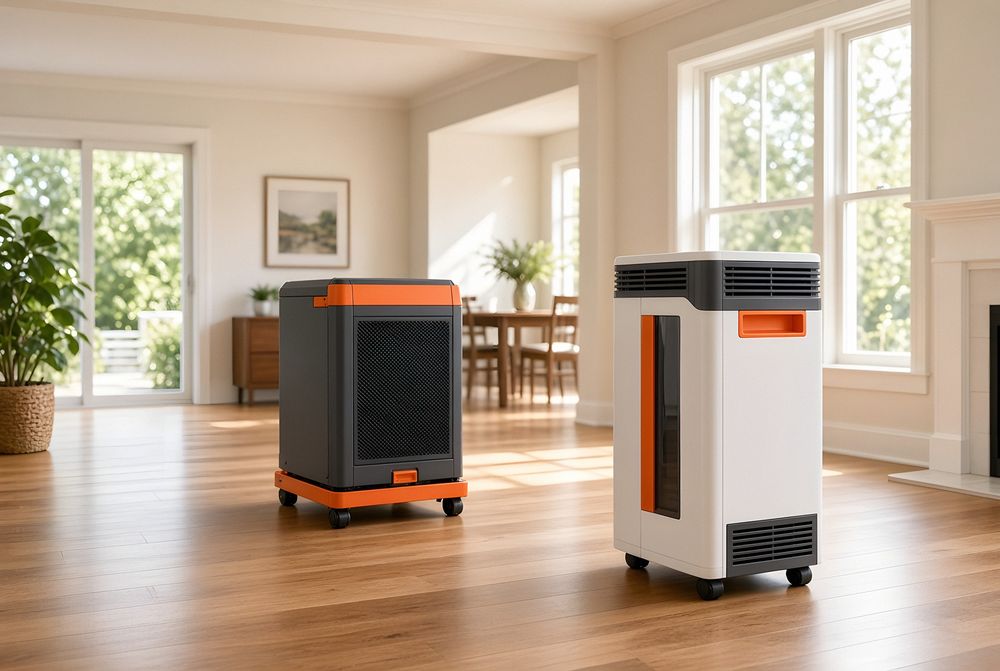
Ozone generators and hydroxyl generators are two of the most common tools professionals use to remove odors after source removal. They work differently and have different safety profiles. Understanding the difference helps you ask the right questions when a company proposes air treatment.
The shared principle
Both tools produce reactive molecules that break down odor-causing compounds through oxidation. Neither removes the material producing the odor. If saturated carpet pad, subfloor, upholstery or ductwork remains, odor comes back. Air treatment is the last step, not the first.
How ozone generators work
Ozone generators produce ozone (O3), usually by passing air through an electrical field. Ozone is a strong oxidizer that reacts with many odor compounds on surfaces and in the air.
Strengths:
- Fast-acting at high concentrations
- Reaches surfaces throughout a closed space
- Effective on many stubborn odors after source removal
Limits and risks:
- Ozone is a lung irritant. The EPA warns that ozone can damage the lungs, and that relatively low amounts can cause chest pain, coughing, shortness of breath and throat irritation.
- The EPA notes that at concentrations that don't exceed public health standards, ozone has little potential to remove indoor air contaminants, which means effective odor treatment requires concentrations that are unsafe for people.
- High concentrations over time can degrade rubber, some plastics, fabrics and artwork.
- Ozone can react with other indoor chemicals and form byproducts.
Professional use: ozone is used only in unoccupied spaces, with people, pets and plants removed, and the space is ventilated thoroughly before anyone returns.
How hydroxyl generators work
Hydroxyl generators use ultraviolet light to create hydroxyl radicals from water vapor and oxygen in the air. Hydroxyl radicals are highly reactive and break down odor compounds, then quickly react away.
Strengths:
- Generally marketed for use in occupied spaces according to manufacturer guidance, allowing people to remain nearby during treatment in many cases
- Less likely to damage materials than high-concentration ozone
- Useful for longer, continuous treatment
Limits:
- Slower than high-concentration ozone
- Works best with good air circulation through the space
- Still doesn't remove the source
Choosing between them
Professionals choose based on:
- Occupancy: hydroxyl when people or pets must stay; ozone only when the space can be vacated.
- Severity: heavy odors after source removal may be treated faster with ozone in an empty space.
- Materials: sensitive contents may favor hydroxyl.
- Timeline: ozone can be faster; hydroxyl may run for several days.
Some projects use both: ozone during unoccupied phases, hydroxyl afterward.
Consumer ozone machines
Ozone generators are widely sold to consumers as air purifiers or odor removers. The EPA does not recommend using ozone generators in occupied spaces, and states such as California regulate ozone-emitting air cleaners. If you use any ozone device, never run it while people or pets are present, and follow manufacturer instructions for ventilation.
A practical example
After an unattended death in a small house, crews remove the mattress, carpet, pad and stained subfloor, clean and seal the joists, and clean the HVAC returns. With the house empty, they run ozone treatment over a period and then ventilate. When the family begins visiting to sort belongings, hydroxyl units run for several more days to address residual odor in contents and fabrics.
Common mistakes
- Running ozone before removing the source
- Running ozone in occupied spaces
- Relying on air treatment instead of HVAC cleaning
- Not ventilating adequately after ozone treatment
- Expecting any machine to fix odor trapped in saturated materials
Protecting contents during treatment
Before ozone treatment, professionals remove or protect sensitive items such as artwork, rubber-based items, some electronics, plants and food. Hydroxyl treatment is gentler, but contents should still be clean before treatment so odor isn't trapped in them.
Questions to ask a company
- What sources will you remove before air treatment?
- Which method will you use, and why?
- Will we need to leave, and for how long?
- How will you protect contents and the HVAC system?
- How will you verify odor removal?
Frequently asked questions
Is ozone dangerous?
Ozone is a lung irritant. Used professionally in empty spaces with proper ventilation, risks are managed; it shouldn't be used where people or pets are present.
Are hydroxyl generators completely safe?
They are generally designed for occupied spaces, but follow manufacturer guidance and professional advice.
Can these machines remove smoke odor?
They can help after cleaning surfaces and HVAC, but smoke residue on surfaces must be removed first.
Will air treatment kill mold?
It isn't a substitute for mold remediation, which requires moisture control and removal of growth.
How long does treatment take?
Ozone treatments may take hours to a day or more; hydroxyl treatments often run for several days.
Can I rent one?
Equipment is available, but improper use, especially of ozone, carries health risks. Professional use is safer.
Do these machines replace HVAC cleaning?
No. Contaminated filters and ducts must be cleaned or replaced; air treatment comes afterward.
Key takeaways
Ozone and hydroxyl generators both oxidize odor molecules, but neither removes sources. Ozone is fast and powerful but is a lung irritant and must be used only in unoccupied spaces with ventilation afterward. Hydroxyl is slower and generally suitable for occupied spaces. Professionals choose based on occupancy, severity, materials and timeline, after source removal.
Sources
This guide is general information. It is not legal, medical, environmental or safety advice. Rules vary by state and locality. For a specific situation, consult the relevant agency or a qualified professional.