Tools, not magic
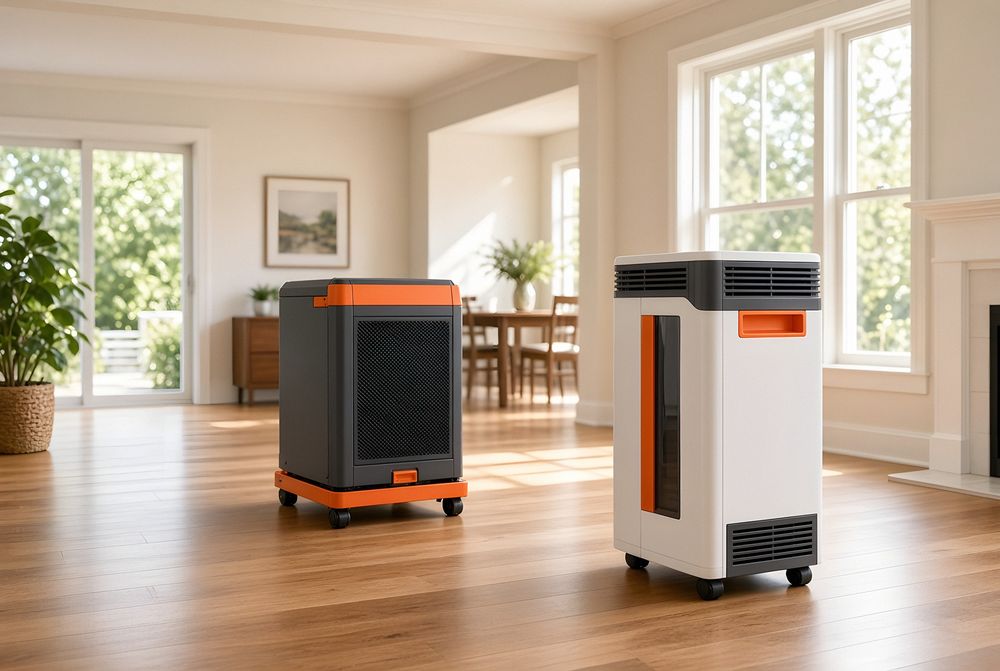
Ozone generators and hydroxyl generators are two of the most common professional deodorization tools. Both work by producing reactive molecules that break down odor compounds. Neither removes the source. If decomposition fluid, urine or smoke residue is still in the materials, odor returns after treatment. In our projects, deodorization follows source removal and cleaning.
Ozone
Ozone (O3) is a strong oxidizer. It can be effective on stubborn odors in structures and contents. It is also a lung irritant. U.S. EPA has noted that ozone generators sold as air cleaners can produce ozone at levels harmful to health and are not effective at removing many indoor pollutants at safe levels. For professional deodorization this means:
- People, pets and plants are removed during treatment.
- Spaces are closed and posted.
- Treatment is followed by an adequate ventilation period before reentry.
- Some materials, such as rubber and certain fabrics, can be degraded by high ozone levels.
Hydroxyl
Hydroxyl generators produce hydroxyl radicals from ambient air and UV light. They work more gradually than ozone, and manufacturers generally permit use in occupied spaces under their guidance. That makes them useful in occupied homes and businesses, or for longer treatment periods.
Choosing between them
We choose based on the odor type, the materials, whether the space can be vacated, the timeline and the remaining contents. Sometimes both are used in sequence.
Our process
- Confirm that the source has been removed and surfaces cleaned.
- Choose the method and set up equipment with HVAC and air movement considered.
- Treat for an appropriate duration.
- Ventilate and verify after the space is closed and warmed.
Common questions
Is ozone safe?
Not for people or pets while it's running. With proper procedures it can be used safely in unoccupied spaces.
How long does treatment take?
From hours to several days, depending on the odor, space size and method.
Can I rent an ozone machine myself?
You can, but misuse creates health risks and often fails because the source wasn't removed.