When law enforcement seizes a clandestine drug lab, the arrests and news coverage are only the beginning for the property. The owner, who is often not the person who ran the lab, is left with a building that may be contaminated, under restrictions and difficult to sell, rent or insure. This guide explains what typically happens next, with a focus on methamphetamine labs, which are the most regulated.
Step 1: Removal of bulk hazards
After a seizure, law enforcement and specialized contractors remove chemicals, equipment, containers and waste that pose immediate hazards. The DEA operates a clandestine laboratory cleanup program that supports this removal for state and local agencies. This step makes the site safer, but it does not decontaminate the building. Residue on walls, floors, fixtures, ductwork and plumbing remains.
Step 2: Notices and restrictions
Depending on the state, the owner and local health officials may receive notice that the property was used as a lab, and the property may be placed under quarantine or occupancy restrictions:
- Tennessee quarantines properties connected with clandestine meth lab activity, publishes a registry, and requires testing by a certified specialist and decontamination by an authorized contractor before release.
- North Carolina's State Bureau of Investigation notifies owners and local health departments when a lab is seized, and the state's rules require a pre-decontamination assessment before reoccupancy.
- West Virginia requires notified residential properties to remain unoccupied until remediation is certified, and remediation can't begin until the state accepts a preliminary plan.
- Kentucky and Arkansas require decontamination by state-certified contractors, and Arkansas keeps a public list of contaminated properties.
- Other states rely on voluntary guidance or local rules.
Keep every notice you receive; it determines which process applies.
Step 3: Securing the property
The property should be secured to prevent entry. Utilities may need to be shut off or maintained depending on the situation. Insurance should be notified, although many policies exclude damage from illegal activity.
Step 4: Assessment and testing
A qualified professional, certified where the state requires it, assesses the property: where cooking or storage occurred, visible staining or damage, plumbing and septic concerns, outdoor dumping or burn areas, and HVAC contamination. Wipe samples quantify residue. The assessment drives the cleanup plan, and some states require it to be submitted for review.
Step 5: Decontamination
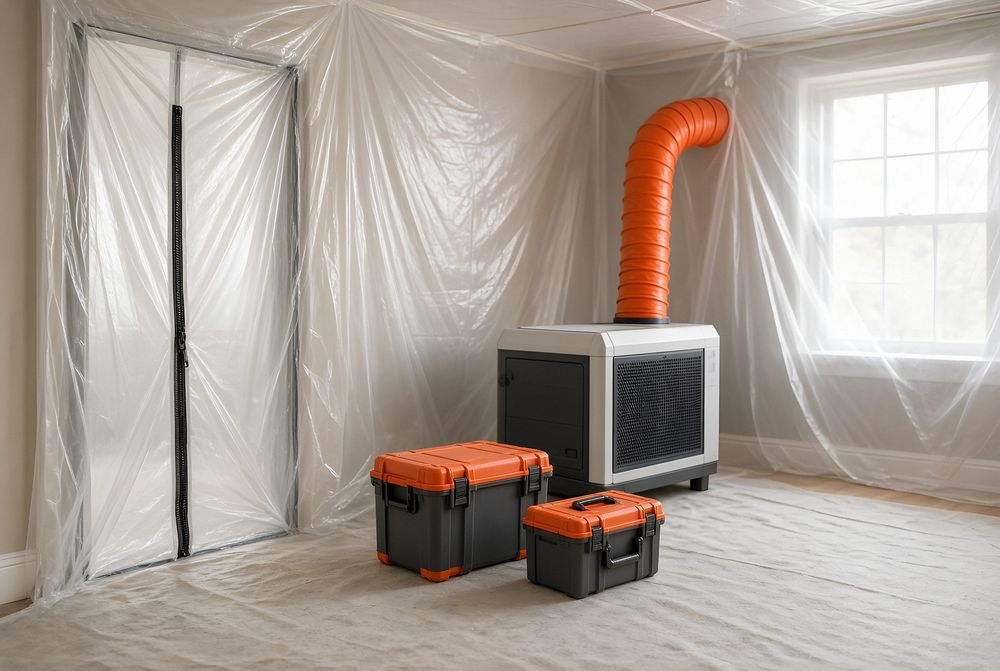
Decontamination is performed by contractors certified or authorized where the state requires it. Typical work includes removing contaminated carpet, furnishings and sometimes drywall and fixtures; washing all hard surfaces repeatedly; cleaning or replacing HVAC components; addressing plumbing traps and septic systems; and encapsulating cleaned surfaces where appropriate.
Step 6: Clearance and release
Post-cleanup sampling confirms whether residue meets the applicable standard. In regulated states, the results and a final report go to the state agency, which releases the property or removes it from its list. Only then can the property be legally occupied in those states.
Owners who weren't involved
Landlords and owners are often unaware a tenant or relative was running a lab. Despite that, they're usually responsible for the cleanup. Options for recovering costs may include the security deposit, claims against the responsible person, and, rarely, insurance. Consult an attorney.
Selling or renting afterward
A property that has been decontaminated and released can usually be sold or rented. Disclosure requirements vary by state; several states require disclosure of known meth lab history. Keep all reports and release documents.
Neighbors and the community
Neighbors often worry about contamination spreading. Residue generally stays in the property where the lab operated, though outdoor dumping can affect soil. Local health departments can address community concerns.
Outdoor areas and septic systems
Labs frequently dump waste outside or down drains. Burn pits, stained soil, dead vegetation and buried containers may need environmental assessment. Septic systems that received chemical waste may need evaluation and pumping by a licensed contractor. These areas are often overlooked in quick cleanups but can matter for state release.
Frequently asked questions
Does the government pay for cleanup?
Bulk hazard removal after a seizure is handled by law enforcement programs. Decontaminating the property is generally the owner's responsibility.
How long does the process take?
From seizure to release can take weeks to months, depending on testing, contractor availability, state review and repairs.
Can I live in the property while it's quarantined?
Not in states that prohibit occupancy until release. Check the notice and state rules.
Can I clean it myself to save money?
In regulated states, decontamination must be done by certified or authorized contractors. Elsewhere, professional cleanup is still strongly recommended.
Will the property stay on a registry forever?
In states with registries, properties are typically removed or marked released after the state approves the final report.
Key takeaways
After a lab bust, law enforcement removes bulk chemicals, but the property remains contaminated. Owners may receive notices and quarantines, and must secure the property, arrange assessment and testing, hire certified or authorized contractors where required, and complete clearance before the state releases it. Keep every document for future sale or rental.
Sources
- DEA: Environmental Management Programs
- EPA: Voluntary Guidelines for Methamphetamine and Fentanyl Laboratory Cleanup
- Tennessee Department of Environment and Conservation: Meth Lab Cleanup
- North Carolina DHHS: Methamphetamine
- North Carolina G.S. 130A-284
- West Virginia: Clandestine Drug Lab Remediation
- Kentucky Energy and Environment Cabinet: Methamphetamine Lab Cleanup
- Arkansas DEQ: Clandestine Lab Remediation
This guide is general information. It is not legal, medical, environmental or safety advice. Rules vary by state and locality. For a specific situation, consult the relevant agency or a qualified professional.