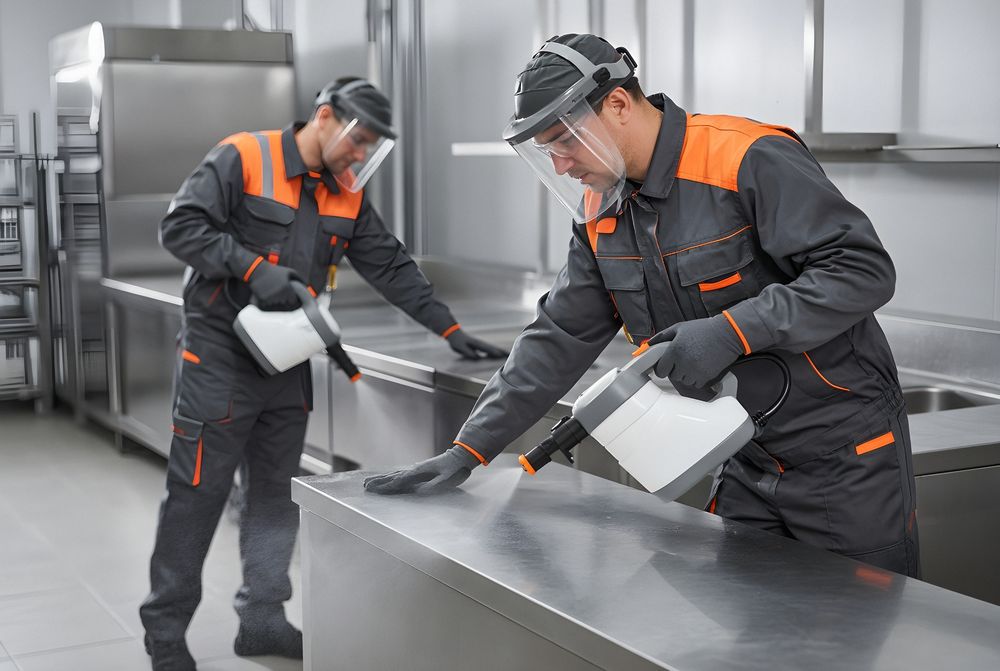
Returning equipment to service
Equipment can be contaminated in many ways: blood and tissue after an accident, bodily fluids, sewage or floodwater, drug residue, animal waste, or chemical residue. Before it can be used, serviced, sold or shipped, it often needs documented decontamination, both to protect workers and technicians and because buyers, lessors and repair shops may require it.
We arrange decontamination for:
- Production machinery and conveyors after workplace incidents
- Forklifts, carts and vehicles involved in incidents
- Tools and portable equipment
- Furniture, fixtures and office equipment from biohazard or flood-affected spaces
- Medical and laboratory equipment being removed, sold or returned at lease end (cleaning only, not medical device reprocessing)
How it works
- Identify the contamination and the equipment's materials, electrical components and manufacturer guidance.
- Coordinate isolation, such as lockout/tagout or disconnection, with your authorized personnel.
- Remove gross contamination, then clean surfaces.
- Disinfect or neutralize as appropriate for the contaminant, using methods that won't damage the equipment.
- Identify parts to replace that can't be decontaminated, such as some belts, foam, upholstery or filters.
- Verify with inspection and, where useful, ATP or residue testing.
- Document the work in a decontamination record that can go with the equipment.
Decontamination certificates
Lessors, repair vendors and buyers often ask for a decontamination statement. We provide a record of the method, products and verification. Whether it meets a particular recipient's requirements is up to that recipient, so share their form with us in advance.
Common questions
Can you clean electrical equipment?
Exteriors, yes, using methods that avoid moisture intrusion. Internal components are left to qualified technicians.
Do you decontaminate equipment off-site?
Most work is done on site. Smaller items can sometimes be moved to a staging area for cleaning.
What about radioactive or highly toxic contamination?
Those require specialized licensed contractors and are outside our scope.