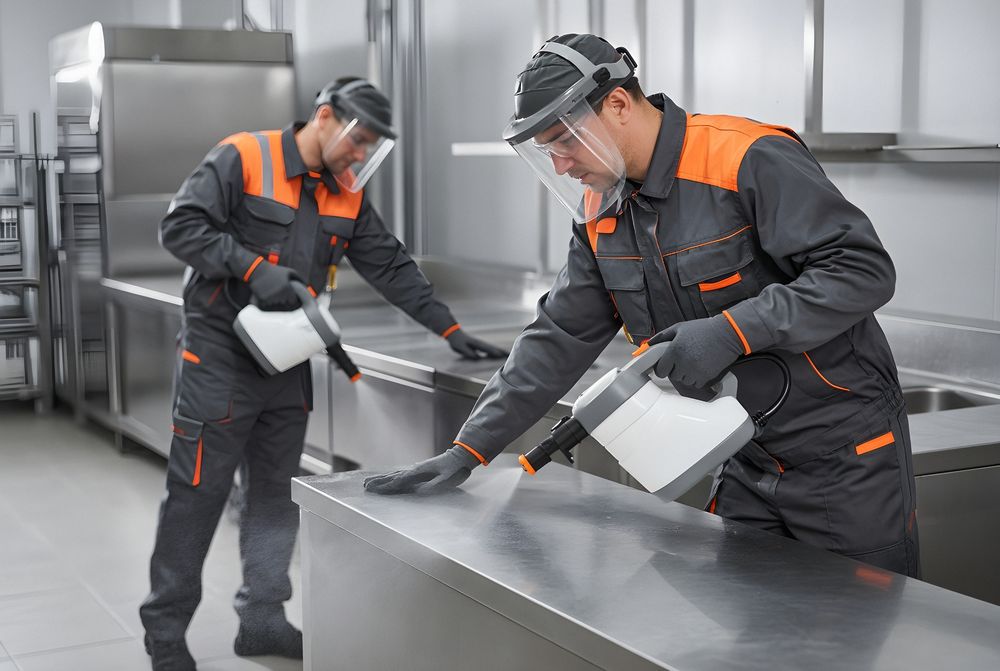
What residue cleanup covers
Chemical residues are films and deposits left on surfaces after spills, process operations, fires, fire suppression discharges or long-term use. They can stain, corrode, contaminate products, create slip hazards or cause skin and breathing irritation. Common examples:
- Oils, greases and lubricants on floors, walls and equipment
- Process residues from manufacturing, printing, finishing or cleaning operations
- Fire suppression agents, such as dry chemical powder, wet chemical agent and foam
- Fire and smoke residue, including acidic soot that can corrode metals and electronics
- Cleaning chemical misuse, such as bleach mixed with other cleaners or excess product left behind
Drug residues, such as methamphetamine or fentanyl, are a separate specialty. See drug residue remediation.
How the work is done
- Identify the residue using safety data sheets, process information and, where needed, sampling.
- Select methods compatible with both the residue and the surface: dry removal, HEPA vacuuming, detergent washing, degreasers, neutralizers or specialized cleaners.
- Protect workers and occupants with PPE and ventilation suited to the chemical.
- Remove residue, collecting wash water and waste for proper disposal.
- Verify with visual inspection, pH testing or other measures suited to the residue.
- Document the work.
Fire suppression discharges
Dry chemical extinguisher and system discharges spread fine powder that can be corrosive, especially in humid conditions. Prompt cleanup protects equipment and electronics. Kitchen suppression systems (wet chemical) leave residue that must be removed before cooking resumes.
Common questions
Is residue from a fire extinguisher dangerous?
It's mainly an irritant, but some agents corrode metals and electronics over time. Clean it up promptly.
Can you test that residue is gone?
Yes. Verification methods depend on the residue, for example surface pH, wipe sampling or visual standards.
Do you clean residues inside equipment?
Exteriors and accessible surfaces, yes. Internal components are referred to the equipment's service technicians.