A sensitive, hazardous job
Cleaning up a former encampment, abandoned lot, under-bridge area or vacant building involves real hazards: hypodermic needles, human waste, rotting food, contaminated bedding and tents, drug residue and sometimes rodents. It also involves people. Local laws and policies often govern how property belonging to unhoused people must be noticed, stored and handled, and many communities coordinate cleanups with outreach services.
We work for property owners, businesses, municipalities, railroads and utilities. We don't remove people from property. Any relocation, notice or enforcement is handled by the property owner, outreach providers and local authorities under their rules. Our role begins once the site is ready for cleanup.
How the work is done
- Plan with the owner and any agencies involved, including notice periods and requirements for storing personal property.
- Sweep for sharps with tools and puncture-resistant containers before bulk debris is moved.
- Separate items that must be stored under local policy from contaminated debris.
- Remove waste, bedding, tents and contaminated debris for proper disposal.
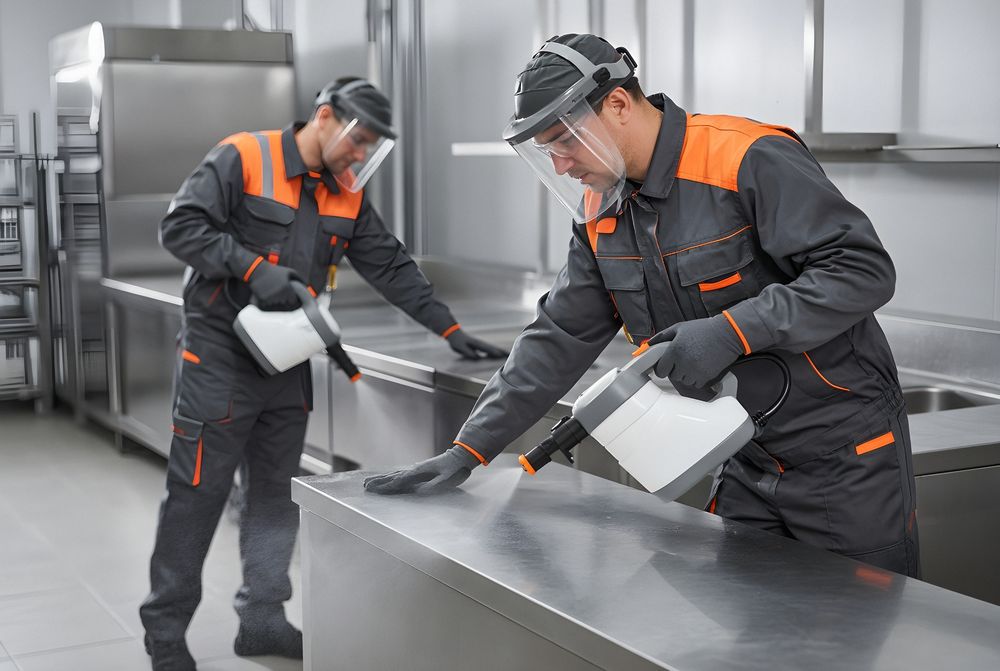
- Clean and disinfect hard surfaces where waste was present, such as concrete, walls and structures.
- Document conditions before and after with photos and quantities removed.
Preventing return problems
After cleanup, owners often secure the site with fencing, lighting, landscaping changes or regular patrols. We can recommend measures and return for periodic sweeps of needles and debris.
Vacant buildings
Abandoned structures used for shelter often contain the same hazards indoors. See vacant property cleanup for building interiors.
Common questions
Do you handle the people living at the site?
No. Notices, outreach and any enforcement are handled by the owner, service providers and authorities. We do the cleanup.
What happens to belongings?
Items that local policy requires to be stored are separated and handled as directed by the property owner or agency.
Do you work with cities and counties?
Yes. We work under municipal purchasing and documentation requirements where we serve.