Beyond routine janitorial
Public restrooms in parks, transit stations, gas stations, libraries, stores and government buildings are where many biohazard problems end up: overdoses, injuries, feces and blood on walls and fixtures, needles in tanks and trash, and long-term misuse. Janitorial crews clean these spaces daily, but heavy contamination, deaths, sharps and drug residue usually need a specialist so staff aren't put at risk.
How the work is done
- Secure the restroom and check for sharps before cleaning begins, including toilet tanks, trash, ceiling tiles, dispensers and partition gaps.
- Collect sharps and paraphernalia into approved containers.
- Remove grossly contaminated items and any damaged porous materials.
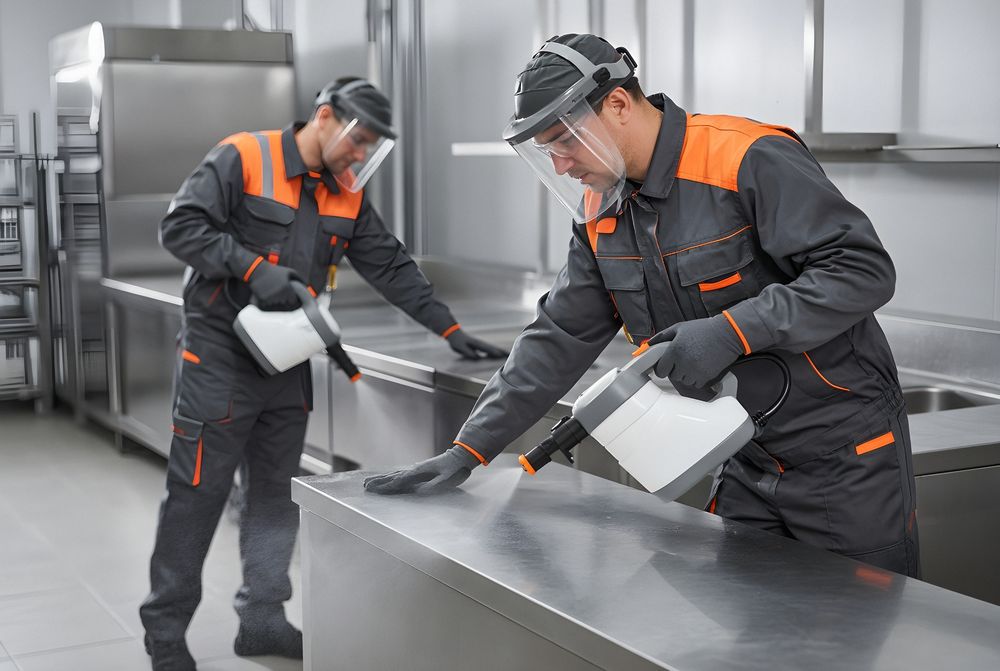
- Clean and disinfect fixtures, partitions, walls, floors, drains and touch points.
- Address drug residue where fentanyl or other drugs are suspected.
- Document the work and photograph conditions before and after.
Repeat problems
When a restroom keeps having incidents, cleaning alone won't fix it. We can share practical changes other property owners use: sharps disposal boxes, durable fixtures, removing ceiling tile access, lighting changes, and scheduled deep cleaning. For municipalities and businesses with several locations, a scheduled program is usually more economical than repeated emergency calls.
Municipal and transit restrooms
Parks departments, transit agencies and public works departments often manage restrooms spread across many sites. We can set up on-call and scheduled service with your purchasing requirements.
Common questions
Can you remove needles from a toilet tank or ceiling?
Yes. Sharps are collected with tools and puncture-resistant containers, never by hand.
Do you provide sharps disposal boxes?
We can recommend options and help you plan where they go. Ongoing collection is typically handled by a medical waste vendor.
Can you come on a regular schedule?
Yes. See our scheduled preventive disinfection programs.