Emergencies first
If a hazardous material release is happening now, causing fumes, fire, injuries or a spread you can't control, call 911. Emergency response belongs to fire departments and hazmat teams.
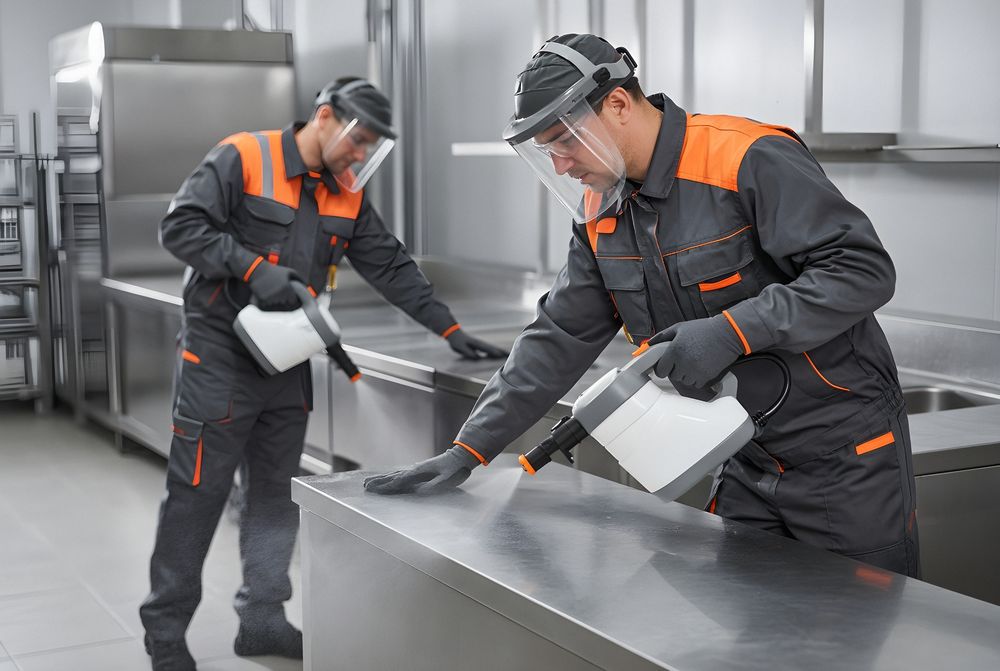
This service covers the non-emergency side: identified materials that need to be cleaned up once the situation is stable. Examples include small spills in a facility, leaking containers found in a building, residue left after a release has been controlled, abandoned containers on a property, and cleanup after a fire department's hazmat team has stabilized a scene.
How we coordinate cleanup
- Identify the material from labels, safety data sheets, process knowledge or sampling.
- Evaluate hazards and requirements. Depending on the material and quantity, cleanup may require crews trained under OSHA's Hazardous Waste Operations and Emergency Response standard (HAZWOPER, 29 CFR 1910.120), specific PPE, and notifications to environmental agencies.
- Assign qualified crews. We arrange this work only through partners with the training, equipment and, where required, licenses for the material involved.
- Contain and remove the material, contaminated absorbents and affected materials.
- Characterize and dispose of waste through licensed transporters and disposal facilities, with manifests where required. As the generator, the property owner signs manifests.
- Clean and verify affected surfaces.
- Document the cleanup for your environmental records and any agency follow-up.
Reporting obligations
Some releases must be reported to state environmental agencies, local emergency planning committees or the National Response Center, depending on the material and quantity. Reporting duties belong to the owner or operator. We don't give legal advice, but we can help you gather the information your environmental counsel or consultant needs.
What's outside our scope
Large-scale releases, unknown materials needing emergency characterization, radioactive materials, explosives and asbestos or lead abatement require specialized licensed contractors. We'll tell you when a job needs one.
Common questions
Can you identify an unknown substance?
Sampling and lab analysis can be arranged. Until it's identified, treat an unknown material with caution and keep people away.
Who signs the hazardous waste manifest?
The generator, usually the property owner or operator, signs. Our partners prepare the paperwork.
Do you handle household hazardous waste?
Small quantities in a home are often best taken to a community household hazardous waste collection. We handle them when they're part of a larger cleanup.