What makes firearm incidents different
A gunshot incident usually spreads biological material farther, and in more directions, than other injuries. Blood and tissue can reach ceilings, the far sides of rooms, inside light fixtures and vents, and behind furniture. Projectiles can pass through drywall, trim, doors and furnishings, carrying contamination into wall cavities and neighboring rooms. Those details are easy to miss and are often what causes odor or staining to return later.
Common settings
- Homes, after a suicide, homicide, accidental discharge or self-defense incident
- Vehicles, where confined space concentrates contamination
- Businesses, hotels, parking areas and public spaces
- Rental units, where neighboring units may also be affected
How the cleanup is done
- Release confirmation. We work only after law enforcement has released the scene, and we don't remove anything investigators have asked to be preserved.
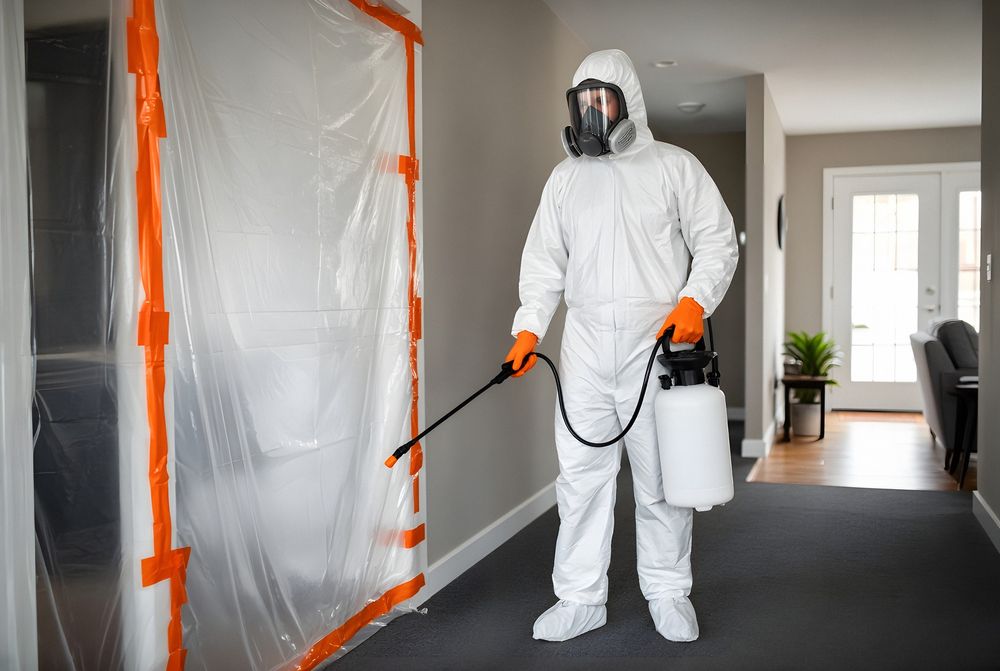
- Full-room assessment. Technicians check ceilings, fixtures, vents, wall cavities behind penetrations and adjacent rooms, not only the floor.
- Controlled removal. Contaminated drywall around penetrations, ceiling material, carpet, pad and upholstery are cut out or removed. Penetration paths are followed through walls.
- Cleaning and disinfection of remaining surfaces with EPA-registered products and appropriate protective equipment.
- HVAC check. Supply and return grilles in the room are inspected and cleaned, and the system is assessed if material reached it.
- Investigative residue removal, such as fingerprint powder or chemical reagents, where present.
- Waste handling and documentation. Regulated waste is packaged for disposal, and you receive photos and an itemized scope.
Firearms and ammunition on site
We don't handle, move or store firearms or ammunition. If any remain on the property, the owner or law enforcement must secure them before work begins.
Repairs
Patching projectile holes, replacing drywall and repainting are repair work. Once remediation is complete, we can coordinate that handoff to your contractor.
Paying for the cleanup
Depending on the circumstances, homeowner or commercial insurance, or a state crime victim compensation program, may cover some costs. We supply documentation. Coverage and eligibility decisions belong to the insurer or program.