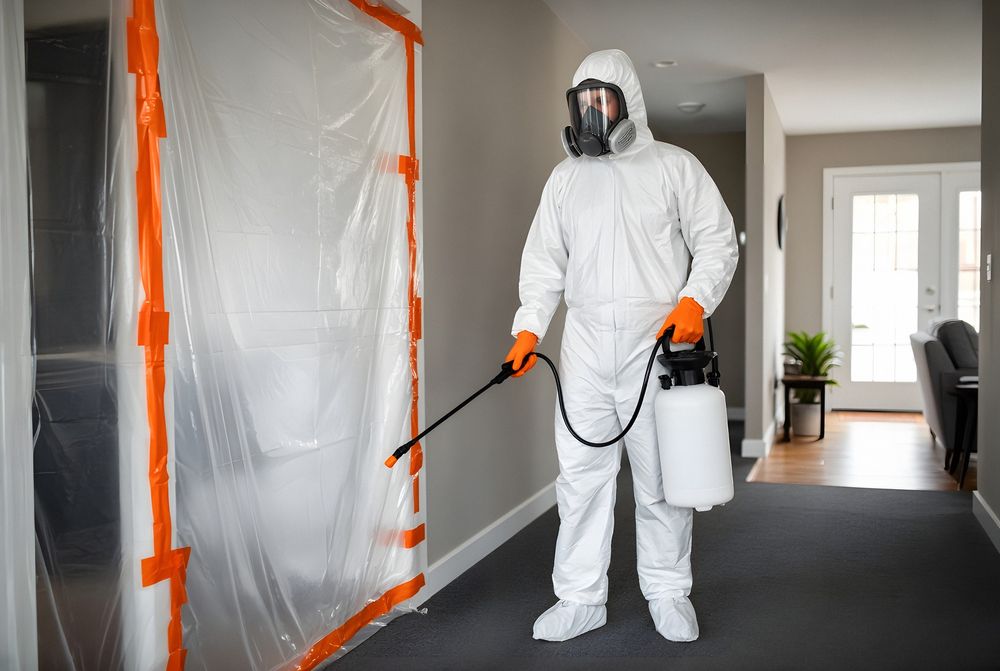
Residue lingers after the air clears
Tear gas, a general term for irritant agents such as CS, and pepper spray (OC, oleoresin capsicum) are often used during police tactical operations, barricade situations and self-defense incidents. Once the air clears, a fine residue stays on floors, walls, ceilings, furniture, fabrics and inside HVAC systems. It can re-irritate eyes, skin and lungs for days or weeks, especially when it is disturbed, heated or pulled through the ventilation system.
Where it ends up
- Hard surfaces such as floors, counters, walls and ceilings
- Carpet, upholstery, bedding, curtains and clothing
- Inside HVAC ducts, registers and air handlers
- Inside cabinets and closets, and on stored belongings
- Vehicle interiors, including cabin air systems
How the cleanup works
- Ventilation and protection. Technicians use respiratory and skin protection, and the space is ventilated in a controlled way.
- HEPA vacuuming of surfaces and fabrics to lift particles without making them airborne.
- Surface washing with detergents suited to the agent. Several passes are often needed.
- Fabrics and contents. Laundering-capable items are bagged for professional laundering. Heavily affected porous items may need replacement.
- HVAC decontamination. Filters are replaced, and ducts and components are cleaned so the system doesn't keep redistributing residue.
- Verification walk-through for any remaining irritation or odor.
Who pays?
When tear gas was used in a law-enforcement operation, owners sometimes ask the agency or the local government about reimbursement. Policies and claim processes vary by jurisdiction. Homeowner and commercial insurance may also apply. We provide documentation for any of these processes.
Safety
Don't use a household vacuum or run the HVAC system before cleanup. Both can spread residue. Keep children, older adults and anyone with asthma or other respiratory conditions out of the space until it has been cleaned.
Common questions
How long does tear gas residue stay active?
Residue can keep irritating for days or weeks, and longer in fabrics and HVAC systems. It is easily stirred back up by walking, vacuuming or running the heat or air conditioning. Thorough removal is the only reliable fix.
Can clothing and bedding be saved?
Many washable items can be saved with repeated laundering, kept separate from other laundry. Delicate, heavily affected or porous items such as some upholstery or mattresses may be better replaced.
Is it safe for children and pets after cleanup?
Once surfaces have been washed, the HVAC system decontaminated and no irritation remains on a walk-through, the space is generally suitable for normal use. If anyone has a respiratory condition, check with their healthcare provider.