Blood rarely stays where it lands
A blood spill that looks contained on the surface is usually larger underneath. Carpet wicks blood sideways into the pad, and the pad passes it to the subfloor. On hard flooring it finds seams and runs beneath baseboards. On walls it travels into outlets and cracks. Upholstery and mattresses absorb it deep into their foam. Weeks later, an odor or a stain coming back through new paint shows the job was only surface-deep.
Blood is also a regulated biohazard. It can carry bloodborne pathogens such as hepatitis B, hepatitis C and HIV, and OSHA's Bloodborne Pathogens Standard (29 CFR 1910.1030) sets requirements for employers whose workers handle it. Bleach and paper towels don't control that exposure, and they won't reach the material that has soaked in.
When to call a professional
Small, fresh spots on non-porous surfaces, such as a minor cut on a kitchen counter, can be handled with gloves and an appropriate disinfectant. Professional blood cleanup is the right choice when:
- the amount is significant, or it has reached carpet, upholstery, mattresses, drywall or wood
- blood has dried, or has been there long enough to soak through
- the cause was a traumatic event such as an assault, suicide, accident or death
- the property is a rental, a business or a public space with obligations to others
- you're unsure how far it spread
How the cleanup is done
- Trace the spread. Technicians follow the blood from visible areas outward and downward. They check under carpet, behind baseboards and trim, inside cabinets and in adjacent rooms.
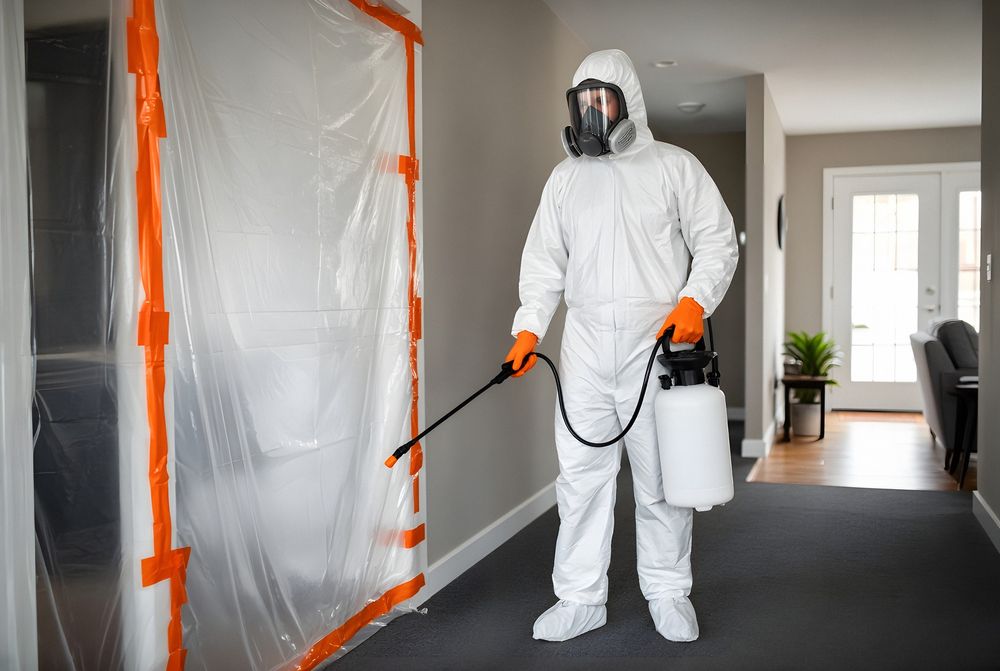
- Protect and contain. Work areas are isolated, and technicians wear protective equipment for bloodborne hazards.
- Remove what can't be saved. Porous materials that have absorbed blood, typically carpet and pad, mattresses, upholstered cushions and affected drywall, are cut out in controlled sections and bagged.
- Clean, then disinfect. Remaining surfaces are cleaned to remove organic material and then treated with EPA-registered disinfectants for the full label contact time.
- Treat the structure. Where blood has reached wood subfloor or framing, the area is cleaned and, if needed, sealed before any new flooring is installed.
- Dispose of waste properly. Blood-contaminated waste is packaged and handled according to state and local regulated-waste requirements.
- Document. Photographs and a written scope record what was removed and cleaned.
What can usually be saved
Sealed tile, glass, metal, stone and most hard plastics can usually be cleaned and disinfected. Finished hardwood may or may not be salvageable, depending on how long blood sat in seams. Carpet, pad, mattresses and most upholstery that have absorbed blood generally can't be reliably decontaminated. We'll explain each decision and get your approval before removing anything.
Insurance and documentation
Homeowner and commercial policies sometimes cover blood cleanup, depending on the cause and policy terms. If the blood is from a crime, your state's crime victim compensation program may reimburse some costs for eligible victims. We provide the documentation these programs commonly request. Coverage decisions are theirs.