After the investigation ends
When an investigation is complete and law enforcement releases a homicide scene, responsibility for the property returns to the owner, often a grieving family, a landlord or a business. What remains can include blood and other biological material spread across several rooms, fingerprint powder and other investigative residue, damaged furnishings, and personal belongings mixed with contaminated items.
No family should have to clean that themselves. Homicide scene cleanup is careful, complete decontamination, carried out with discretion and with respect for what the space means to the people involved.
What makes homicide scenes complex
- Extent. Violent events can spread blood and tissue farther than expected: across ceilings, under furniture, along walls, into adjacent rooms and into HVAC returns.
- Penetration. Material that sits before release has more time to soak into carpet, pad, subfloor, drywall and wood.
- Investigative residue. Fingerprint powder, chemical reagents and evidence markings are left behind and need their own cleanup methods.
- Personal property. Photographs, documents, heirlooms and other items are often in or near affected areas.
- Emotional context. Family members may want to be present, may not, or may want certain items found and set aside.
Our approach
- Release confirmation. We confirm the scene has been released and note any instructions from investigators.
- Walkthrough and scope. The full extent of contamination is mapped, including secondary areas, and a written scope is prepared for approval.
- Item recovery plan. We ask which items matter most, such as documents, photographs, jewelry and keepsakes, and plan to recover, clean and return them where it's safe to do so.
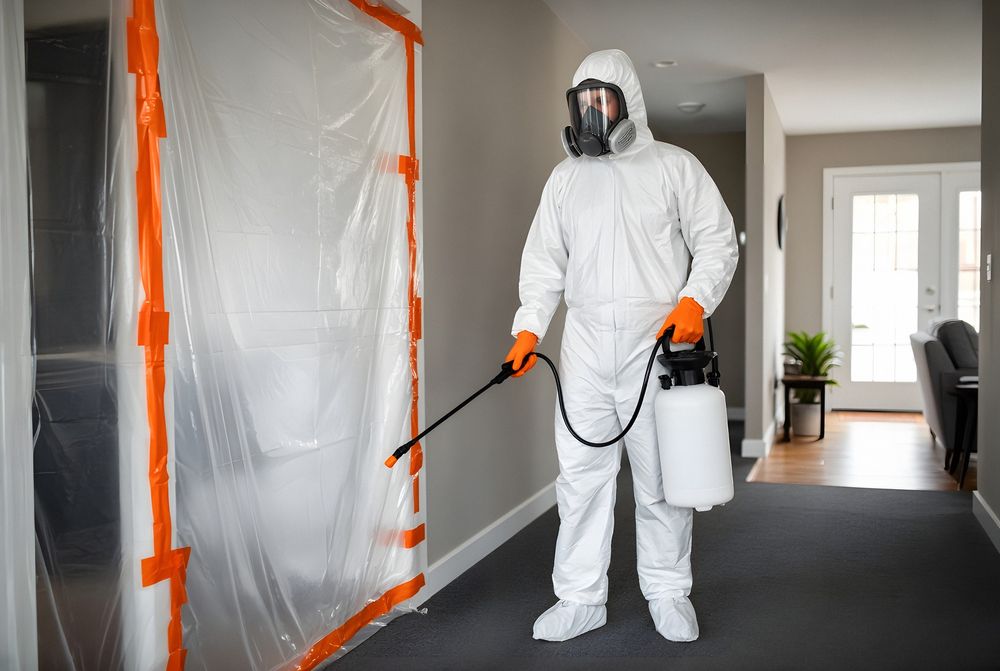
- Remediation. Affected porous materials are removed in controlled sections. Remaining surfaces are cleaned and disinfected, investigative residue is removed, and structural materials are treated or sealed as needed.
- Odor control where needed.
- Waste handling according to regulated-waste requirements.
- Documentation with photographs and an itemized record.
Paying for the cleanup
Crime victim compensation programs in many states can reimburse some crime scene cleanup costs for eligible victims and families. Eligibility rules, caps and deadlines vary by state. Homeowner and commercial policies may also cover some costs, depending on terms. We provide the documentation these programs and insurers commonly request. We don't decide eligibility or coverage.
Discretion
We keep the details of your project confidential, and crews work in a way that draws as little attention as practical. If media or neighbors ask questions, the crews we coordinate don't discuss the job.
Support beyond the cleanup
Many communities have victim advocates, often working through prosecutors' offices or law-enforcement agencies, who can help families with compensation applications and other needs. Ask the investigating agency for a referral.