Why RVs are harder than houses
A motorhome or travel trailer packs a kitchen, bathroom, bedroom and living area into a few hundred square feet, built mostly from lightweight, porous materials. Thin wall panels, foam cushions, carpet glued over plywood floors and fabric window treatments absorb fluids quickly, and the tight interior means odor and contamination reach almost everything. Many RVs also sit closed up in storage or at a campsite for long periods, so an unattended death or a plumbing failure can go unnoticed for days or weeks.
We arrange cleanup for:
- Unattended deaths and decomposition in parked or stored campers
- Blood and trauma after injuries, suicides or violent incidents
- Black tank and sewage backups inside the coach
- Drug residue in campers used for manufacturing or heavy use
- Hoarding conditions and animal waste in long-term-occupied units
How the work is done
- Assess the coach, including the floor structure, wall cavities, under-seat storage, the HVAC system and the holding-tank plumbing.
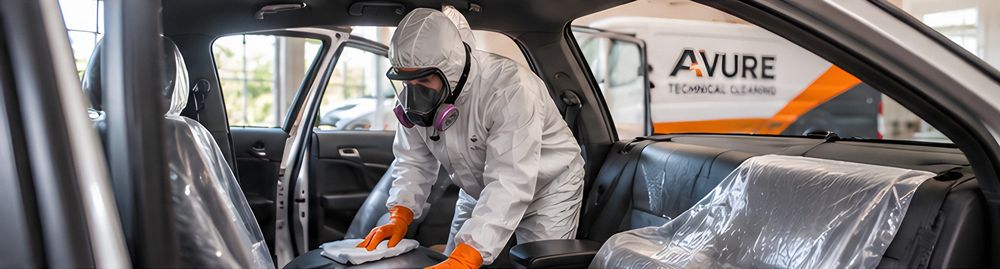
- Contain and protect. Seal vents and openings and stage removed materials for proper disposal.
- Remove contaminated cushions, mattresses, carpet, flooring and panels. In RVs, fluids often travel along the floor and under built-in cabinetry, so we look beyond the visible stain.
- Clean and disinfect remaining structure, fixtures and appliances with disinfectants used according to their labels.
- Treat odor after the source is removed, including the air system.
- Document the work with photos and a written scope for your insurer, lender or dealer.
Repair or replace?
For older or lower-value units, the cost of removing and rebuilding contaminated sections can approach the value of the coach. We give you a clear picture of what needs removal before reconstruction starts, so you and your insurer can make that decision with real information.
Common questions
Can you clean an RV where it's parked?
Usually yes, at a campground, storage lot or private property, depending on access and the property owner's rules. Some projects are better done at a shop where the unit can be partly disassembled.
Is RV biohazard cleanup covered by insurance?
Many RV policies cover sudden events. Coverage depends on your policy. Our documentation is written to support the claim.
Will the odor come back?
Not if the source is removed. Odor returns when contaminated material is left behind, which is why we remove saturated materials rather than masking them.