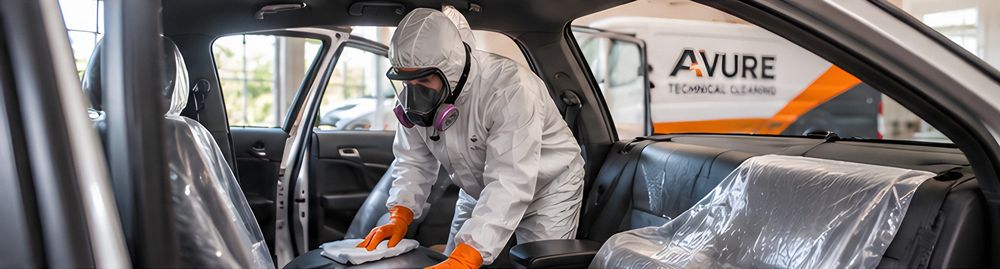
Keeping emergency fleets in service
Ambulances, patrol cars, transport vans and fire apparatus regularly carry patients and people in custody who are bleeding, sick or exposed to drugs. Routine wipe-downs by crews handle everyday contamination. Some events need more: heavy blood loss, bodily fluids in seams and upholstery, a death in the vehicle, or a suspected fentanyl or other drug exposure. A unit sitting out of service is a gap in coverage, so the work has to be thorough and fast.
What a decontamination includes
- Intake. We confirm what happened, which areas were affected, and any drug-exposure concerns, and agree on the required return-to-service condition with your fleet or EMS supervisor.
- Protect the team with protective equipment selected for the hazard, including drug-residue precautions where they apply.
- Remove gross contamination and any porous materials that can't be cleaned, such as damaged seat covers or foam.
- Clean and disinfect all touched and splash-zone surfaces: cot mounts, cabinets, rails, seat belts, door panels, cage partitions and floor tracks.
- Address equipment that can be cleaned in place, according to manufacturer instructions.
- Verify with visual inspection and, where you want it, ATP surface testing.
- Document the work for your infection-control and exposure records.
Working with your policies
Agencies often have written decontamination procedures under the OSHA Bloodborne Pathogens Standard (29 CFR 1910.1030) and their own exposure control plans. We follow your procedures and products where specified, and keep records your infection-control officer can file.
Drug exposure
Where fentanyl or other potent drugs are suspected, cleaning methods change: dry sweeping and compressed air are avoided, and surfaces are wiped wet. Drug-residue sampling can be arranged when a department wants documented results before returning a unit to service.
Cleaning without damaging equipment
Emergency vehicles carry monitors, radios, computers, cot systems and other equipment that harsh chemicals or excess moisture can damage. Each surface is cleaned with methods and products that are compatible with it, following equipment manufacturers' cleaning guidance where it exists. Upholstery and seat materials that are cracked or torn can't be reliably disinfected, so we note them for repair or replacement rather than treating them as clean.
Common questions
Can you work at our station or yard?
Yes. Most fleet work is done on site so units don't have to be transported.
Do you service privately owned vehicles too?
Yes. See our vehicle biohazard cleanup service for cars, trucks and personal vehicles.
Can you set up recurring service?
Yes. Agencies can schedule periodic deep cleaning in addition to on-call decontamination.