Why fentanyl calls for careful planning
Fentanyl and its analogs are synthetic opioids that are far more potent than morphine. Residue may be found where the drug was used, stored, packaged or, less commonly, pressed into pills or manufactured. Because of that potency, cleanup is planned conservatively. It doesn't need to be dramatic, but every step should be deliberate, and workers should be properly protected.
The U.S. EPA added a chapter on fentanyl to its Voluntary Guidelines for Methamphetamine and Fentanyl Laboratory Cleanup in 2021, drawing on Alberta Health's remediation guidance. EPA notes that there are currently no state or federal standards for determining when a former fentanyl lab has been successfully remediated. We treat that as a reason for clear documentation and honest reporting, not for overstatement.
Situations we handle
- Homes and rentals where fentanyl use or storage is known or suspected
- Hotel and motel rooms after drug activity
- Vehicles used to transport or use drugs
- Properties associated with pill pressing or distribution, after law-enforcement release
- Commercial spaces such as restrooms, storage rooms and offices where residue is suspected
How the work is planned
- History and assessment. What is known about the activity, how long it went on, and where in the property. Law-enforcement information is valuable when it's available.
- Testing strategy. Sampling can help define the scope and document the result. Methods and laboratory capabilities for fentanyl and its analogs differ from methamphetamine testing. Our fentanyl testing page explains what results can and can't tell you.
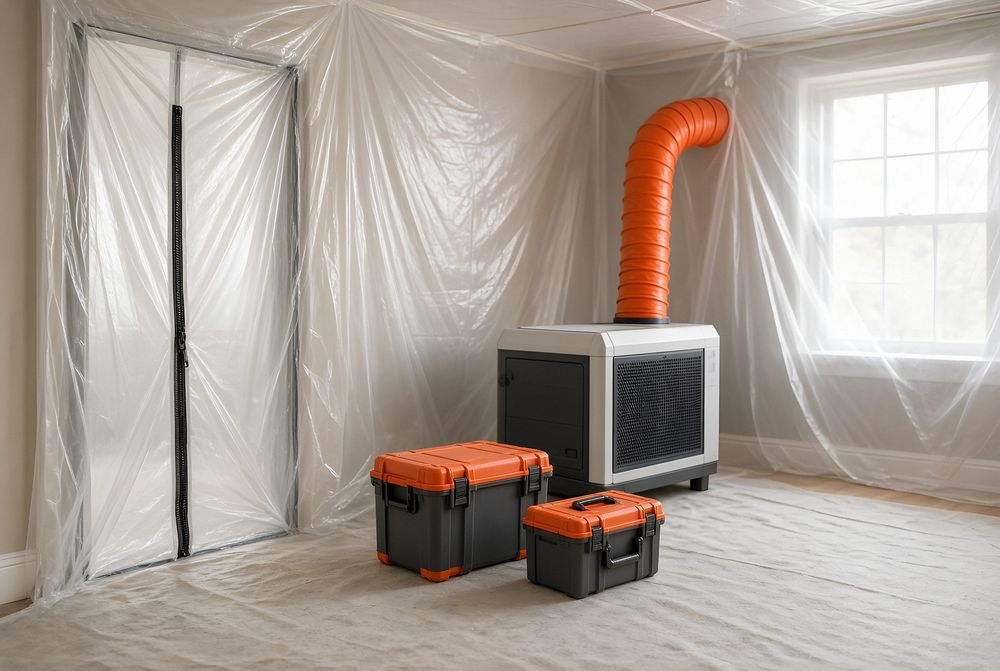
- Protection. Technicians use respiratory, skin and eye protection matched to the risk, plus containment and decontamination procedures for leaving the work area.
- Removal. Porous items and materials in affected areas are bagged and removed.
- Cleaning. Hard surfaces are cleaned with methods supported by current guidance, which favors careful wet cleaning over dry methods that could make residue airborne.
- HVAC. Ventilation components in affected areas are assessed and cleaned or replaced.
- Documentation. A written record of conditions, methods, waste handling and any sampling results.
Safety for occupants
If you find powders, pills or paraphernalia, don't touch them. Leave the area and contact law enforcement. Anyone showing signs of opioid exposure, such as extreme drowsiness, slow or stopped breathing or pinpoint pupils, needs emergency care: call 911. Naloxone, which is widely available, can reverse opioid overdose.
What we won't claim
We won't tell you a property is "fentanyl-free" on the basis of appearance, and we won't present any single test as proof beyond what it actually measures. You'll get a clear account of what was done and what the evidence shows.