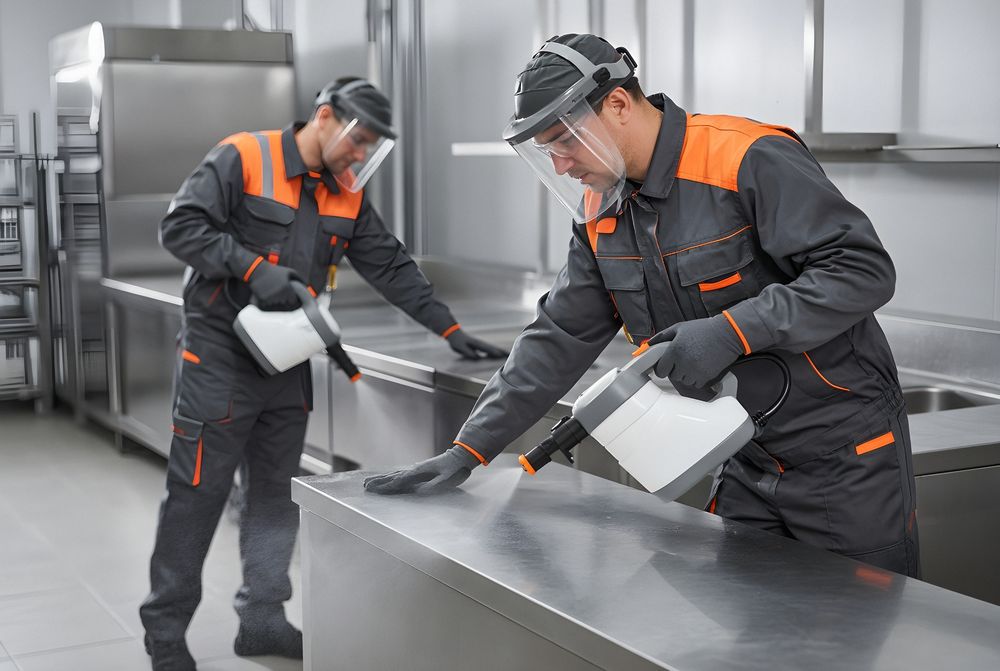
What fogging is
Fogging disperses disinfectant as a fine mist or fog that fills a space and settles on surfaces, including areas that are hard to reach by hand. Two common approaches are:
- ULV (ultra-low-volume) fogging, which produces small droplets that drift through a room and settle on exposed surfaces.
- Dry fog and vapor systems, such as hydrogen peroxide-based systems, used in some controlled or healthcare settings.
Fogging is an application method. Its effectiveness depends on the product's label claims and on the space being cleaned first, the room being unoccupied, and the right dwell and ventilation times.
When fogging makes sense
- Rooms with many surfaces and crevices after a disinfection-sensitive event
- Vehicles and compartments
- Supplementing cleaning after illness outbreaks
- Deodorization in some cases, with products made for odor
Fogging doesn't replace physical cleaning. Blood, bodily fluids and visible soil must be removed first, and a fog won't penetrate porous materials such as mattresses, carpet pad or upholstery deeply.
How a fogging service works
- Clean first and remove items that shouldn't be exposed.
- Prepare the space. Turn off HVAC as appropriate, cover smoke detectors if required, protect sensitive electronics, and post signs to keep people out.
- Fog using products labeled for the method.
- Dwell and ventilate for the time required by the label before re-entry.
- Document the products and times.
Fogging versus electrostatic spraying
Electrostatic spraying coats targeted surfaces evenly. Fogging fills a space. We choose the method for your situation, and some projects use both.
Common questions
Can people be present during fogging?
No. Spaces must be unoccupied and kept closed until the label's re-entry time has passed.
Will fogging damage electronics?
Exposed electronics can be affected by wet fogs. We protect or remove sensitive items and choose products accordingly.
Does fogging remove odors?
Some fogs are made for deodorization, but odor sources must be removed first.