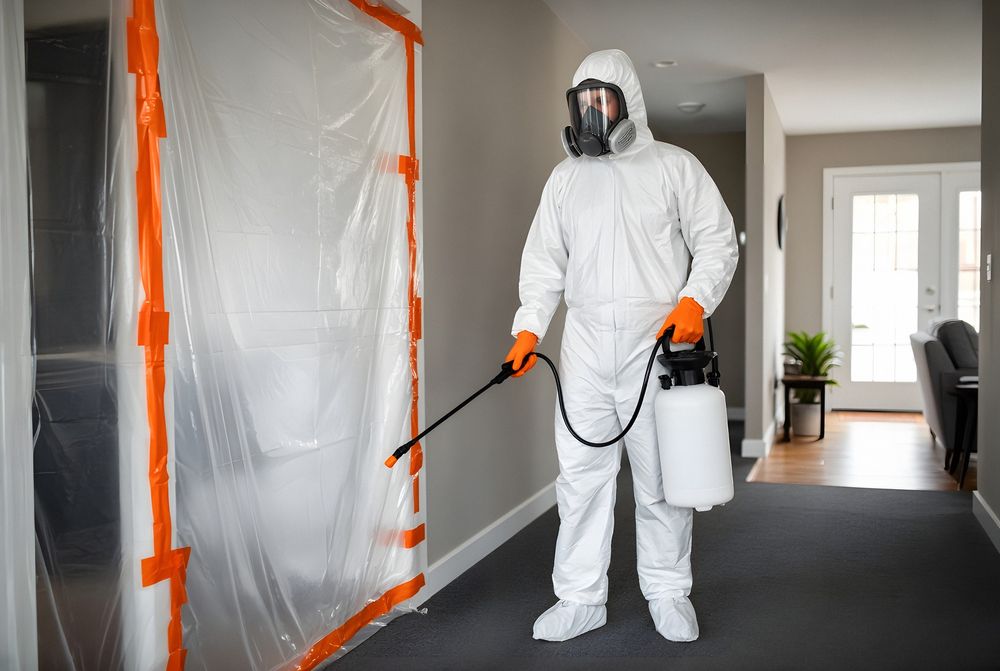
Every product sold in the United States with a claim to kill germs on surfaces is regulated by the Environmental Protection Agency as a pesticide. That regulation is what gives a disinfectant label its meaning. Knowing how to read the label and use the EPA's lists helps you choose the right product and use it so it actually works.
What EPA registration means
Before a disinfectant can be sold with claims to kill bacteria or viruses, the manufacturer must submit data to the EPA showing the product works against the organisms it lists, under the conditions on the label. The EPA reviews those claims and registers the product. The label then becomes a legal document: using the product in a way that conflicts with the label is a violation of federal pesticide law, and the claims are valid only when the directions are followed.
Registration does not mean the EPA endorses a brand, and it doesn't certify that a product is safe in every use. It means the efficacy claims on the label were supported by required testing.
Finding the registration number
Look for "EPA Reg. No." on the label, followed by two or three numbers separated by hyphens. The first number identifies the company that registered the product, and the second identifies the product. A third number, if present, identifies a distributor selling the same product under a different brand name. Products with the same first two numbers are the same formulation, even if the brand names differ.
A cleaning product without an EPA registration number may clean well, but it isn't a registered disinfectant and makes no legal claim to kill germs.
The EPA's pathogen lists
The EPA publishes lists of registered products that have label claims against particular pathogens. Some of the most useful for property owners and facility managers include:
- List G: products effective against norovirus. Norovirus is a leading cause of vomiting and diarrhea outbreaks and is hard to kill; many ordinary products don't work against it.
- List H: products effective against MRSA and VRE, antibiotic-resistant bacteria.
- List K: products effective against C. difficile spores, which resist most disinfectants.
- List N: products meeting EPA's criteria for use against SARS-CoV-2, the virus that causes COVID-19.
- Lists for HIV and hepatitis B, tuberculosis, Candida auris and emerging viral pathogens.
To check a product, find its EPA registration number and search the list. Then confirm the product's own label includes directions for the pathogen you care about.
Reading the directions
A label tells you:
- Which organisms the product kills
- Which surfaces it can be used on, usually hard, non-porous surfaces
- Whether to pre-clean. Many labels require cleaning heavily soiled surfaces first.
- Dilution, for concentrates
- Application method, such as spray, wipe, mop, or electrostatic sprayer if approved
- Contact time, how long the surface must stay wet
- Rinse requirements, especially for food-contact surfaces
- Protective equipment and first aid
- Re-entry and storage instructions
Contact time
Contact time is the most commonly ignored instruction. If the label says a surface must stay wet for ten minutes to kill norovirus, a quick spray-and-wipe does not disinfect. Apply enough product to keep the surface visibly wet, or reapply, for the full time. Contact times can differ for different organisms on the same label.
Hard, non-porous surfaces
Most disinfectants are registered for hard, non-porous surfaces such as sealed counters, metal, glass and plastic. A few products have claims for soft surfaces like upholstery, usually as sanitizers rather than full disinfectants. No surface spray can disinfect a mattress or carpet pad that has absorbed blood or sewage; those materials have to be removed.
Using disinfectants safely
- Read the label before use, every time.
- Wear the protective equipment the label specifies.
- Ventilate the area.
- Never mix products, especially bleach with ammonia or acids.
- Keep products out of reach of children and pets.
- Store products in original containers.
Application methods
Some products are registered for use in electrostatic sprayers or foggers. Use those methods only if the label allows them. EPA has expedited approval of electrostatic application directions for some products, but a product not labeled for a method shouldn't be applied that way.
Disinfectants in remediation projects
In professional biohazard work, product choice follows the hazard. Blood and bodily fluid cleanup calls for a product with claims against bloodborne pathogens such as HIV and hepatitis B. Outbreak response calls for products on the list for the organism involved. Healthcare and food settings may require products appropriate for those environments, with rinse steps for food-contact surfaces. Crews record the product name, registration number, dilution and contact time used in each area, which becomes part of the project documentation.
Questions to ask a cleaning company
- Which product will you use, and what is its EPA registration number?
- Does the label include the organisms we're concerned about?
- What contact time will you use, and how will you make sure surfaces stay wet?
- Is it approved for the application method and surfaces involved?
- What protective equipment and re-entry time does it require?
A reputable company will answer readily and can provide the product's safety data sheet.
Key takeaways
An EPA registration number means the product's germ-kill claims were supported by data and are valid when the label is followed. Use the EPA's lists to match products to specific pathogens, confirm the label includes your organism, clean first, and keep surfaces wet for the full contact time. Disinfectants work on surfaces, not inside porous materials.
Sources
- EPA: Selected EPA-Registered Disinfectants
- EPA: Registered Antimicrobial Products Effective Against Norovirus (List G)
- EPA: List N, Disinfectants for Use Against SARS-CoV-2
This guide is general information. It is not legal, medical, environmental or safety advice. Rules vary by state and locality. For a specific situation, consult the relevant agency or a qualified professional.