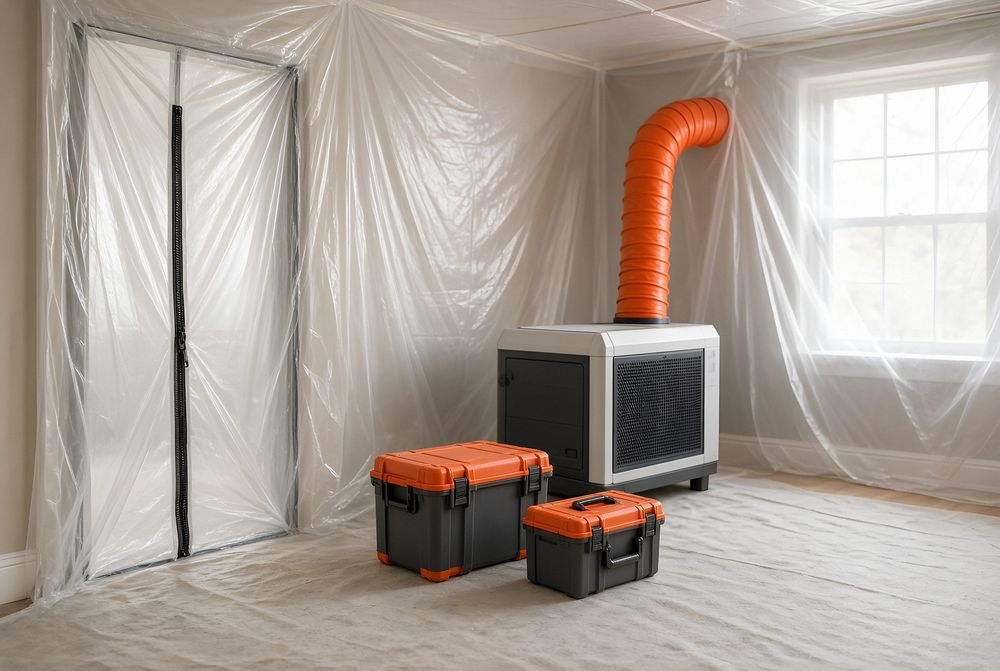
Manufacturing leaves more than residue
A property where methamphetamine was manufactured is a different problem from one where it was only used. Production involves solvents, acids, bases, reactive metals and other chemicals. Spills, vapors and dumped waste can contaminate surfaces, plumbing, septic systems and sometimes soil. Law enforcement removes the bulk chemicals and equipment when a lab is seized (DEA's Clandestine Laboratory Cleanup Program supports that removal), but the residual contamination left in the structure is the owner's responsibility.
State requirements come first
How a former lab must be cleaned depends heavily on the state.
- Tennessee quarantines affected properties. Release requires testing by a TDEC-certified CML specialist or Certified Industrial Hygienist and decontamination by an authorized contractor, followed by documentation.
- Kentucky requires decontamination by contractors certified by the Energy and Environment Cabinet, with a Contractor's Certificate of Decontamination.
- Arkansas lists contaminated properties and requires a DEQ-certified Clandestine Laboratory Remediation Contractor. A property is removed from the list after DEQ approves a final cleanup report.
- West Virginia licenses remediation contractors and technicians and requires an accepted preliminary remediation plan before work starts.
- North Carolina requires pre-decontamination assessment and decontamination under state rules before reoccupancy.
- Other states may have no mandatory standard. EPA's voluntary guidelines and any local ordinances then guide the work.
Where a state requires a certification or license, the regulated work is performed only by parties who hold it, and we'll give you their credential information before work begins.
The remediation process
- Records and site history. Law-enforcement reports, the agency notice and any prior testing.
- Preliminary assessment and sampling by a qualified party to define the scope.
- Work plan. Including any required agency submission.
- Removal of contaminated materials: carpet, pad, furnishings, drywall, ceiling materials, fixtures and appliances as indicated.
- Washing and rinsing of remaining surfaces, often in multiple passes.
- HVAC and plumbing. Ductwork, air handlers and, where indicated, plumbing traps and septic systems are evaluated.
- Exterior assessment for dumping or burn areas, with referral to environmental professionals when soil may be affected.
- Encapsulation where the rules allow, after cleaning.
- Clearance sampling against the applicable standard.
- Final report for the agency, owner, lender or buyer.
Demolition as an alternative
Some state frameworks allow demolition as an alternative to remediation for heavily contaminated structures. Demolition debris may still need documented handling. We can help you compare the options.