Residue you can't see
Methamphetamine residue is invisible. When meth is smoked indoors over time, or was once manufactured in a building, residue settles on walls, ceilings, cabinets, fabrics, carpet and HVAC components. Odor is unreliable. Many contaminated properties smell normal, and paint can cover residue without removing it. The only dependable way to know whether residue is present, and how much, is surface wipe sampling analyzed by an accredited laboratory.
That's why meth residue cleanup should start and end with testing.
Use vs. manufacturing
Residue from use is generally lower and more evenly spread than residue from manufacturing, though heavy, long-term smoking can produce high readings. Former labs can also involve solvents, corrosives and other chemicals, and are often subject to law-enforcement involvement and state oversight. If there's any sign a property was used to make drugs, our former meth lab cleanup and clandestine drug lab remediation pages describe the additional steps.
How the cleanup works
- Pre-remediation sampling. Composite or discrete wipe samples are collected from representative surfaces and HVAC components and sent to a lab. Results show which areas exceed the applicable standard.
- Scope. Based on the results, we prepare a written scope that covers what will be washed, what will be removed and how HVAC will be handled.
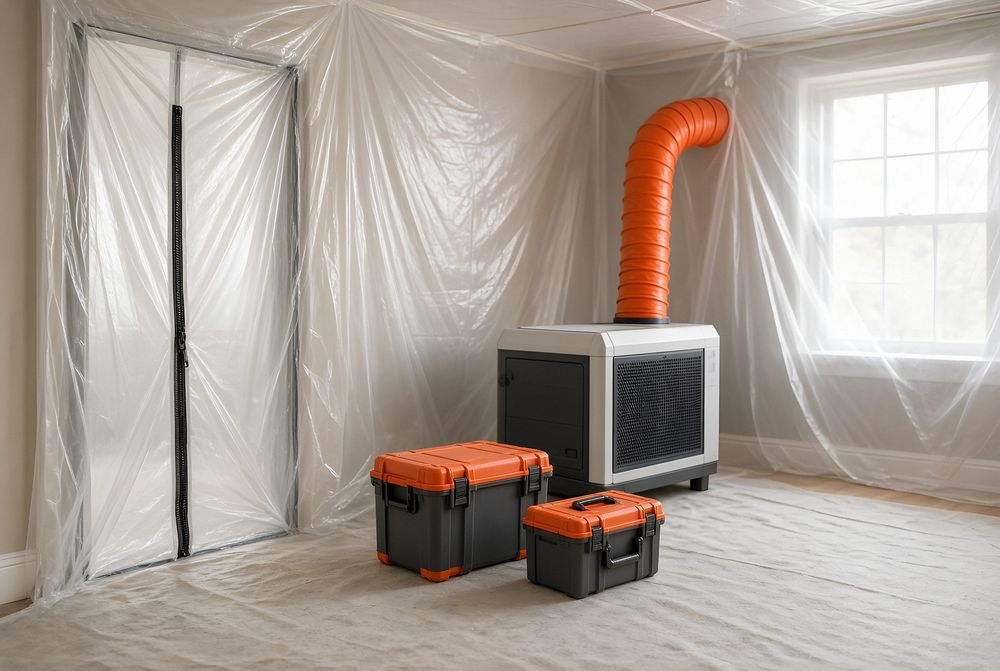
- Containment and protection. Work areas are contained, and technicians wear protective equipment suited to the residue and cleaning chemicals.
- Removal. Carpet, pad, window coverings, upholstered items and other porous furnishings in affected areas are typically removed. Some states' rules specify materials that must be discarded.
- Washing. Hard surfaces are washed and rinsed, often more than once. Walls and ceilings are included.
- HVAC. Duct runs, registers and air-handling components are cleaned or replaced, and filters are replaced.
- Encapsulation, where the applicable rules allow it, for cleaned surfaces before repainting.
- Clearance sampling. Post-remediation samples confirm whether the result meets the standard. If it doesn't, the affected areas are cleaned again and resampled.
Which standard applies?
That depends on the state. Tennessee, Kentucky, Arkansas, West Virginia and North Carolina, among others, set requirements for specific circumstances, sometimes including certified or licensed contractors. In states without a mandatory standard, the U.S. EPA's Voluntary Guidelines for Methamphetamine and Fentanyl Laboratory Cleanup are the usual reference. We'll identify the applicable framework for your property. Where a state credential is required, the regulated work is done by parties who hold it.
Who calls us
Landlords between tenants, buyers who discovered residue during due diligence, sellers who want to resolve it before listing, lenders and REO managers, and families who bought or inherited a property with an unknown history.