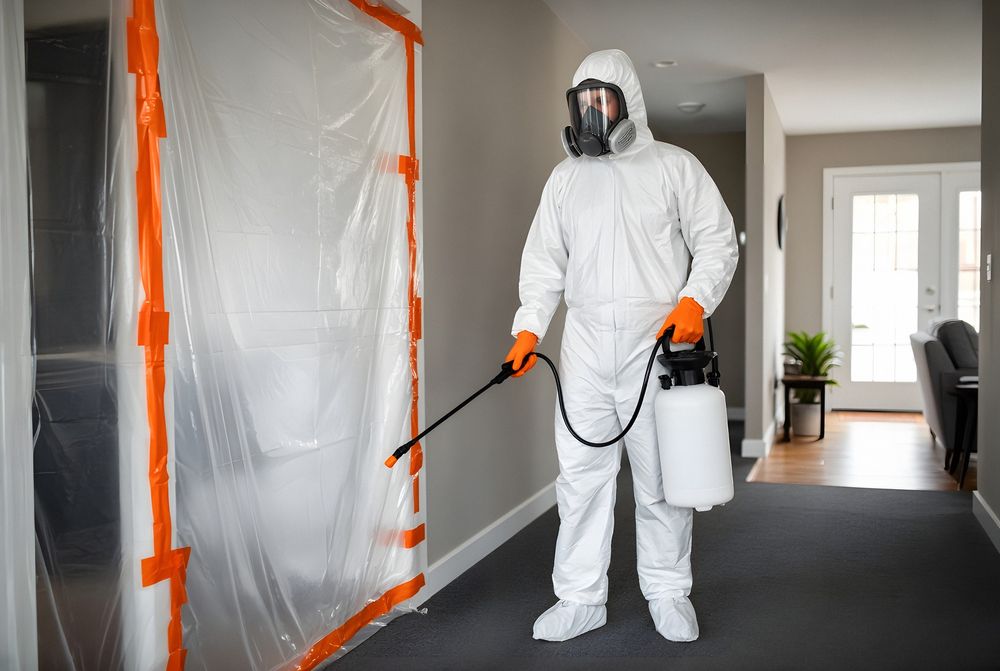
When the septic system backs up
In rural and suburban homes on septic, a full tank, failed drain field, blocked line or heavy rain can push sewage back through the lowest drains: basement floor drains, showers, toilets and laundry drains. Sewage may also surface in the yard over the drain field. Indoor backups are Category 3 contamination and need prompt, thorough cleanup.
First steps
- Stop using water in the home. Every flush and drain adds to the backup.
- Call a septic contractor to pump the tank and diagnose the cause.
- Keep people and pets away from affected areas.
- Call us for cleanup once the system is stabilized, or sooner if sewage is spreading.
How cleanup works
- Extract sewage and standing water.
- Remove affected carpet, pad, drywall, insulation, baseboards and porous contents.
- Clean and disinfect floors, walls, framing and fixtures.
- Dry the structure with dehumidification.
- Treat odor at the source.
- Document for insurance.
Outdoors
Sewage surfacing in the yard is a public health concern. Keep children and pets away, and follow your septic contractor's and local health department's guidance. Repairs to drain fields typically require a licensed septic installer and local permits.
Wells
If your home has a private well near the septic system and a backup or surfacing occurred, consider having the well water tested. Your local health department can advise.
Common questions
Does homeowners insurance cover septic backups?
Coverage varies widely. Some policies cover sudden backups with an endorsement. Damage from a system that failed from lack of maintenance is often excluded.
How long until we can use the room again?
Typically several days to a week or more, depending on drying and what was removed.
Do you pump septic tanks?
No. Pumping and repair are done by septic contractors. We clean up the home.