When the drains back up
A sewage backup happens when wastewater can't get out through the building's drain line and comes back up through the lowest fixtures instead: floor drains, basement toilets, showers and tubs. Common causes include root intrusion, collapsed or bellied pipes, grease buildup, items flushed that shouldn't be, and, in some areas, municipal sewer surcharges during heavy rain.
Sewage is grossly contaminated water and contains bacteria, viruses and parasites. Everything porous it touches is considered contaminated.
First steps
- Keep everyone out of the affected area, especially children, older adults and anyone who is immunocompromised.
- Stop running water and flushing toilets. Every drain use adds to the backup.
- If water is near outlets, electrical panels or appliances, don't enter. Have power shut off safely.
- Call a licensed plumber to find and fix the cause. Cleaning before the cause is fixed often means doing it twice.
- Photograph the damage before anything is moved, and notify your insurer if you plan to claim.
How we clean up a sewage backup
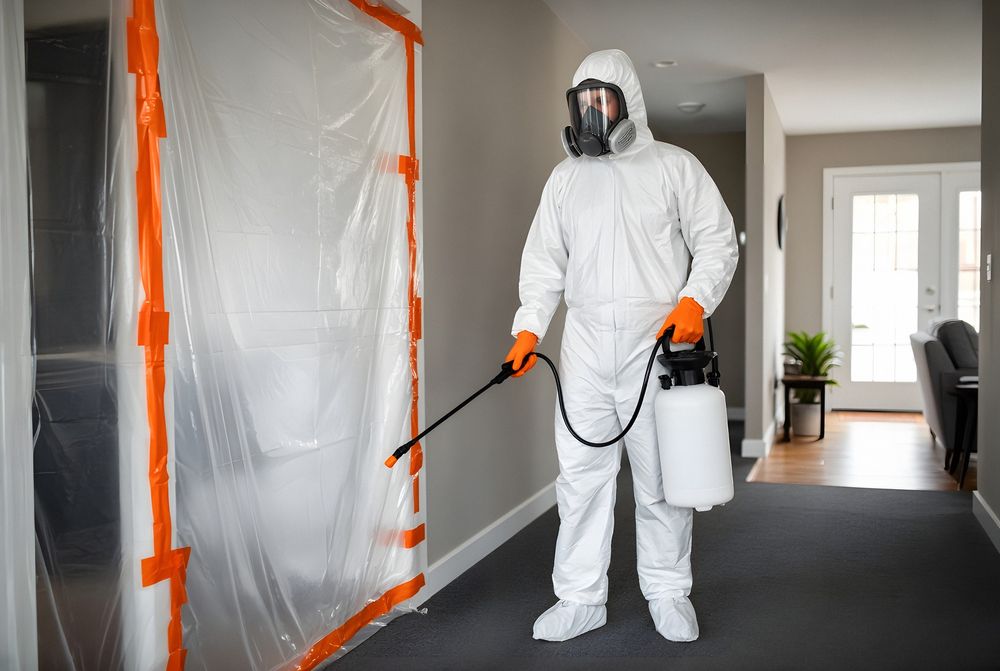
- Containment. The affected area is isolated and protected walkways are set up so contamination isn't tracked through the building.
- Extraction. Standing sewage and water are pumped and extracted.
- Removal of affected materials. Carpet and pad, saturated drywall (typically cut a set distance above the water line), baseboard, insulation and other porous materials are removed. Contents are separated into salvageable and non-salvageable with your input.
- Cleaning and disinfection. Hard surfaces, framing and slab are cleaned to remove residue and treated with disinfectants appropriate for sewage contamination.
- Drying. The structure has to be dried to normal moisture levels to prevent mold. Drying is coordinated with moisture readings so it isn't stopped too early.
- Odor control. Remaining sewage odor is treated once the source material is gone.
- Documentation. Photos, moisture records and an itemized scope are provided for insurance and repairs.
Salvaging belongings
Hard, non-porous items such as metal, glass and some plastics can often be cleaned and disinfected. Porous items such as upholstered furniture, mattresses, paper goods, stuffed toys, many rugs and clothing that sewage soaked are often not salvageable. Some textiles can be professionally laundered. We'll go through items with you instead of making blanket decisions.
Insurance
Many homeowner policies exclude sewer and drain backup unless an endorsement was added, and flood damage is normally covered only by separate flood insurance. Commercial policies vary. We provide thorough documentation. Your insurer determines coverage.