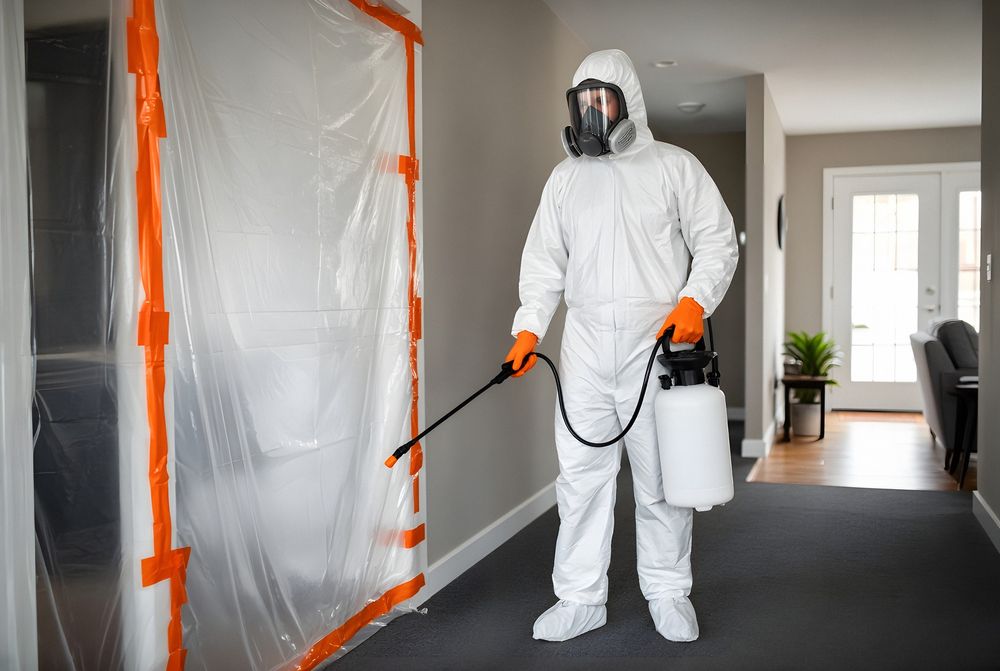
Cleaning, sanitizing and disinfecting are often used as if they mean the same thing. They don't. Each does a different job, they work best in a particular order, and using the wrong one can leave a surface looking clean while germs survive. This guide explains the differences in plain language.
Cleaning: removing what you can see
Cleaning physically removes dirt, grease, food, blood, body fluids and other material from a surface, usually with soap or detergent, water and friction. Cleaning removes many germs along with the soil, but it isn't designed to kill them.
Cleaning is the most important step, and the one people most often skip when they reach for a disinfectant spray. Disinfectants are less effective, sometimes much less, when organic material such as blood, vomit or food residue is still on the surface. That material can shield microorganisms and react with the active ingredients. In professional work the rule is simple: clean first, then disinfect.
Sanitizing: reducing germs to a safe level
Sanitizing lowers the number of bacteria on a surface to levels considered safe by public health standards. It is common for food-contact surfaces such as cutting boards, dishes and food preparation counters, and in laundry. Sanitizers typically work faster and at lower concentrations than disinfectants, and many food-contact sanitizers don't require rinsing.
Sanitizing does not claim to kill viruses or all bacteria, so it isn't the right choice after a blood or bodily fluid incident.
Disinfecting: killing specified germs
Disinfecting uses chemicals to kill the specific bacteria and viruses listed on the product label. In the United States, products sold with claims to kill germs on surfaces are regulated as pesticides by the Environmental Protection Agency. A disinfectant must have an EPA registration number on its label, and the label lists the organisms it has been shown to kill and the directions needed to do so.
That last point matters. A disinfectant is effective only against the organisms on its label, used the way the label says.
Contact time: the step most people miss
Every disinfectant label lists a contact time, sometimes called dwell time. That is how long the surface must stay visibly wet with the product to kill the listed organisms. Contact times range from under a minute to ten minutes or more, and they can differ for different organisms on the same label.
Spraying and immediately wiping dry doesn't disinfect. If the product dries before the contact time is reached, apply more. In professional work, crews time their application and track it in their records.
Matching the product to the problem
The EPA maintains lists of registered disinfectants with claims against specific pathogens. Examples include:
- List G for products effective against norovirus, which is hard to kill and a common cause of vomiting and diarrhea outbreaks
- List K for products effective against Clostridioides difficile (C. diff) spores
- List N for products meeting EPA's criteria for use against SARS-CoV-2, the virus that causes COVID-19
- Lists covering bloodborne viruses such as HIV and hepatitis B, and others
Some organisms are much harder to kill than others. Bacterial spores and non-enveloped viruses such as norovirus resist many common products. Enveloped viruses such as influenza and coronaviruses are generally easier to inactivate. If you are dealing with a specific illness or outbreak, check that the product lists that organism.
Bleach
Diluted household bleach is an effective, inexpensive disinfectant for many situations when it is used correctly. Use a product registered for disinfection, mix it fresh at the dilution on the label or recommended by health authorities for your situation, clean the surface first, and keep the surface wet for the full contact time. Never mix bleach with ammonia, acids or other cleaners, which can produce toxic gases. Bleach can damage fabrics, metals and some finishes, and it is not appropriate for every surface.
Where each step fits
Everyday household cleaning: cleaning is usually enough, with disinfection of high-touch surfaces when someone is sick.
Food areas: clean, then sanitize food-contact surfaces with a food-safe sanitizer, rinsing if the label requires it.
Blood and bodily fluids: clean thoroughly, then disinfect with a product that lists bloodborne pathogens and observe the contact time. For large or soaked-in contamination, materials must be removed.
Outbreaks: clean, then disinfect with products whose labels include the organism involved, focusing on high-touch surfaces and restrooms.
What disinfection can't do
Disinfectants work on surfaces, mostly hard and non-porous ones. They cannot reach blood that soaked into a mattress, sewage in a carpet pad, or decomposition fluid in a subfloor. They also don't remove odor sources. When contamination is in porous materials, removal is the answer, not more spray.
A note on "natural" products
Vinegar, essential oils and similar household products may clean, but they aren't registered disinfectants and shouldn't be relied on for blood, bodily fluids or outbreak cleaning. Some products are registered as disinfectants and use ingredients such as hydrogen peroxide, citric acid or thymol; if you prefer those, check the label for an EPA registration number and the organisms you are concerned about.
Safety when using disinfectants
Wear gloves, ventilate the area, keep products away from children and pets, and store them in original containers. Read the label for protective equipment, re-entry times and any rinse requirements. More product is not better; follow the dilution and directions.
Key takeaways
Cleaning removes material, sanitizing reduces bacteria to safe levels, and disinfecting kills the organisms listed on the label. Clean first, choose a registered product with the right organisms on its label, and keep the surface wet for the full contact time. For soaked-in contamination, removal of materials is required.
Sources
- EPA: Selected EPA-Registered Disinfectants
- EPA: Registered Antimicrobial Products Effective Against Norovirus (List G)
- EPA: List N, Disinfectants for Use Against SARS-CoV-2
- OSHA: 29 CFR 1910.1030, Bloodborne Pathogens Standard
This guide is general information. It is not legal, medical, environmental or safety advice. Rules vary by state and locality. For a specific situation, consult the relevant agency or a qualified professional.