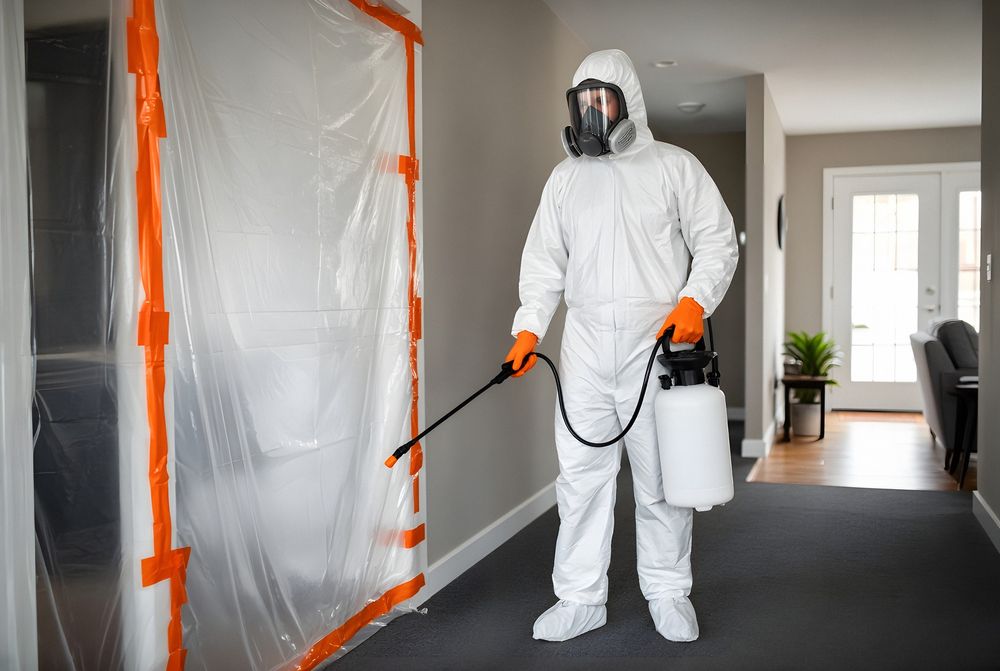
Bloodborne pathogens are microorganisms carried in human blood that can cause disease in people. The three that matter most for cleanup are hepatitis B virus (HBV), hepatitis C virus (HCV) and human immunodeficiency virus (HIV). They are the reason trained cleanup crews treat every blood spill as potentially infectious, even when nobody involved is known to be sick.
This guide explains how these pathogens spread, which materials carry them, and how property owners can protect themselves when blood is present.
How exposure happens
Bloodborne pathogens don't spread through the air or through casual contact. Infection requires infected blood or certain body fluids to enter the body. In a cleanup setting, the realistic routes are:
- Punctures and cuts. A needlestick, a cut from broken glass, or a scrape from a sharp edge while handling contaminated material.
- Contact with broken skin. Blood touching a cut, scrape, rash or chapped skin on the hands.
- Splashes to the eyes, nose or mouth. Mucous membranes absorb fluids easily. Splashes can happen when scrubbing, wringing out cloths, or spraying a pressurized cleaner.
Intact skin is a good barrier, which is why gloves and covering cuts matter so much.
Which materials count
OSHA's Bloodborne Pathogens Standard defines "other potentially infectious materials" to include, along with blood, a range of body fluids such as semen, vaginal secretions, and fluids around the brain, spine, joints, heart, lungs and abdomen. It also covers any body fluid visibly contaminated with blood, and situations where it is hard or impossible to tell body fluids apart. Unfixed human tissue is included too.
Vomit, urine, feces and saliva are not on the core list unless they contain visible blood, but they carry other pathogens and are handled with care for different reasons. In practice, professional crews treat all bodily fluids with the same caution. This approach, called universal or standard precautions, avoids the guesswork of deciding which fluid is infectious.
How long pathogens survive
Bloodborne viruses can survive outside the body for some time, especially in dried blood that looks harmless. Hepatitis B in particular is known to remain infectious in dried blood on surfaces for an extended period. The practical lesson: dried or old blood is not safe to touch with bare hands, and "it's been a while" is not a reason to skip precautions.
Workplace rules
OSHA's Bloodborne Pathogens Standard (29 CFR 1910.1030) applies to employers whose employees can reasonably be expected to contact blood or other potentially infectious materials as part of their job. It requires, among other things:
- A written exposure control plan, reviewed and updated annually
- Engineering and work practice controls, such as sharps containers and handwashing facilities
- Personal protective equipment at no cost to employees
- Hepatitis B vaccination offered to exposed employees
- Post-exposure evaluation and follow-up
- Training and recordkeeping
- Labeling of regulated waste and contaminated items
Professional biohazard cleanup companies operate under this standard for their own workers. Employers in other industries, such as offices, retail and hotels, need to consider it when deciding whether their staff should handle a blood incident or whether to bring in a specialist.
Protecting yourself at home
Homeowners cleaning their own property aren't regulated by OSHA, but the same principles keep you safe. For a small, fresh spill on a hard surface:
- Keep others away, including children and pets.
- Wear disposable gloves. Nitrile gloves are a good choice. Cover any cuts on your hands first.
- Protect your eyes if there is any chance of splashing.
- Absorb the liquid with paper towels or disposable cloths.
- Clean the area with detergent and water to remove visible material, since disinfectants work poorly on soiled surfaces.
- Disinfect with an EPA-registered disinfectant that lists bloodborne pathogens on its label, or a freshly mixed bleach solution, and leave it wet for the contact time on the label.
- Bag gloves and wipes in a sealed plastic bag.
- Wash your hands thoroughly with soap and water.
Never pick up needles with your hands. Use tongs or a similar tool and a rigid, puncture-resistant container with a lid.
When the job is too big
Blood that has soaked into carpet, pad, upholstery, mattresses, drywall or subfloor can't be made safe with surface cleaning. Removing those materials creates more opportunities for exposure, involves cutting and tearing contaminated material, and generates waste that may be regulated. These situations, along with any involving a death, are best handled by professionals with training, protective equipment and waste disposal arrangements.
If you are exposed
If blood gets into a cut, your eyes or mouth, or you are stuck by a needle, wash the area immediately with soap and water (or flush eyes and mouth with water) and contact a healthcare provider promptly. Post-exposure care is time-sensitive for some infections, so don't wait to see whether symptoms appear.
Key takeaways
Bloodborne pathogens such as hepatitis B, hepatitis C and HIV spread when infected blood enters the body through punctures, broken skin or mucous membranes. Treat all blood and bodily fluids as potentially infectious, including dried blood. Gloves, eye protection, cleaning before disinfecting, and careful handling of sharps protect you. Large or soaked-in contamination should be handled by trained professionals.
Sources
- OSHA: Bloodborne Pathogens and Needlestick Prevention
- OSHA: 29 CFR 1910.1030, Bloodborne Pathogens Standard
- OSHA: 29 CFR 1910 Subpart I, Personal Protective Equipment
- EPA: Selected EPA-Registered Disinfectants
This guide is general information. It is not legal, medical, environmental or safety advice. Rules vary by state and locality. For a specific situation, consult the relevant agency or a qualified professional.