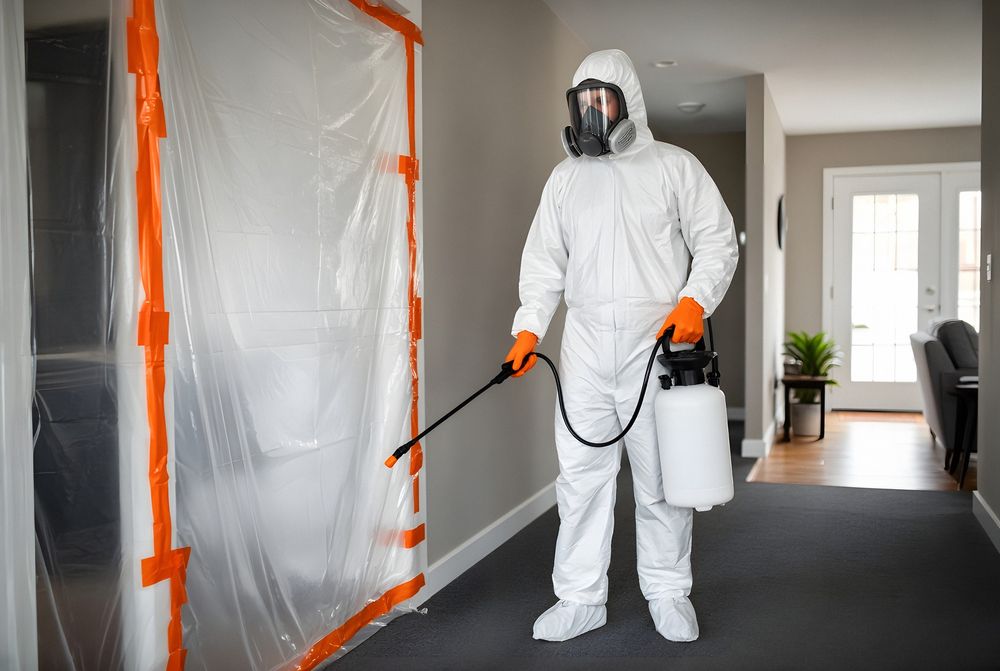
One of the first questions families and property owners ask is how long cleanup will take. The honest answer is that it depends. A small blood cleanup on hard surfaces can be finished in a few hours. A large scene with soaked-in contamination across several rooms can take days, plus time for repairs afterward. This guide explains the typical ranges and what drives them.
Typical timelines
These are general ranges for the cleanup itself, not including reconstruction:
- Small, contained incidents on hard surfaces: a few hours.
- A single room with blood on flooring and furniture: often one day.
- Multiple rooms, soaked carpet and subfloor, or a death with some decomposition: two to four days is common.
- Extended decomposition, hoarding conditions or contamination in walls and HVAC: several days to a week or more.
Testing, insurance approvals and rebuilding add time on top of these ranges.
What happens before work starts
Release. Cleanup can't begin until law enforcement or the medical examiner releases the scene.
Assessment. A technician inspects the property, traces where contamination went, and identifies other hazards. This usually takes an hour or two on site.
Estimate and approvals. You receive a scope and estimate. If insurance is involved, the insurer may need to review it or send an adjuster. This step can take hours or days, depending on the insurer.
What happens during cleanup
Setup. Crews protect paths through the home, set up containment and air filtration where needed, and establish clean and dirty zones. Typically an hour or two.
Personal item recovery. Items the family wants are located, set aside and cleaned where possible. This is done carefully and can take time in cluttered homes.
Removal. Contaminated carpet, pad, furniture, drywall and subfloor are cut out and packaged. This is often the longest phase.
Cleaning and disinfection. Remaining surfaces are cleaned, then disinfected with contact times observed. Rough surfaces may need repeated passes.
Odor treatment. Once sources are removed, odor treatment such as sealing or air treatment may run overnight or longer.
Final inspection and verification. Visual inspection and, if planned, testing.
Waste removal. Regulated waste is packaged and transported according to state rules.
Factors that make it faster
- The incident was discovered and released quickly.
- Contamination is limited to non-porous surfaces such as tile, sealed stone or vinyl.
- The area is small and uncluttered.
- Decisions about belongings are made promptly.
- Insurance approval is quick or not needed.
Factors that make it longer
- Time before discovery. The longer fluids sit, the deeper they penetrate, and decomposition adds work and odor.
- Porous materials. Carpet, pad, mattresses, upholstery and drywall must be removed.
- Spread. Fluids that traveled under baseboards, into wall cavities, through floors or into the HVAC system expand the scope.
- Clutter. Hoarded or crowded homes require sorting before cleaning.
- Additional hazards. Needles, drug residue, structural damage or pests require extra precautions.
- Testing requirements. Waiting for lab results can add days.
- Access limits. Apartment buildings, gated communities and businesses may restrict hours.
- Weather and utilities. Lack of power or water slows work.
After cleanup: repairs
Cleanup leaves the property decontaminated but often missing flooring, drywall or fixtures. Reconstruction is a separate phase handled by a contractor, and its timeline depends on the scope, material availability and permits.
Can I stay in the home?
It depends on where the contamination is and how the home is laid out. If the affected area can be closed off and you have access to a bathroom and kitchen, staying may be possible. If odor is strong, the affected area is central, or containment and equipment will be throughout the home, staying elsewhere for a few days is usually better. Many homeowner policies include coverage for additional living expenses when a home is unlivable after a covered loss.
Businesses
Businesses can often reduce downtime by scheduling work after hours and isolating the affected area so the rest of the business can operate. Planning with the cleanup company before work starts helps keep reopening on schedule.
Why rushing doesn't help
Shortcuts such as cleaning the carpet instead of removing the pad, or skipping the subfloor, often lead to returning odor, stains bleeding through new flooring, and a second, more expensive cleanup. A reliable timeline is one based on a thorough assessment.
Vehicles and outdoor scenes
Vehicle cleanup is usually faster than a room, often a day, because the space is small, but seats and carpet frequently need removal and parts may need to be ordered. Outdoor scenes on concrete or asphalt can often be cleaned in hours, though stain treatment on concrete may take repeat applications.
Questions to ask about timing
- When can you do the assessment?
- How long do you expect the work to take, and what could change that?
- Will we be able to stay in the home?
- When will the property be ready for repairs?
- Is testing planned, and how long do results take?
Key takeaways
Small incidents can be cleaned in hours; larger scenes take one to several days, and extensive decomposition or hoarding can take a week or more. Time before discovery, porous materials, spread, clutter and testing are the biggest factors. Repairs come afterward. A thorough assessment gives you the most reliable timeline.
Sources
- OSHA: 29 CFR 1910.1030, Bloodborne Pathogens Standard
- EPA: Medical Waste
- Office for Victims of Crime: Crime Victim Compensation
This guide is general information. It is not legal, medical, environmental or safety advice. Rules vary by state and locality. For a specific situation, consult the relevant agency or a qualified professional.