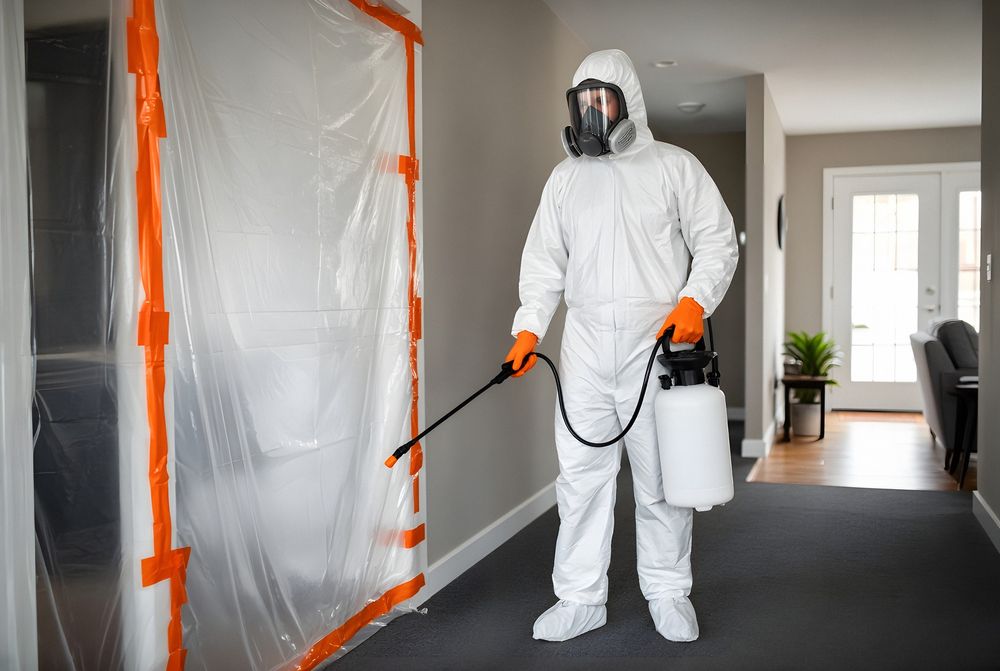
When blood is spilled at home or work, many people's first instinct is to grab towels and cleaner and make it go away. For a small, fresh spill on a hard surface, that can be fine with the right precautions. For larger amounts, or blood that has soaked into materials, doing it yourself puts your health at risk, often leaves contamination behind, and can take a serious emotional toll. This guide explains why.
Health risks
Bloodborne pathogens. Blood can carry hepatitis B, hepatitis C and HIV. Infection happens when blood enters the body through cuts, scrapes, needlesticks or splashes to the eyes, nose or mouth. During cleanup, people cut themselves on broken glass, splash solution into their faces when scrubbing, and touch contaminated surfaces with chapped or cut hands. Professional crews work under OSHA's Bloodborne Pathogens Standard, with training, protective equipment and hepatitis B vaccination, because these risks are real.
Dried blood isn't safe. Hepatitis B can remain infectious in dried blood on surfaces. Scraping dried blood can also create particles and flakes.
Hidden sharps. Scenes involving injuries, drug use or medical care may include needles, glass or other sharp objects hidden under furniture, in bedding or in carpet.
Chemical hazards. Mixing cleaning products, especially bleach with ammonia or acids, can release toxic gases. People cleaning under stress sometimes reach for several products at once.
Other hazards. Decomposition fluids, drug residue, and dust from removing materials add further risks.
Practical problems
You may not get it all. Blood spreads into carpet pad, subfloors, wall cavities and furniture interiors. Cleaning the surface leaves those areas contaminated, and odor and staining often return.
You may spread it. Without containment, contamination gets tracked on shoes, carried on clothing, and spread with cleaning cloths into other rooms.
Removal is hard work. Cutting out carpet, pad, drywall and subfloor is physically demanding, needs tools and creates heavy, contaminated waste.
Disposal is regulated. Saturated materials may be regulated medical waste under state rules. Putting them in household trash can expose sanitation workers and may violate local rules.
Financial consequences
Insurance. Insurers often need photos and documentation of the condition before materials are removed. Cleaning first can make a claim harder to support.
Repeat work. An incomplete cleanup that leaves contaminated pad or subfloor behind can mean paying for professional remediation later anyway, after new flooring or furniture has been damaged by returning stains and odor.
Property value. Lingering odor or staining affects resale and rental value.
Emotional consequences
When the blood belongs to someone you love, cleaning it up can be traumatic. Family members who clean up after a suicide, homicide or fatal accident often describe intrusive images and lasting distress. There is no obligation to do this yourself. Professional crews work discreetly and can recover the belongings that matter to you.
Employers: special considerations
Employers who ask employees to clean up blood must comply with OSHA's Bloodborne Pathogens Standard, which requires an exposure control plan, training, protective equipment and hepatitis B vaccination for employees with occupational exposure. Assigning untrained staff to a large blood incident exposes them to risk and the business to liability. Many businesses designate a professional provider in advance.
What you can safely clean
A small, fresh spill on a hard, non-porous surface, such as a few drops on tile, a countertop or sealed flooring, can be handled carefully:
- Keep others away.
- Cover any cuts on your hands and put on disposable gloves; add eye protection if splashing is possible.
- Pick up any broken glass with tools, not hands.
- Absorb the blood with paper towels.
- Clean the area with detergent and water.
- Disinfect with an EPA-registered disinfectant that lists bloodborne pathogens, or a freshly mixed bleach solution, keeping the surface wet for the label's contact time.
- Bag all waste, remove gloves carefully, and wash your hands.
A note on fingerprint powder and investigative residue
After an investigation, blood is often accompanied by fingerprint powder and chemical reagents. Powder smears and spreads when wiped with a wet cloth, and some reagents stain surfaces. Removing them along with biological material is part of professional scene cleanup, using methods suited to each surface.
What it costs to wait
Delays make every part of the job harder. Blood that sits for days soaks deeper into flooring and walls, more material must be removed, and odor grows. If you can't face the cleanup or aren't sure, close the room and get an assessment rather than waiting.
When to stop and call a professional
- Blood soaked into carpet, upholstery, a mattress or walls
- More than a small amount, or more than one area
- A death, especially one not discovered right away
- Needles or other sharps present
- Strong odor
- Drug use suspected
- You feel unable to do it
If you are exposed
Wash skin with soap and water, flush eyes or mouth with water, and contact a healthcare provider promptly. Some post-exposure treatments work best when started quickly.
Key takeaways
Small, fresh spills on hard surfaces can be cleaned safely with gloves, cleaning and a registered disinfectant. Larger amounts and soaked-in blood carry real health risks, often can't be fully cleaned without removing materials, may require regulated disposal, and can be emotionally devastating. Professional cleanup protects your health, your property and your peace of mind.
Sources
- OSHA: Bloodborne Pathogens and Needlestick Prevention
- OSHA: 29 CFR 1910.1030, Bloodborne Pathogens Standard
- EPA: Selected EPA-Registered Disinfectants
- EPA: Medical Waste
This guide is general information. It is not legal, medical, environmental or safety advice. Rules vary by state and locality. For a specific situation, consult the relevant agency or a qualified professional.