The odor that follows an unattended death is one of the most difficult problems a property owner can face. It clings to everything, returns after cleaning and can make a home unlivable. This guide explains why the odor is so persistent and how professionals remove it for good.
Why decomposition odor is different
Decomposition releases a complex mix of volatile organic compounds, including sulfur-containing compounds and amines with names like putrescine and cadaverine. These compounds are noticeable at very low concentrations, which is why even a small amount of residue can make a room smell. They also bind readily to porous materials such as drywall, wood, fabric, carpet and insulation.
The odor has two sources:
- The contaminated materials themselves, such as a mattress, carpet pad or subfloor soaked with fluids.
- Odor molecules absorbed into surrounding materials, including walls, ceilings, furniture, clothing and the HVAC system, even where no fluid reached.
Both must be addressed.
Why common fixes fail
- Air fresheners, candles and sprays mask odor temporarily but don't remove the source.
- Cleaning the surface of a stained carpet or floor leaves contamination underneath.
- Opening windows helps with comfort but doesn't remove odor bound into materials.
- Ozone alone, without removing the source, may reduce odor briefly, but it returns because the source remains.
- Painting over stained walls or floors without proper cleaning and sealing traps odor that can bleed through.
Step 1: Remove the source
Every successful odor removal starts with removing contaminated materials. That usually includes mattresses and box springs, upholstered furniture, carpet and pad, and stained sections of subfloor, drywall and baseboards. Hidden areas, such as the subfloor under a stain, wall cavities and floor registers, must be checked and addressed.
Step 2: Clean and disinfect
Remaining surfaces are cleaned to remove residue, then disinfected. Enzymatic cleaners, which break down organic material, are commonly used on structural surfaces.
Step 3: Seal stained structural materials
After cleaning, structural wood and concrete that remain stained are sealed with an odor- and stain-blocking primer or encapsulant. This locks in residual compounds so they don't affect the new flooring or finishes. Sealing works only after cleaning; it isn't a substitute for removal.
Step 4: Treat the air and HVAC system
The heating and cooling system spreads odor throughout the home. Filters are replaced, and returns, registers and ductwork are cleaned where odor has reached them. In some cases, contaminated flexible duct is replaced.
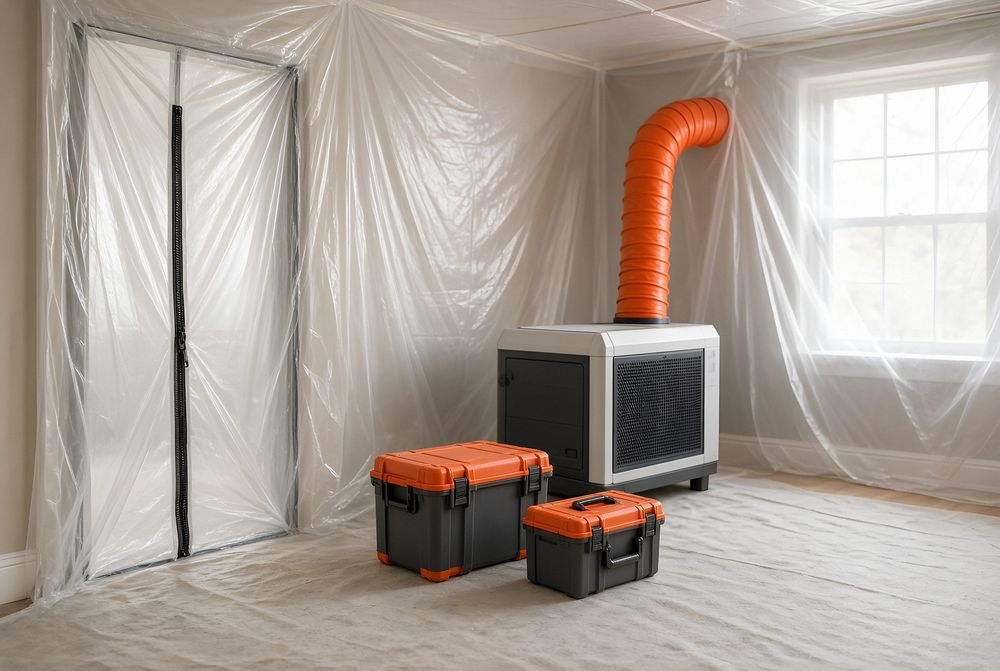
Air treatment then removes odor molecules that remain in the air and in surface materials. Two common tools:
- Hydroxyl generators produce reactive molecules that break down odor compounds. They are generally considered suitable for use in occupied spaces according to the manufacturer's guidance.
- Ozone generators are powerful oxidizers used in unoccupied spaces. Ozone is a lung irritant; the EPA warns that ozone at levels effective against odors can exceed health standards and that ozone generators should not be used in occupied spaces. Professionals use ozone only when the space is empty, then ventilate before anyone returns.
Step 5: Address contents and the rest of the home
Clothing, bedding and fabrics throughout the home may hold odor. Washable items can often be laundered; others may need professional cleaning or replacement. Hard-surface contents are cleaned. Rooms far from the affected area may need cleaning and air treatment as well.
Step 6: Verify
Professionals verify odor removal by walking through the home after air treatment and ventilation, often under warm conditions, which tend to bring out residual odor. If odor remains, they track it to its source and address it.
How long it takes
Odor removal usually takes several days after source removal, depending on severity and the size of the home. Extended decomposition and HVAC involvement can extend that time.
Can I do it myself?
Removing contaminated materials exposes you to biological hazards and usually requires protective equipment and regulated waste disposal. Ozone use carries health risks if misused. For anything beyond minor, surface-level odor, professional remediation is the safer and more reliable choice.
Insurance
Homeowners insurance often covers remediation after a sudden death in the home, including odor treatment as part of the cleanup. Document the condition and work with photos and a written scope.
Frequently asked questions
Can I paint over the smell?
Not without first removing the source and cleaning. Ordinary paint doesn't block decomposition odor; specialized sealing primers do, but only on cleaned surfaces.
Will the odor come back on hot days?
If odor returns in warm weather, residue remains somewhere, often in subfloor, wall cavities or ducts. A thorough job includes a warm-weather check.
Do I need to replace the HVAC system?
Rarely. Cleaning ducts, returns and the air handler and replacing filters is usually enough. Contaminated flexible duct may be replaced.
Can clothes and furniture be deodorized?
Washable items usually can. Upholstered furniture that absorbed fluids should be discarded; furniture with odor only may be treated.
Key takeaways
Death odor persists because contaminated materials remain and odor molecules bind to surrounding materials and the HVAC system. Lasting removal requires removing the source, cleaning and disinfecting, sealing stained structural materials, treating the HVAC system and air, and verifying the result. Masking products and ozone without source removal don't work.
Sources
- EPA: Ozone Generators That Are Sold as Air Cleaners
- EPA: Selected EPA-Registered Disinfectants
- OSHA: 29 CFR 1910.1030, Bloodborne Pathogens Standard
This guide is general information. It is not legal, medical, environmental or safety advice. Rules vary by state and locality. For a specific situation, consult the relevant agency or a qualified professional.