Why the smell won't go away
Decomposition odor comes from gases, including sulfur compounds and amines, that are produced as tissue breaks down. Those compounds bind into porous materials such as drywall, wood, insulation, carpet, fabric and even concrete. Fluids that soaked into a subfloor keep releasing odor for months. Air fresheners, open windows and household odor bombs may help for a day. Then warmth, humidity or the HVAC system brings the smell back.
The odor won't stop until the material producing it is removed or neutralized.
Our method
- Find every source. We trace where fluids went: under flooring, into the subfloor and joists, behind baseboards, and into the ceiling below in multi-story buildings. We also check the HVAC returns and ducts that served the room.
- Remove the source material. Saturated furnishings, carpet and pad, flooring and subfloor sections, drywall and insulation are cut out until clean material is reached.
- Clean the structure. Exposed framing and slab are cleaned with enzymatic and detergent products that break down organic residue.
- Seal what can't be replaced. Cleaned structural members can be coated with an odor-blocking encapsulant before rebuilding.
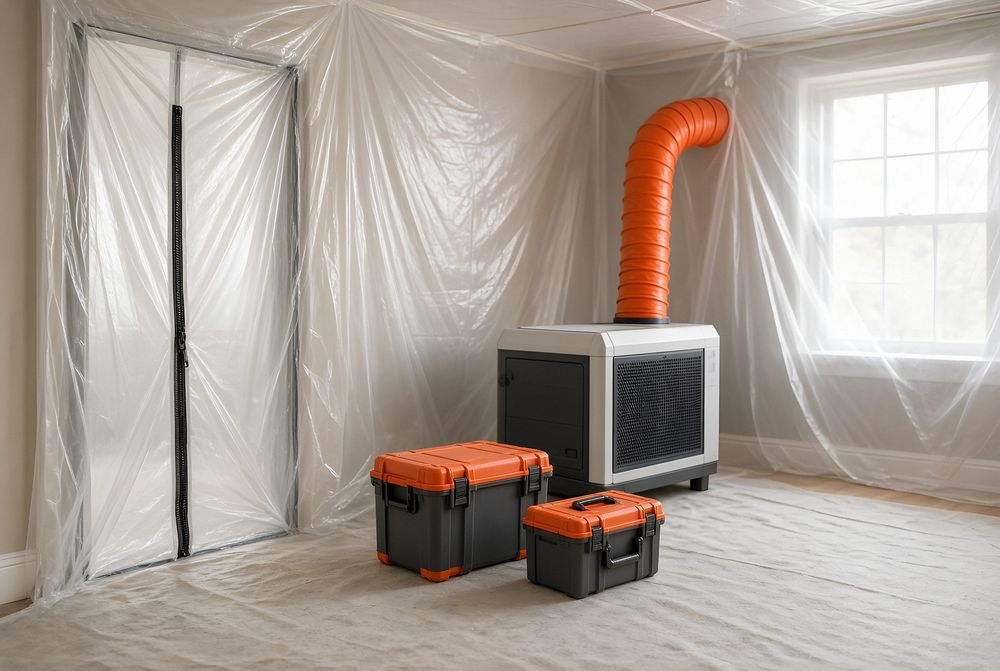
- Treat the air and remaining materials. Hydroxyl generation, ozone (only in an unoccupied, closed space), or thermal fogging, depending on the space and materials.
- HVAC. Filters are replaced, and ducts and air-handling components in the affected zone are cleaned or deodorized.
- Verification. The space is checked after it has been closed up and warmed, which is when residual odor shows up.
Animals, not people
Strong decomposition odor sometimes comes from a dead animal in a wall, attic, crawlspace or duct. The same rule applies: find and remove the source first. Our dead animal removal page covers that work.
Realistic expectations
When the source has been fully removed and the structure treated, decomposition odor can be eliminated. A faint odor may linger for a short time while treated materials off-gas, and we'll tell you if that's expected. If an odor returns weeks later, there is usually a missed source, and the fix is to find it rather than add more deodorizer.
Common questions
Can we stay in the house during treatment?
During source removal and ozone treatment, no. Hydroxyl treatment can be used in occupied spaces under manufacturer guidance, but most families prefer to stay elsewhere until the work is done.
Will painting cover the smell?
Not by itself. Standard paint doesn't seal decomposition odor. Specialty encapsulants are used only after cleaning.