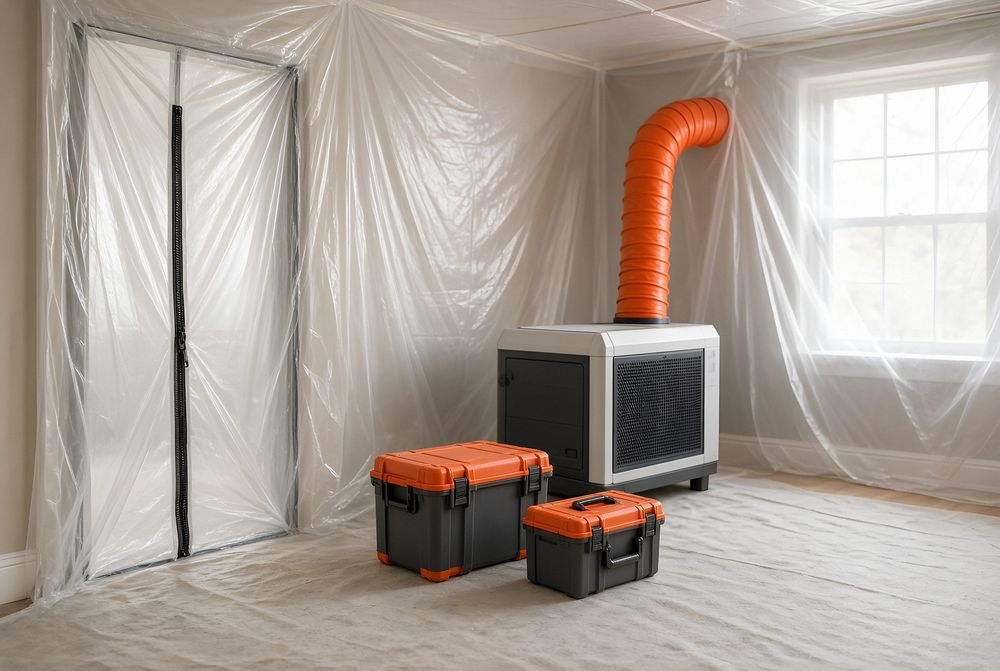
After an unattended death, odor often shows up in rooms far from where the person was found. The reason is usually the heating, ventilation and air conditioning (HVAC) system. Understanding how air systems carry odor explains why remediation often includes the ductwork, and why ignoring it can leave a home smelling long after the affected room is clean.
How air systems move odor
Forced-air systems pull air from rooms through return grilles, pass it through a filter and the air handler, where it's heated or cooled, and push it back out through supply ducts and registers. Every pass carries odor compounds from the affected room through the system and into the rest of the home.
Over days or weeks, odor compounds absorb into:
- Filters, which trap particles and become odor sources themselves
- Return ducts and plenums, especially those near the affected room
- The air handler, including the blower, coil and drain pan
- Supply ducts, carrying odor to every room
- Duct insulation and flexible duct, which are porous
Direct contamination
In some cases, decomposition fluids reach the HVAC system directly. Floor registers or returns in the affected room can collect fluids, which then drain into ductwork, especially in homes with floor ducts over crawlspaces or in slabs. Insects can also enter ducts.
Signs the HVAC system is involved
- Odor stronger when the system runs
- Odor in rooms far from the affected area
- Odor returning after the affected room has been cleaned
- Visible staining or debris at registers or returns near the affected area
What remediation of the HVAC system involves
Shut it down early. Turning off the system after discovery limits how far odor spreads. Seal registers in the affected room until remediation.
Inspect. A technician checks returns, supply registers, accessible ductwork and the air handler. Camera inspection helps for inaccessible duct runs.
Replace filters. Filters are replaced, often several times during the project.
Clean ducts. Rigid metal ducts are cleaned with negative-air collection equipment and agitation tools, following accepted duct-cleaning practice.
Replace porous components. Flexible duct, duct board and duct liner that absorbed odor or fluids often can't be cleaned effectively and are replaced.
Clean the air handler. The blower, coil, cabinet and drain pan are cleaned, coordinated with a licensed HVAC contractor.
Treat odor. After cleaning, air treatment is run through the system, and the system is operated to confirm odor is gone.
Coordinating with HVAC contractors
Mechanical repairs, coil cleaning that requires disassembly, and equipment replacement are handled by licensed HVAC contractors. Remediation companies coordinate with them so the system is decontaminated and working before it's turned back on.
Apartment buildings and commercial spaces
Buildings with shared ventilation can spread odor between units through common returns, exhaust systems and plenums. Building engineering should be involved early to isolate the affected unit and plan cleaning.
Costs and insurance
HVAC cleaning and component replacement add to the remediation scope. When the death was a sudden event, homeowners or landlord insurance often covers this work as part of the overall cleanup. Documentation of the system's condition helps.
What not to do
- Don't run the system to "air out" the house; it spreads odor.
- Don't spray fragrances into vents.
- Don't run ozone through an occupied home or a system that serves occupied areas; ozone is a lung irritant and should be used only in unoccupied spaces.
Homes without central air
Homes heated by baseboard, radiators or space heaters don't have ducts to spread odor, but odor still travels through open doors, stairwells and gaps around pipes. Remediation in these homes focuses on source removal, sealing and air treatment room by room. Exhaust fans in bathrooms and kitchens can help ventilate during treatment but should be cleaned afterward.
Checking the system after remediation
At the end of a project, run the system with new filters for a few hours with all registers open, then walk every room. Pay attention to rooms nearest the affected area and to the air coming out of registers. If any odor is detected, the source should be traced before the job is considered complete.
Frequently asked questions
Do I need to replace my whole HVAC system?
Rarely. Cleaning ducts and the air handler and replacing filters and porous duct components usually resolves odor.
How long until I can run the system again?
After cleaning and odor treatment are complete and verified, typically at the end of the remediation project.
What about window units or mini-splits?
They can also hold odor. Units in or near the affected room may need professional cleaning or replacement.
Will duct cleaning remove all odor?
Combined with source removal and air treatment, it usually does. If odor persists, remaining sources should be traced.
Should I open the windows while the system is off?
Ventilating helps comfort, but don't rely on it to remove odor; source removal and treatment are what work.
Key takeaways
HVAC systems spread decomposition odor through filters, returns, the air handler and supply ducts, and sometimes collect fluids directly. Turn the system off after discovery, then include inspection, filter replacement, duct cleaning, replacement of porous components and air handler cleaning in remediation, coordinated with HVAC contractors.
Sources
- EPA: Ozone Generators That Are Sold as Air Cleaners
- OSHA: Bloodborne Pathogens and Needlestick Prevention
This guide is general information. It is not legal, medical, environmental or safety advice. Rules vary by state and locality. For a specific situation, consult the relevant agency or a qualified professional.