Discarded needles turn up in store restrooms, parking lots, landscaping, stockrooms, fitting rooms and public spaces. A needlestick can expose workers or customers to bloodborne pathogens and cause serious anxiety. A simple, consistent plan protects people and reduces risk. This guide covers the basics.
Why needles are a concern
Used needles can carry blood containing hepatitis B, hepatitis C or HIV. The risk of infection from a single needlestick depends on many factors, but every needlestick should be treated as a potential exposure.
Rules for employees
- Never pick up needles with bare hands.
- Never recap, bend or break needles.
- Don't reach into places you can't see, such as trash cans, under seats, behind toilet tanks or between merchandise.
- Report needles to a manager.
- Only trained employees with tools and containers should handle sharps.
Safe pickup
For trained employees:
- Put on puncture-resistant gloves if available, or disposable gloves.
- Bring a sharps container to the needle.
- Use tongs or tweezers to pick up the needle, point away from you.
- Place it in the container, point first.
- Close the container.
- Check the area for more needles.
- Remove gloves and wash hands.
Sharps containers
Use rigid, puncture-resistant, leak-resistant containers with lids that close securely and labels marking them as sharps or biohazard. Don't overfill. Dispose of full containers according to state and local rules, often through a medical waste vendor or a community disposal program.
Restrooms and public areas
Some businesses install wall-mounted sharps disposal boxes in restrooms so people who use needles dispose of them safely rather than leaving them in trash or toilet tanks. Consider whether this makes sense for your location, and check local guidance.
When to call professionals
- Multiple needles or a large area
- Needles in hard-to-reach places, such as ceilings, toilet tanks or landscaping
- Needles with blood or drug residue nearby
- Encampment areas
- Repeated finds in the same location
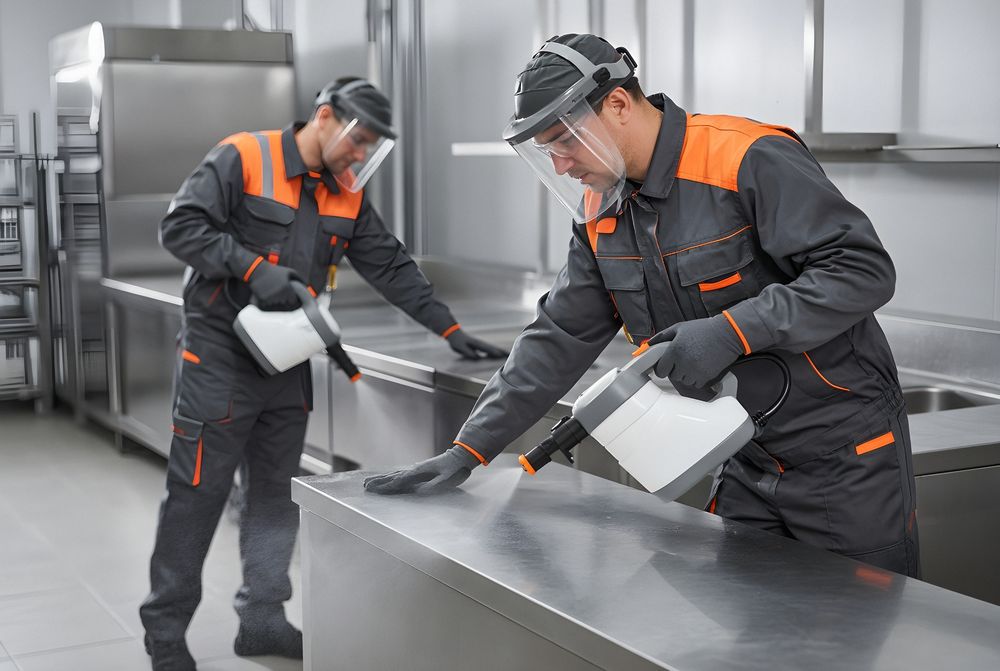
Professional crews sweep areas methodically with tools and containers, and can clean and disinfect contaminated surfaces.
If someone is stuck
- Wash the area with soap and water immediately.
- Seek medical evaluation promptly; post-exposure treatment works best when started quickly.
- Report the incident to a manager and document it.
- Keep the needle in a sharps container if your medical provider wants it, but don't test it yourself.
Employers whose employees have occupational exposure must provide post-exposure evaluation and follow-up under OSHA's Bloodborne Pathogens Standard.
Prevention
- Improve lighting in restrooms and parking areas.
- Limit restroom access or increase monitoring if needed.
- Remove hiding places, such as dropped ceiling access in restrooms.
- Check high-risk areas regularly.
- Work with local outreach and harm reduction programs where appropriate.
Customers
If a customer is stuck by a needle on your property, encourage prompt medical evaluation, document the incident and notify your insurer.
A practical example
A grocery store's night crew finds needles in a restroom ceiling tile and behind the toilet tank. Following policy, they close the restroom and call the manager, who calls the remediation vendor. The vendor removes the needles, checks the ceiling space, disinfects the restroom, and recommends removing the ceiling tile access and adding a sharps disposal box.
Parking lots and landscaping
Outdoor areas are harder to sweep. Assign trained staff to check landscaping, cart corrals and lot edges on a schedule, using grabbers and sharps containers. Don't use leaf blowers or bare hands in areas where needles have been found. Trim shrubs that hide debris.
Documentation
Keep a simple log of where and when needles are found and how they were handled. Patterns help you decide where to add lighting, change restroom access or schedule professional sweeps, and the log supports insurance and safety reviews.
Training refreshers
Turnover in retail is high. Include sharps safety in onboarding and repeat it periodically, with a short demonstration of tool use and container handling.
Frequently asked questions
Can I put a needle in the regular trash?
Not loose. Use a sharps container and follow local disposal rules.
What if I don't have a sharps container?
A rigid plastic container with a screw-top lid can be used temporarily; label it and dispose of it properly.
Do employees need training?
Employees expected to handle sharps should be trained under your exposure control plan.
Should we call police?
For large quantities or criminal activity, yes; for occasional finds, follow your procedure.
Do sharps boxes encourage drug use?
Many public health agencies support safe disposal options to reduce discarded needles; decide based on local guidance.
Who pays for professional sweeps?
The business or property owner.
What gloves work best?
Puncture-resistant gloves add protection, but tools, not hands, are the main safeguard.
Should we post signs?
Signs asking people to use sharps boxes and report needles can help.
Can we give used sharps containers to the trash hauler?
Only if local rules allow it. Many areas require a medical waste vendor or a designated drop-off program, so check with your health department.
Key takeaways
Never handle needles with bare hands. Train specific employees, use tools and rigid sharps containers, and dispose of containers properly. Wash and seek prompt medical care after a needlestick. Call professionals for multiple or hard-to-reach needles, and take steps to prevent repeated finds.
Sources
- OSHA: 29 CFR 1910.1030, Bloodborne Pathogens Standard
- OSHA: Bloodborne Pathogens and Needlestick Prevention
- EPA: Medical Waste
This guide is general information. It is not legal, medical, environmental or safety advice. Rules vary by state and locality. For a specific situation, consult the relevant agency or a qualified professional.