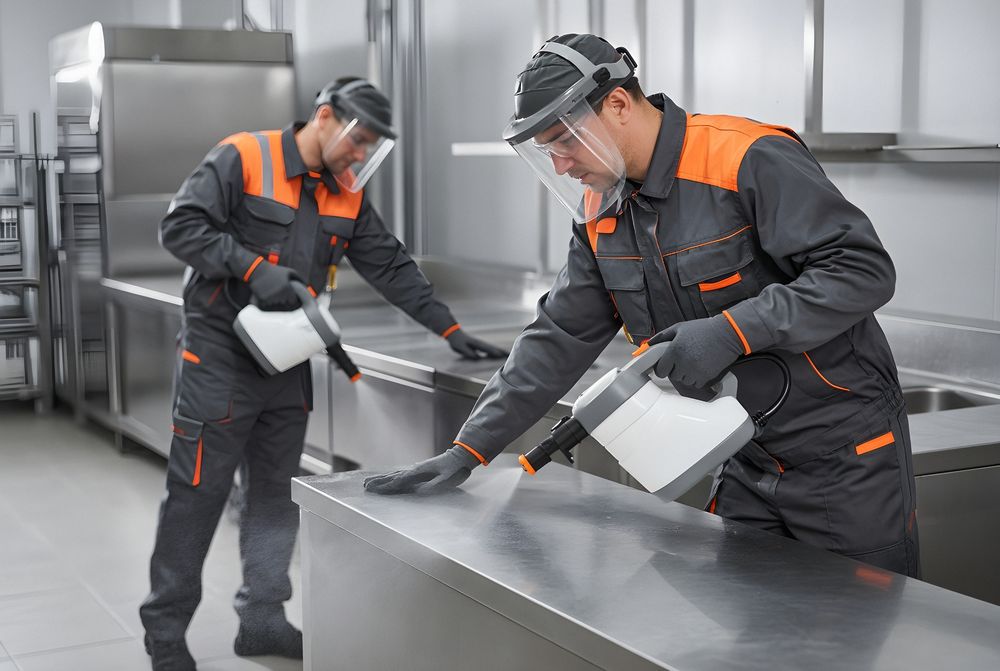
Most workplaces will eventually face a biohazard incident: an injury with blood loss, a vomit or bodily fluid incident, needles found in a restroom, a sewage backup, or a death on site. A short, practical response plan helps employees act safely and quickly, protects the business, and supports compliance with OSHA requirements. This guide outlines what to include.
Start with a risk assessment
Identify:
- Likely incidents: injuries, illness, needles, sewage, violence, deaths
- Locations: restrooms, break rooms, entrances, parking areas, production floors
- Who might respond: first aid providers, janitorial staff, managers, security
- Existing obligations: whether any employees have occupational exposure under OSHA's Bloodborne Pathogens Standard
Define roles
- Incident lead on each shift
- First aid responders, trained and equipped
- Facilities or janitorial staff, with clear limits on what they clean
- Communications contact for employees and, if needed, the public
- Vendor contact who calls the biohazard company, plumber or other services
Decide what employees will and won't clean
Many workplaces adopt a simple rule:
- Trained employees may clean small, contained spills on hard surfaces using a spill kit and appropriate disinfectant.
- Professionals handle large spills, soaked-in contamination, sharps beyond a single needle, deaths, sewage and anything involving drug residue.
Write this into your exposure control plan if your employees are covered by the Bloodborne Pathogens Standard.
Equip the workplace
- Bodily fluid spill kits with gloves, absorbent, scoop, disinfectant and bags
- Sharps containers in restrooms or locations where needles are found
- First aid kits
- PPE such as gloves, eye protection and aprons
- EPA-registered disinfectants with appropriate claims
Step-by-step response
- Ensure safety and call 911 for medical emergencies.
- Secure the area and keep people away.
- Notify the incident lead.
- Decide: small spill handled internally, or professional cleanup?
- Clean or call accordingly.
- Document what happened, who responded and what was done.
- Follow up on any employee exposures with medical evaluation.
Outside vendors
Pre-arrange relationships with:
- A biohazard remediation company
- A plumber for sewage problems
- Pest control
- A testing professional if drug residue is a concern
Confirm availability, response expectations and documentation.
Communication
Prepare simple messages for employees about what happened, what's being done and whether areas are closed. Protect the privacy of anyone involved. For serious incidents, coordinate any public statements.
Training
Train employees on recognizing hazards, the "don't touch" rule for needles and drugs, using spill kits, reporting procedures and what to do after an exposure. Covered employees need training under the Bloodborne Pathogens Standard.
Documentation
Keep incident reports, vendor reports, waste records and exposure follow-up records. Some injuries or exposures may need to be recorded on OSHA injury and illness logs.
Review and drills
Review the plan annually, after incidents and when operations change. Short tabletop exercises help managers practice decisions.
A practical example
A warehouse employee cuts a hand badly and bleeds across a concrete floor and a forklift seat. Coworkers call 911 and apply first aid. The shift lead tapes off the area and calls the biohazard vendor because blood soaked into the forklift seat. Trained staff clean small drips on the floor with a spill kit. The vendor cleans the forklift and replaces the seat cover. The incident is documented and the injury recorded as required.
Special settings
Food businesses must consider health department rules for food, food-contact surfaces and closure after contamination. Healthcare and dental offices have broader infection control obligations. Schools and childcare need plans that protect children and comply with education and licensing rules. Hotels and multifamily properties should add procedures for guest rooms and units. Tailor the plan to your setting.
Sewage and water events
Include sewage backups in your plan. Steps include stopping water use, calling a plumber, closing affected areas, protecting electrical systems and calling a remediation company. Employees shouldn't clean sewage without training and protective equipment.
Deaths on site
If a person dies at the workplace, call 911, keep the area secured, and wait for police and the medical examiner to release it. Support employees who witnessed the event, and use a professional company for cleanup.
Frequently asked questions
Do small businesses need a plan?
A short plan helps any business; requirements depend on whether employees have occupational exposure.
What goes in a spill kit?
Gloves, absorbent, scoop or scraper, disinfectant, biohazard bags and instructions.
Who pays for professional cleanup?
The business, though property insurance may cover some events.
Should we keep naloxone?
Many workplaces do, particularly where overdoses have occurred; follow local guidance and train responders.
What if an employee refuses to clean?
Employees shouldn't be required to clean biohazards beyond their training and equipment.
How do we handle needles found in restrooms?
Don't touch them with hands; use tools and a sharps container, or call professionals.
Where should the plan be kept?
Where shift leads can find it quickly, in print and digitally, with vendor phone numbers on the first page.
How long should the plan be?
Short enough to use under pressure: a one-page quick reference backed by a fuller document.
Should remote or field employees be included?
Yes. Field staff need guidance for incidents at customer sites, including whom to call.
Key takeaways
Assess risks, define roles, decide what employees will and won't clean, equip the workplace, set step-by-step procedures, pre-arrange vendors, communicate clearly, train staff, document incidents and review the plan regularly.
Sources
- OSHA: 29 CFR 1910.1030, Bloodborne Pathogens Standard
- OSHA: Bloodborne Pathogens and Needlestick Prevention
- EPA: Selected EPA-Registered Disinfectants
This guide is general information. It is not legal, medical, environmental or safety advice. Rules vary by state and locality. For a specific situation, consult the relevant agency or a qualified professional.