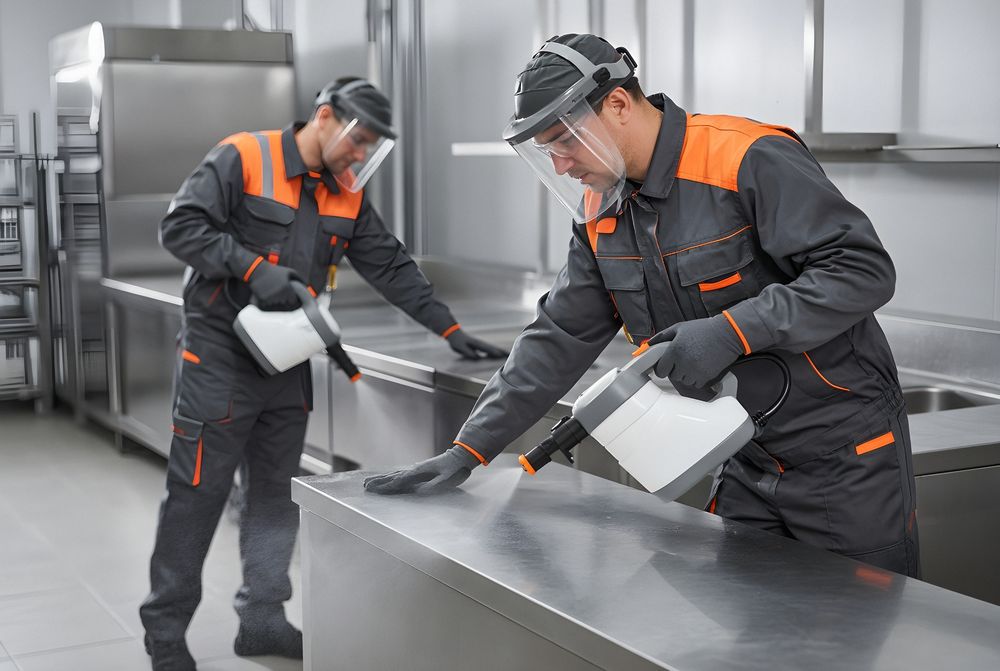
OSHA's Bloodborne Pathogens Standard, found at 29 CFR 1910.1030, protects workers who can reasonably be expected to come into contact with blood or other potentially infectious materials as part of their jobs. It applies far beyond hospitals, including to many businesses that don't think of themselves as healthcare employers. This guide gives employers an overview. It isn't a substitute for reading the standard or getting compliance advice.
Who is covered
The standard applies to all occupational exposure to blood or other potentially infectious materials (OPIM). "Occupational exposure" means reasonably anticipated contact with blood or OPIM that may result from performing job duties. Examples outside healthcare can include:
- Designated first aid providers
- Janitorial and housekeeping staff who clean up blood or bodily fluids
- Maintenance workers in residential and commercial properties
- Security staff and law enforcement
- Hotel housekeeping
- Tattoo and body piercing studios
- Biohazard cleanup companies
Whether a job involves occupational exposure depends on the duties, not the job title.
What counts as OPIM
OPIM includes certain human body fluids, such as semen, vaginal secretions and several internal body fluids, any body fluid visibly contaminated with blood, and all body fluids in situations where it's difficult or impossible to differentiate between them. It also includes unfixed human tissues and certain cell and tissue cultures.
Key requirements
Exposure control plan. A written plan identifying jobs with exposure, describing how the employer will comply, and reviewed and updated at least annually.
Engineering and work practice controls. Measures that isolate or remove hazards, such as sharps disposal containers and handwashing facilities, and safe work practices that reduce exposure.
Personal protective equipment. Gloves, gowns, face shields, eye protection and other equipment, provided at no cost to employees, in appropriate sizes, and used when exposure is possible.
Housekeeping. A written schedule and methods for cleaning and decontaminating work surfaces, handling regulated waste and laundry.
Hepatitis B vaccination. Offered at no cost to employees with occupational exposure, after training and within the required time frame.
Post-exposure evaluation and follow-up. Confidential medical evaluation and follow-up after an exposure incident, at no cost to the employee.
Labels and signs. Biohazard labels on containers of regulated waste and contaminated items.
Training. Initial and annual training during working hours, covering the standard, the plan, controls, PPE, vaccination and what to do after exposure.
Recordkeeping. Medical records for exposed employees, kept confidential, and training records. Certain employers must also maintain a sharps injury log.
Using outside cleanup companies
Many employers decide that their employees won't clean up significant blood or bodily fluid incidents, and instead call a professional biohazard company. That decision should be reflected in the exposure control plan, and employees should know how to secure the area and whom to call. Small, routine spills may still be handled by trained employees with appropriate equipment.
Common compliance gaps
- No written exposure control plan, or one never updated
- Training not provided annually or not specific to the workplace
- Hepatitis B vaccination not offered
- No post-exposure procedure
- Inadequate sharps containers or PPE
- Janitorial staff cleaning blood without training
State plans
Some states operate their own OSHA-approved occupational safety and health plans, which must be at least as effective as federal OSHA and may have additional requirements.
A practical example
A hotel chain identifies housekeepers and maintenance staff as having occupational exposure. It writes an exposure control plan, provides gloves, sharps containers and spill kits, trains staff annually, offers hepatitis B vaccination, and sets a rule that housekeepers report significant blood or bodily fluid incidents to managers, who call a biohazard vendor. Housekeepers handle only small spills with the provided kits.
Getting started
If you're unsure whether the standard applies, start by listing every job and asking whether the duties include reasonably anticipated contact with blood or OPIM. For covered jobs, draft the exposure control plan, select controls and PPE, schedule training, set up vaccination and post-exposure procedures, and decide which incidents will go to an outside cleanup company. Review the plan with employees, who often know where exposures actually happen.
Frequently asked questions
Does the standard apply to my office?
If employees are designated first aid providers or are expected to clean up blood, it may. Assess job duties.
Do I have to offer hepatitis B vaccine to everyone?
To employees with occupational exposure, as the standard specifies.
Can I require employees to clean up blood?
Only if they're covered by your program, trained and equipped. Many employers use professionals for significant incidents.
What is an exposure incident?
A specific eye, mouth, other mucous membrane, non-intact skin or parenteral contact with blood or OPIM resulting from job duties.
How often must training occur?
Initially and at least annually, and when tasks change.
Where can I get help?
OSHA's website and consultation services, and state plan agencies.
Do contractors we hire need their own program?
Yes. Contractors are responsible for their own employees' compliance; ask vendors to confirm they have an exposure control plan.
Key takeaways
OSHA's Bloodborne Pathogens Standard covers employees with reasonably anticipated exposure to blood or OPIM. Employers need a written exposure control plan, controls, PPE, housekeeping procedures, hepatitis B vaccination offers, post-exposure follow-up, labels, training and records. Using professional cleanup for significant incidents protects employees.
Sources
- OSHA: 29 CFR 1910.1030, Bloodborne Pathogens Standard
- OSHA: Bloodborne Pathogens and Needlestick Prevention
- OSHA: 29 CFR 1910 Subpart I, Personal Protective Equipment
This guide is general information. It is not legal, medical, environmental or safety advice. Rules vary by state and locality. For a specific situation, consult the relevant agency or a qualified professional.