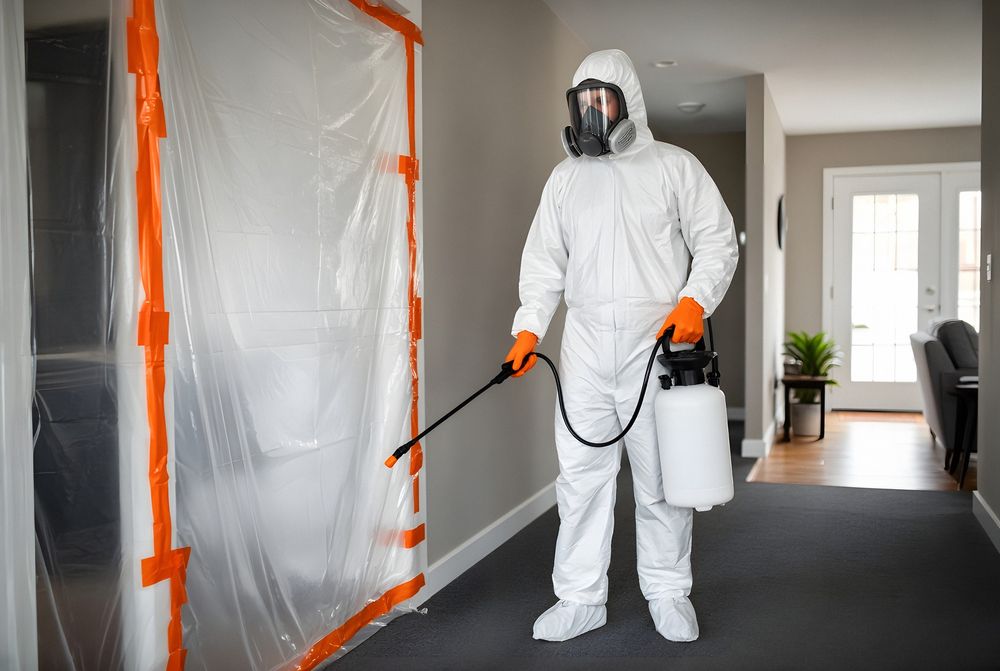
Many small messes can be handled safely at home with gloves, cleaning and a registered disinfectant. Others put you at real risk, or will come back as odor and stains if they're not fully removed. This guide lists the signs that a situation needs professional biohazard cleanup.
1. Blood or fluids soaked into soft materials
If blood, vomit, urine or other bodily fluids have reached carpet, carpet pad, a mattress, upholstered furniture or drywall, the contamination is no longer on the surface. Cleaning the visible stain won't reach what soaked in. Removing those materials involves cutting and handling contaminated material, and often regulated waste disposal.
2. Anything more than a small spill
A few drops on a tile floor is a household job. A pool of blood, splatter across walls, or contamination in more than one room is not. Larger quantities mean more exposure, more surfaces, and more places fluids can hide.
3. A death that wasn't discovered right away
Even a day or two can be enough for decomposition to begin releasing fluids and odor, especially in warm conditions. Decomposition fluids travel through flooring into subfloors and can reach the floor below, wall cavities and HVAC returns. This work needs protective equipment, controlled material removal and source-level odor treatment.
4. A strong odor that cleaning doesn't fix
If an odor returns after cleaning, the source is still there, usually in a porous material or hidden space. This is common with decomposition, urine, sewage and dead animals. Air fresheners and sprays only mask it. Professionals locate and remove the source.
5. Sewage or floodwater in living spaces
Sewage backups and floodwater from outside are Category 3 water under the industry's water damage standard, meaning they can carry bacteria, viruses and parasites. Porous materials they reach generally need to be removed, and remaining surfaces cleaned and disinfected. Waiting also invites mold.
6. Needles or sharps
Used needles carry the risk of bloodborne disease through a single puncture. If you find more than an isolated syringe, or find them in hidden places such as toilet tanks, ceiling tiles, furniture or cluttered rooms, a professional sweep with proper tools and containers is safer.
7. Large amounts of animal droppings
Rodent droppings can carry hantavirus, which spreads through breathing contaminated dust, so the CDC advises against sweeping or vacuuming them. Old accumulations of bird and bat droppings can harbor Histoplasma fungus. Raccoon feces can contain roundworm eggs that most chemicals don't kill. A few droppings can be cleaned with the CDC's wet methods; an infested attic, crawlspace or outbuilding is a professional job.
8. Signs of drug use or manufacturing
Burn marks, foil, glass pipes, chemical odors, stained walls or a history of drug use in the property suggest chemical residue such as methamphetamine or fentanyl. These residues aren't visible and require testing and specialized cleanup. If manufacturing is suspected, stop and contact law enforcement or your state's environmental agency; some states regulate these properties.
9. Hoarding with biological contamination
Hoarded homes often combine spoiled food, human or animal waste, pests, mold and blocked exits. Cleaning them safely requires planning, protective equipment and a crew, as well as sensitivity toward the occupant.
10. Contamination in the HVAC system
If contamination or odor has reached ductwork, returns or the air handler, the system can spread it through the building. Cleaning ducts and air handlers requires specialized equipment and coordination with HVAC professionals.
11. A business, rental or public space
Employers have obligations under OSHA's Bloodborne Pathogens Standard. Landlords need documentation for turnovers and deposits. Businesses need to reopen quickly and protect staff and customers. Professional cleanup brings documentation and compliance that in-house staff may not be able to provide.
12. You need documentation
Insurance claims, estate matters, real estate sales and landlord-tenant disputes all go more smoothly with professional photos, written scopes and waste records.
13. The emotional weight is too much
After a suicide, homicide or the death of a loved one, family members often feel they should clean up themselves. Many later describe it as one of the hardest experiences of their lives. There's no obligation to do it. Professional crews handle the work discreetly and can recover personal items for you.
14. You're not sure what you're dealing with
If you don't know what a substance is, how far it spread, or whether it's safe to enter, don't guess. Keep people out and get an assessment.
What you can do while you wait
- Keep people and pets out of the affected area.
- Don't try to remove soaked materials yourself.
- Close doors to contain odor, but don't run fans that blow air from the area into the rest of the building.
- If the HVAC system serves the area, consider turning it off until it can be checked.
- Photograph the area from a safe distance for insurance, if you can do so without entering.
- Contact your insurer to report a possible claim.
Key takeaways
Call a professional when contamination is large, soaked in, hidden, involves a death, sewage, sharps, heavy animal waste, drugs or hoarding, when odors persist after cleaning, when documentation matters, or when the emotional burden is too heavy. When in doubt, an assessment costs far less than getting it wrong.
Sources
- OSHA: Bloodborne Pathogens and Needlestick Prevention
- IICRC: ANSI/IICRC S500 Standard for Professional Water Damage Restoration
- CDC: How to Clean Up After Rodents
- CDC/NIOSH: Histoplasmosis and Work
- CDC: Preventing Raccoon Roundworm
- EPA: Voluntary Guidelines for Methamphetamine and Fentanyl Laboratory Cleanup
This guide is general information. It is not legal, medical, environmental or safety advice. Rules vary by state and locality. For a specific situation, consult the relevant agency or a qualified professional.