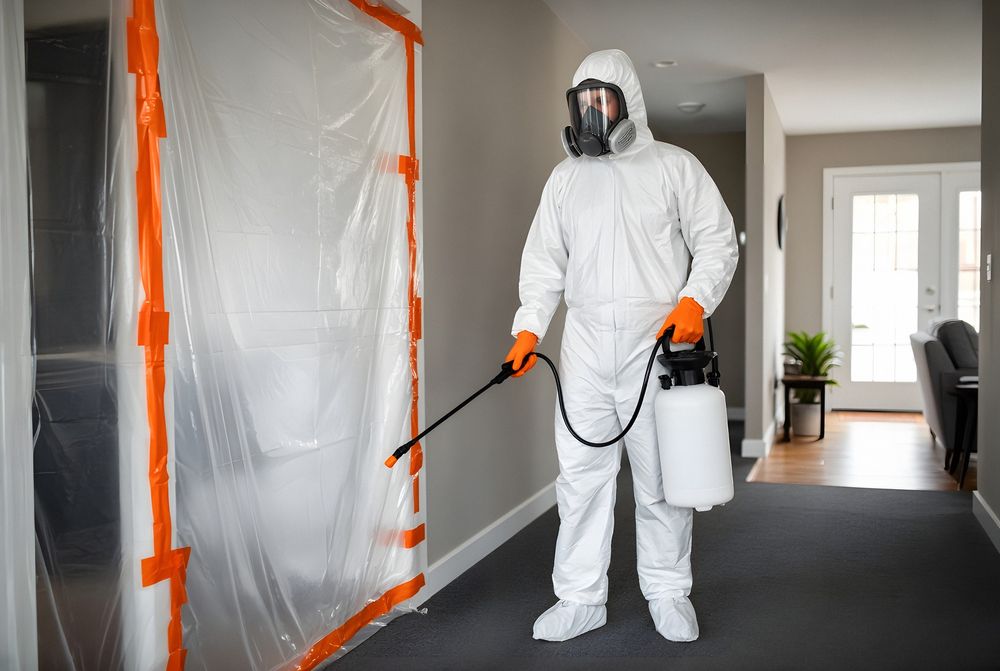
Police sometimes use tear gas or pepper spray when entering a home or vehicle, and some people use pepper spray for self-defense indoors. Afterward, residue can keep irritating eyes, skin and lungs for a long time. This guide explains what's left behind and how it's removed.
What these agents are
Tear gas is a general term for several chemical irritants. A common one, CS, is a solid that is dispersed as fine particles, often from canisters or grenades that release it in a cloud. The particles settle on surfaces and get into fabrics and air systems.
Pepper spray contains oleoresin capsicum (OC), an oily extract from hot peppers, usually delivered as a spray, stream or foam. It leaves an oily residue on surfaces.
Some products combine agents. Both kinds cause burning eyes, coughing, skin irritation and breathing discomfort.
Why residue lingers
CS particles are fine and settle on every surface in a space, including inside cabinets, closets and drawers if doors were open, and inside heating and cooling systems. OC is oily and clings to surfaces and fabrics. Both can be reactivated when disturbed, for example by walking on carpet, sitting on upholstery, or turning on the HVAC system. Heat can also re-release irritation. That's why people often feel effects days or weeks later.
Safety first
- Ventilate the space by opening windows and doors, before and during cleanup.
- Turn off the HVAC system until it can be cleaned, so residue isn't circulated.
- Protect yourself with gloves, eye protection, long sleeves, and respiratory protection appropriate for particulates.
- Avoid hot water and heat at first, which can increase vapor and irritation.
- Keep children, pets and people with respiratory conditions away until cleaning is complete.
How residue is removed
Remove loose particles first. HEPA vacuuming of floors, upholstery and surfaces lifts dry particles without blowing them around. Avoid sweeping and household vacuums without HEPA filtration.
Wash hard surfaces. Use a detergent solution and wipe repeatedly with clean cloths, working top to bottom. Change water and cloths frequently. OC's oily residue needs a degreasing detergent.
Launder fabrics. Wash clothing, bedding and curtains separately in cold water first, possibly more than once, then normally. Air dry until irritation is gone, since heat can reactivate residue.
Clean upholstery and carpet. Professional extraction is often needed. Heavily contaminated items may not be worth saving.
Clean the HVAC system. Replace filters and clean returns, registers and accessible ductwork. Professional duct cleaning may be needed after heavy exposure.
Clean contents. Items in open closets, cabinets and drawers may need washing.
Check food. Discard uncovered food and anything in damaged packaging.
Vehicles
Vehicles hold residue in seats, headliners, carpets and the ventilation system. Interior detailing with HEPA vacuuming, surface washing, extraction and cabin air filter replacement, plus cleaning of vents, is usually needed. Heat from the sun or the heater can reactivate residue, so test by warming the car before considering it done.
When to call professionals
Professional cleaning is wise when:
- The entire home or vehicle was exposed
- Canisters were deployed indoors
- Residue is in HVAC systems
- Occupants have asthma or other respiratory conditions
- Irritation persists after initial cleaning
- Blood or other contamination is also present
Professionals bring HEPA equipment, protective gear, extraction tools and experience with the cleaning sequence.
Testing whether residue is gone
There's no simple home test for these residues, so the practical test is how people feel in the space. After cleaning, run the HVAC system with new filters, warm the space to normal temperature, and spend time in each room. Any renewed burning in the eyes, throat or skin means residue remains somewhere, often in fabrics, carpet or ducts. Professionals may repeat targeted cleaning in those areas until the space is comfortable.
Pets
Pets are close to the floor and furniture where particles settle, and they groom residue off their fur. Keep them out of affected areas until cleaning is finished, and talk with a veterinarian if they show eye or breathing irritation. Wash pet bedding and bowls along with other fabrics and dishes.
Personal items and documents
Clothing, bags, papers and electronics in the space may all carry residue. Wipe hard items with a damp, detergent-moistened cloth, launder fabrics separately, and handle paper gently with dry methods. Electronics should be wiped externally only, following the manufacturer's guidance.
Who pays
When police deploy tear gas during an operation at a property, policies on who pays for cleanup and damage vary by agency and jurisdiction. Ask the agency about its process. Homeowner and renter insurance may cover some cleanup; review your policy and document conditions with photos before cleaning.
Health concerns
If someone has ongoing breathing problems, eye injuries or skin burns, they should see a healthcare provider. Don't rely on cleaning to fix health effects.
Key takeaways
Tear gas and pepper spray leave residue that can keep causing irritation. Ventilate, shut off HVAC, protect yourself, remove dry particles with HEPA vacuuming, wash surfaces with detergent, launder fabrics in cold water first, and clean the HVAC system. Vehicles and heavily affected homes usually need professional cleaning.
Sources
- OSHA: 29 CFR 1910.134, Respiratory Protection
- OSHA: 29 CFR 1910 Subpart I, Personal Protective Equipment
This guide is general information. It is not legal, medical, environmental or safety advice. Rules vary by state and locality. For a specific situation, consult the relevant agency or a qualified professional.