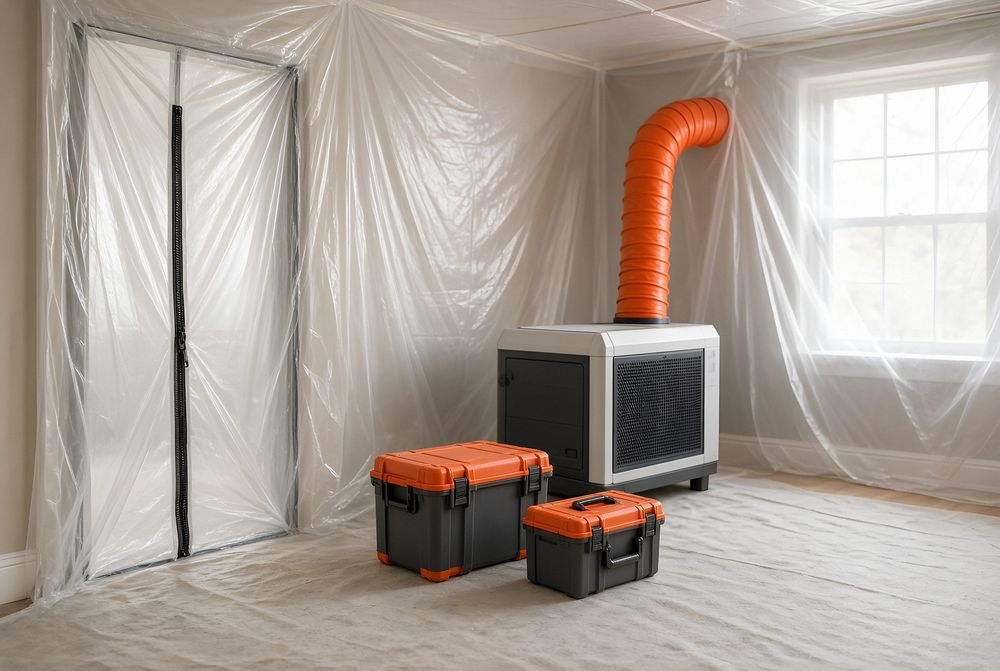
How decomposition affects a building
When a death isn't discovered for several days or longer, decomposition releases fluids and gases that spread into the building. Fluids move downward through mattresses, upholstery, carpet and pad and keep going into subflooring, floor joists, concrete and, in apartments, the ceiling of the unit below. Gases carry strong odor compounds into drywall, insulation, textiles, wood and HVAC ductwork. Temperature, humidity and time decide how far it all goes, which is why two similar-looking rooms can need very different work.
Decomposition cleanup is different from general biohazard cleanup because so much of the problem is in the structure, not on it.
What the work involves
- Assessment from the source outward. The area under and around where the decedent was found is examined first, then the layers below and the adjacent spaces. HVAC returns and supply runs near the area are checked for odor and residue.
- Removal of saturated contents. Mattresses, box springs, upholstered furniture, bedding, rugs and other absorbent items in the affected area are packaged for disposal with the authorization of the family or owner.
- Flooring and subfloor. Carpet and pad are removed. Affected sections of hardwood, laminate or vinyl and the underlying subfloor are cut out until clean material is reached.
- Structural cleaning. Exposed joists, slab and framing are cleaned with enzymatic and detergent products and disinfected.
- Sealing where appropriate. If faint odor remains bound in a structural member that has been cleaned but can't practically be replaced, an odor-blocking encapsulant may be applied before rebuilding.
- Insects. Flies, larvae and pupae are cleaned out as part of decontamination. Persistent infestations may need a licensed pest professional.
- Odor elimination. After the source is gone, residual odor is treated with methods suited to the space, such as hydroxyl generation, ozone (in unoccupied spaces only) or thermal fogging.
Why DIY attempts usually fail
Families often try to clean the visible stain and use air fresheners. The odor almost always returns because the fluid has reached materials below the surface. Disturbing the area without protection also exposes people to biological hazards. We recommend closing the room, keeping people and pets out and, if possible, shutting off forced-air heating and cooling until the area has been assessed.
Multi-unit buildings
In apartments and condominiums, decomposition fluid can pass through the floor assembly into the unit below, and odor can travel through shared walls and ventilation. Landlords and associations should expect the assessment to include neighboring units and common systems.
After the cleanup
When remediation is complete, the space should be free of visible contamination and of decomposition odor at the source. You'll receive documentation describing what was removed and cleaned, so repairs can begin and insurers, executors or buyers have a record. Rebuilding flooring and drywall is usually done by a separate contractor, and we can coordinate that handoff.