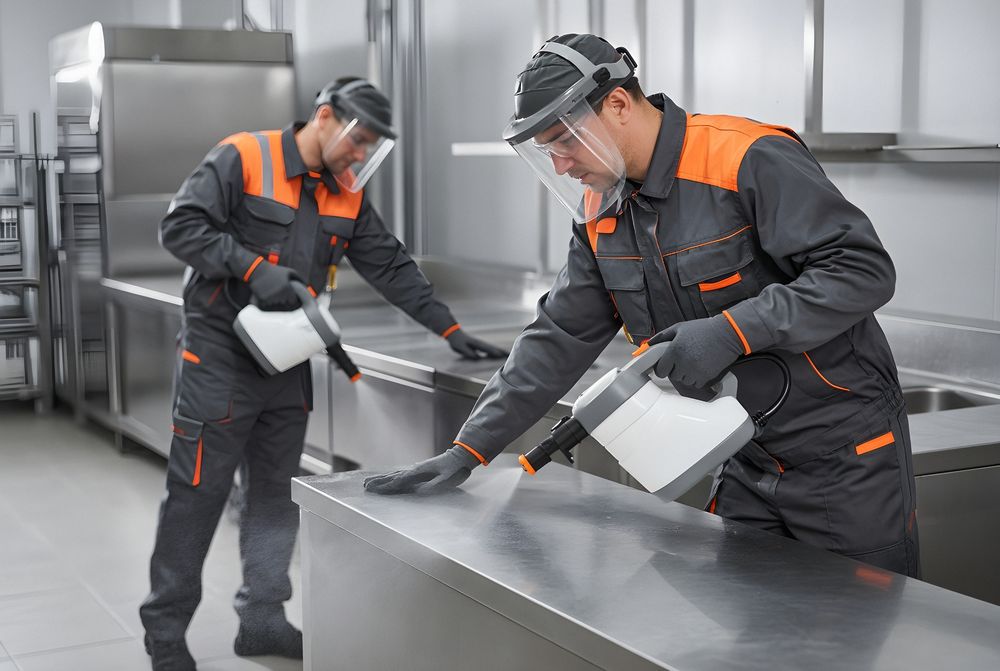
When an illness spreads through a building, whether norovirus in a care home, influenza in an office, a skin infection in a gym or a respiratory virus in a school, cleaning and disinfection become part of the response. Done well, it helps interrupt transmission alongside other measures such as staying home when sick and hand hygiene. This guide covers the practical steps facility managers can take.
Start with public health
Local health departments are the lead on outbreaks. They can identify the likely pathogen, recommend exclusion periods, advise on reporting, and suggest cleaning approaches. Many facilities, such as care homes, childcare centers and schools, have reporting obligations. Contact your health department early.
Know the pathogen
Pathogens differ in how they spread and how hard they are to kill:
- Norovirus spreads through vomit and feces, survives on surfaces and resists many disinfectants.
- Respiratory viruses spread mainly through the air, with surfaces playing a lesser role.
- Skin infections such as MRSA spread through contact and shared items.
- C. difficile spores require specific sporicidal products.
Choosing a product with the right claim matters.
Choosing products
The EPA registers disinfectants and lists products with claims against specific pathogens, such as norovirus and C. difficile, in searchable lists. Choose a product with a claim against the pathogen you're dealing with, and follow its label: dilution, surface compatibility, contact time and safety precautions.
Cleaning before disinfecting
Disinfectants work poorly on dirty surfaces. Clean surfaces of visible soil first, then disinfect. Some products combine cleaning and disinfecting in one step for lightly soiled surfaces; check the label.
Contact time
Contact time, sometimes called dwell time, is how long a surface must stay wet with the product to achieve the claimed kill. It ranges from under a minute to ten minutes or more. Wiping a surface dry too soon is one of the most common reasons disinfection fails.
High-touch surfaces
Focus on surfaces people touch frequently:
- Door handles, push plates and light switches
- Elevator buttons and handrails
- Faucets, toilet flush handles and restroom fixtures
- Tables, desks, counters and chairs
- Phones, keyboards, remote controls and shared devices
- Gym equipment, mats and lockers
- Bed rails and call buttons in care settings
Increase frequency during an outbreak.
Bodily fluid incidents
Vomit and diarrhea incidents during norovirus outbreaks need immediate, careful cleanup with protective equipment, wide-area disinfection and proper waste handling.
Staff protection
Cleaning staff need training, gloves and other PPE as the product label and situation require, and procedures that protect them from both the pathogen and the chemicals. Employers have duties under OSHA's hazard communication rules for chemicals used at work.
Ventilation
For respiratory illness, ventilation and filtration matter as much as surface cleaning. Increasing outdoor air and improving filtration can help reduce airborne spread.
When to bring in professionals
Consider professional disinfection when:
- The facility lacks staff or capacity for enhanced cleaning
- A large area needs thorough treatment at once
- Bodily fluid contamination affects porous materials
- Public health officials recommend it
- You need documentation for stakeholders
Professional services should use registered products and follow labels. Be skeptical of claims that any treatment provides lasting protection; disinfection works on surfaces at the time it is applied.
Communication
Tell staff, residents and families what's happening and what you're doing, in coordination with public health. Clear communication reduces anxiety and encourages people to follow measures like staying home when sick.
After the outbreak
Return to routine cleaning once public health advises. Review what worked, restock supplies and update procedures.
A practical example
A care home sees vomiting and diarrhea among residents. The administrator notifies the health department, which suspects norovirus. Staff switch to a product with a norovirus claim, increase high-touch cleaning, use careful procedures for incidents, and cohort ill residents. A professional crew disinfects common areas after the outbreak ends. Cases stop within two weeks.
Frequently asked questions
Does fogging the building stop outbreaks?
Fogging or spraying is not a substitute for cleaning and disinfecting surfaces according to label directions. Ask public health before relying on it.
Is bleach effective?
Bleach solutions are effective against many pathogens when mixed and used properly, but they damage some surfaces and require care. Follow guidance for concentration.
How often should we disinfect during an outbreak?
More often than usual for high-touch surfaces; public health can advise on frequency.
Do hand sanitizers work against norovirus?
Handwashing with soap and water is recommended for norovirus.
Do we need to close?
Closure decisions follow public health guidance.
Can a disinfection service certify our building is virus-free?
No service can guarantee that; be wary of such claims.
Should we disinfect soft furnishings?
Some products are labeled for soft surfaces; otherwise, launder items where possible or clean them according to the manufacturer's guidance.
Key takeaways
Work with public health, identify the pathogen, use products with the right claim, clean before disinfecting, respect contact time, focus on high-touch surfaces, protect staff and consider ventilation. Bring in professionals when capacity or contamination demands it, and communicate clearly.
Sources
- EPA: Registered Antimicrobial Products Effective Against Norovirus (List G)
- EPA: Selected EPA-Registered Disinfectants
- EPA: List N, Disinfectants for Use Against SARS-CoV-2
- OSHA: 29 CFR 1910 Subpart I, Personal Protective Equipment
This guide is general information. It is not legal, medical, environmental or safety advice. Rules vary by state and locality. For a specific situation, consult the relevant agency or a qualified professional.