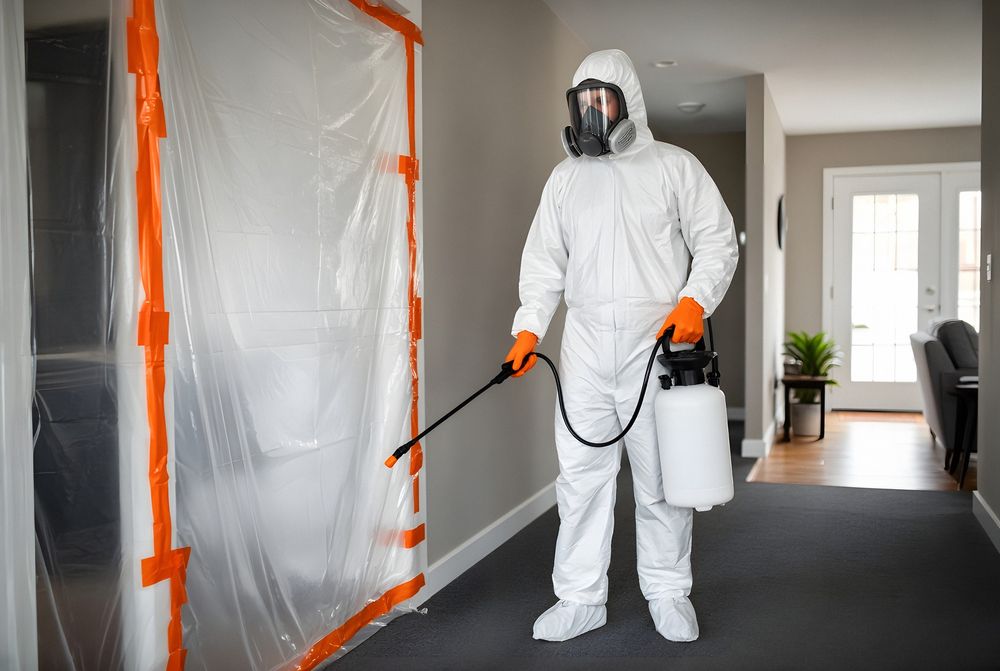
When illness leaves contamination behind
Some infections spread through contaminated surfaces as well as person to person. After a serious illness at home, an outbreak in a facility, or a death from an infectious condition, families and operators often want the space properly decontaminated before others use it. The aim is to reduce the organism of concern on surfaces through careful cleaning and the correct disinfectant, applied correctly.
Matching the method to the organism
Organisms differ in how hard they are to kill:
- Enveloped viruses, such as influenza and coronaviruses, are relatively easy to inactivate with many registered disinfectants.
- Non-enveloped viruses, such as norovirus, are hardier. They call for products with specific label claims.
- Bacterial spores, such as C. difficile, resist many common disinfectants and require sporicidal products.
- Resistant bacteria, such as MRSA, are killed by many hospital-grade disinfectants when they're used correctly.
EPA maintains lists of registered products by pathogen claim, and we choose products whose labels cover the organism involved.
Our process
- Intake. What illness is involved (as far as you know), where the person spent time, and who uses the space.
- Scope. We identify high-touch surfaces, bathrooms, bedding, soft furnishings and any bodily-fluid contamination.
- Clean first. Soil and organic matter are removed so the disinfectant can work.
- Disinfect with the appropriate product, keeping surfaces wet for the full contact time on the label.
- Soft goods. Bedding and washable fabrics are bagged for hot laundering. Contaminated mattresses and upholstery are treated where label-appropriate, or removed.
- Waste is handled according to applicable rules.
- Documentation of products, methods and areas treated.
Limits
We don't diagnose illness or give medical advice, and no cleaning can guarantee that no one will get sick. For guidance specific to a disease, follow your healthcare provider and your local health department. In healthcare settings, our work supplements, and doesn't replace, the facility's infection-prevention program.
Common questions
Should we clean before or after the person recovers?
Usually after the person is no longer contagious, or after they've left the space. Ongoing cleaning during illness is best guided by their healthcare provider.
Do you clean after a death from an infectious disease?
Yes, often together with unattended death or bodily fluid cleanup. Tell us what you know about the illness so we can plan protective measures.